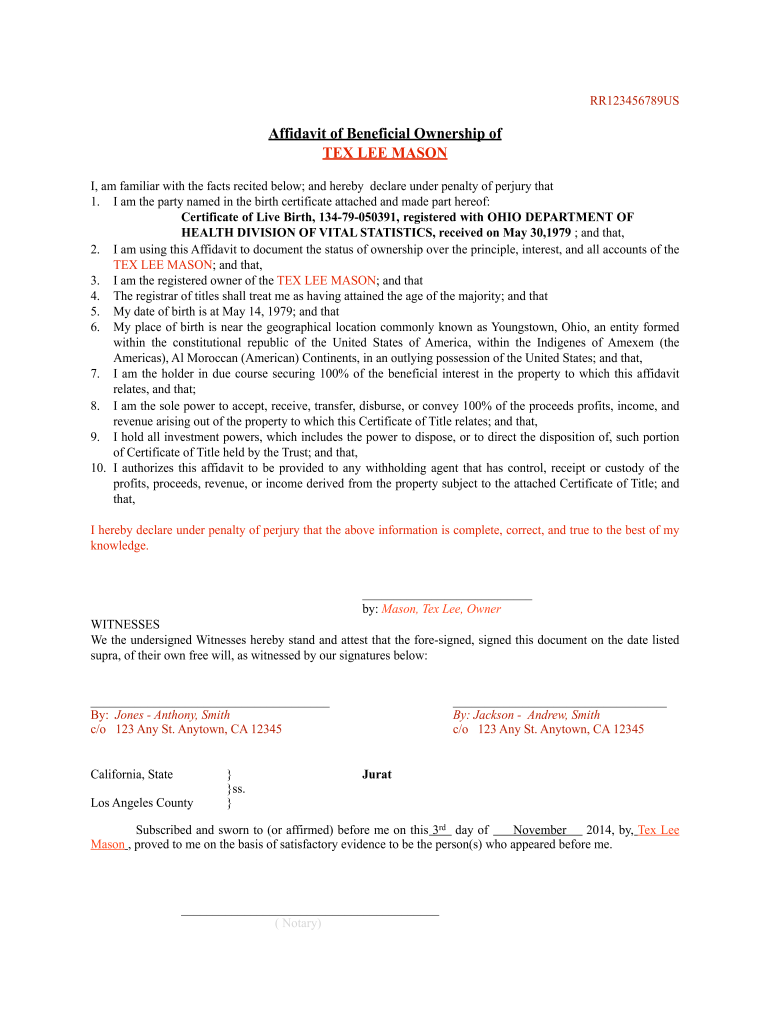







Definition and Meaning of Affidavit of Beneficial Ownership
An affidavit of beneficial ownership is a legal document that establishes an individual's rights and ownership status regarding a particular asset or property. This affidavit serves as a formal declaration, affirming that the personal named in the document is the true owner of the asset in question, rather than a mere nominal owner or trustee. It typically includes critical personal information such as the affiant's name, address, and the specifics of the property or assets they declare ownership of, including details necessary for clarity and legality.
An affidavit of beneficial ownership plays a vital role in various contexts, particularly in real estate, financial transactions, and asset management. It is often utilized by individuals or entities in situations where proof of ownership needs to be legally recognized, such as during property transfers or when engaging in sales transactions. This affidavit enhances transparency and serves to protect individuals' rights and interests, particularly in disputes regarding ownership.
Key Elements of an Affidavit of Beneficial Ownership
Creating an effective affidavit of beneficial ownership necessitates the inclusion of several essential components. These elements help establish clarity and prevent potential legal disputes:
-
Affiant's Information: This section contains the name, address, and possibly the contact information of the person making the affidavit, affirming their identity and connection to the property.
-
Description of Property/Asset: A detailed description of the property or asset in question should be included. This might involve the property's physical address, legal description, or any identifying features that establish ownership.
-
Statement of Ownership: A clear declaration asserting that the affiant is the rightful owner of the described property. This statement should be unequivocal to provide a strong legal basis.
-
Witness and Notary Public Details: The affidavit should be signed in the presence of a witness and typically must be notarized to validate its authenticity. Witnesses confirm the identity of the affiant and the legitimacy of the signing event.
-
Date and Signature: The date on which the affidavit is signed and the affiant's signature are critical to establishing the document's timeframe and to ensure it is legally binding.
Uses of the Affidavit of Beneficial Ownership
Affidavits of beneficial ownership find application in numerous scenarios, primarily centered around legal safeguards and asset management. These uses include:
-
Real Estate Transactions: When purchasing or selling a property, the affidavit helps to clarify who the actual owner is, particularly when the title may be held by a trust or corporation.
-
Financial Documentation: This document can be critical for banks and other financial institutions requiring a certified statement of ownership for securing loans or credit against the asset.
-
Legal Proceedings: In disputes where ownership claims are contested, an affidavit of beneficial ownership can serve as evidence to reinforce the affiant's claims, crucial during litigation.
-
Compliance: Businesses may require such affidavits to comply with regulatory requirements, particularly when addressing anti-money laundering (AML) regulations or beneficial ownership disclosures.
-
Inheritance matters: In cases where an individual inherits property, an affidavit can clarify the ownership status in the estate settlement process.
Steps to Complete an Affidavit of Beneficial Ownership
Completing an affidavit of beneficial ownership requires careful attention to detail. The following steps outline the process:
-
Gather Necessary Information: Collect all relevant details about the property or asset, such as address, title numbers, and descriptions, along with personal information about the affiant.
-
Draft the Affidavit: Using a template or drafting from scratch, incorporate the gathered information into the affidavit, ensuring that all required sections are included.
-
Review for Accuracy: Thoroughly check the document for correctness. Ensure all details reflect the true ownership status and that no information is misleading or missing.
-
Sign in the Presence of a Witness: Schedule a signing event where a third-party witness can observe the affidavit being signed, which is a necessary requirement to validate its authenticity.
-
Notarization: Take the completed affidavit to a notary public who will confirm identities and notarize the document, making it a legally binding instrument.
-
Make Copies: Once the affidavit is signed and notarized, make several copies for personal records and distribution to involved parties, such as banks or legal representatives.
Common Scenarios for Using an Affidavit of Beneficial Ownership
Affidavits of beneficial ownership can be employed across various circumstances where ownership must be declared. These common scenarios include:
-
Purchasing Property Through LLCs: An individual purchasing real estate through a limited liability company (LLC) may need to submit an affidavit of beneficial ownership to clarify their personal interest in the property, especially for loan applications.
-
Joint Ownership Disputes: In cases involving multiple parties contesting ownership, an affidavit can help clarify who is the primary owner, thereby simplifying conflicts during asset division.
-
Transferring Ownership: During a property transfer, the existing owner may need to provide an affidavit to affirm their ownership before the asset changes hands, particularly relevant in private sales.
-
Bank Verification: When establishing an account that requires proof of asset ownership, an affidavit may be necessary for financial institutions to validate the owner’s claim over the property or investment.
By ensuring clarity and legal compliance through the affidavit of beneficial ownership, individuals and businesses can fortify their claims to assets while facilitating smoother transactions and legal processes.