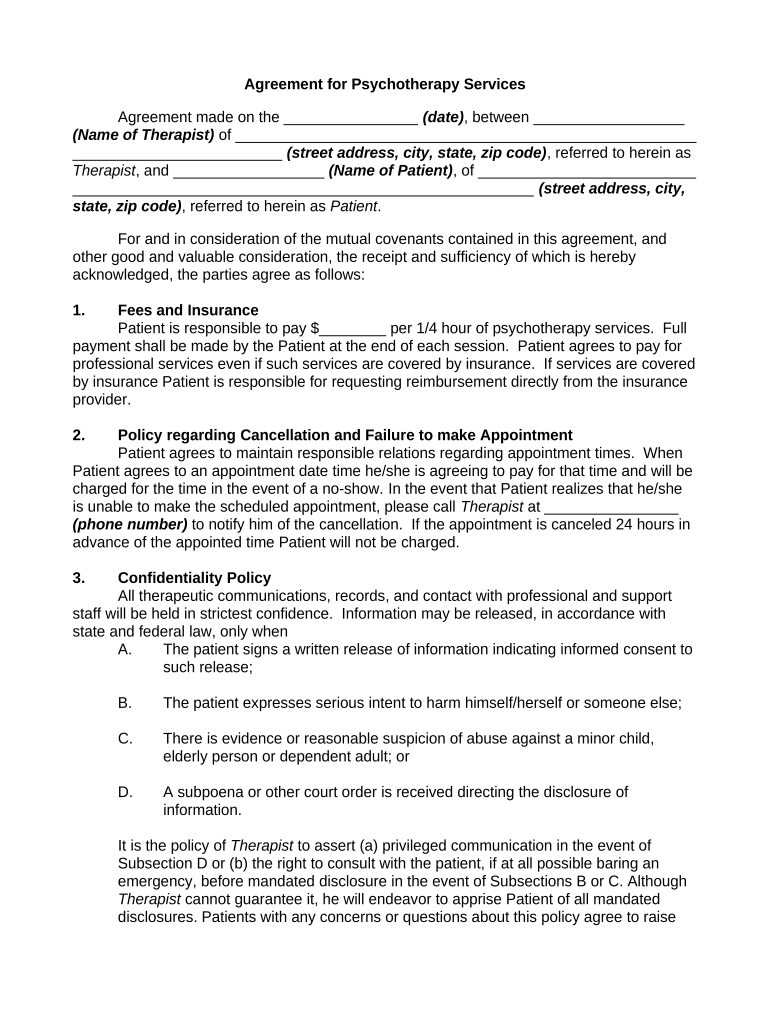
In general, counseling is recommended for specific issues and situations, such as addiction or grief, and takes place over weeks to several months. Psychotherapy, in contrast, tends to explore past issues that might be contributing to present day problems.
How do I create a therapy intake form?
Essential components of an effective therapy intake form Patient demographics: Basic information such as name, age, gender, and contact details. Medical history: Including past medical conditions, surgeries, and allergies. Reason for seeking therapy: Understanding the patients primary concerns and goals for treatment.
What is the best form of psychotherapy?
(2)]: (1) CBT is the most researched form of psychotherapy. (2) No other form of psychotherapy has been shown to be systematically superior to CBT; if there are systematic differences between psychotherapies, they typically favor CBT.
What are the 4 stages of psychotherapy?
ABSTRACT - The unfolding of the psychotherapeutic relationship is considered to proceed in four main stages: Commitment, Process, Change and Termination. Each stage has its own tasks and sub-stages, and has to be reasonably completed before transition to the next can take place.
Is psychotherapy a form of counseling?
One caveat is that counseling can be used in other contexts. For instance, someone may receive career counseling or a couple may receive premarital counseling, which changes the meaning of the term. In the context of mental health, however, counseling often refers to psychotherapy or therapy.
Related Searches
Free printable counseling intake formsCounseling intake assessment form pdfPrivate practice intake form for counseling clientsCounselling assessment form PDFCounselling intake form templateCounseling INTAKE FORM for childFree counseling forms & templatesMental health Intake Form PDF free
Security and compliance
At DocHub, your data security is our priority. We follow HIPAA, SOC2, GDPR, and other standards, so you can work on your documents with confidence.
The mental health world is very diverse and convoluted and can thus be a little confusing, and there are over 400 different kinds of psychotherapy (Prochaska Norcross, 2007). Psychotherapy is performed by many different people with various educational and training backgrounds.
What is the main difference between Counselling and psychotherapy?
Counselling deals with personal, social, vocational, and educational concerns while psychotherapy focuses more on adjustment and psychological problems.
What is the difference between psychotherapy and counseling PDF?
Counselling is a short-term process that encourages the change of behaviour. Psychotherapy: Helps people with psychological problems that have built up over the course of a long period of time. It will help you understand your feelings, thoughts and actions more clearly.
Related links
PERSONAL PSYCHOTHERAPY INCEPTION FORM
The therapist shall sign this form at the inception of therapy. The therapist must be licensed as a. Marriage and Family Therapist (MFCC), Clinical Social
Cookie consent notice
This site uses cookies to enhance site navigation and personalize your experience.
By using this site you agree to our use of cookies as described in our Privacy Notice.
You can modify your selections by visiting our Cookie and Advertising Notice.