






Definition and Meaning of a Debt Contract Template
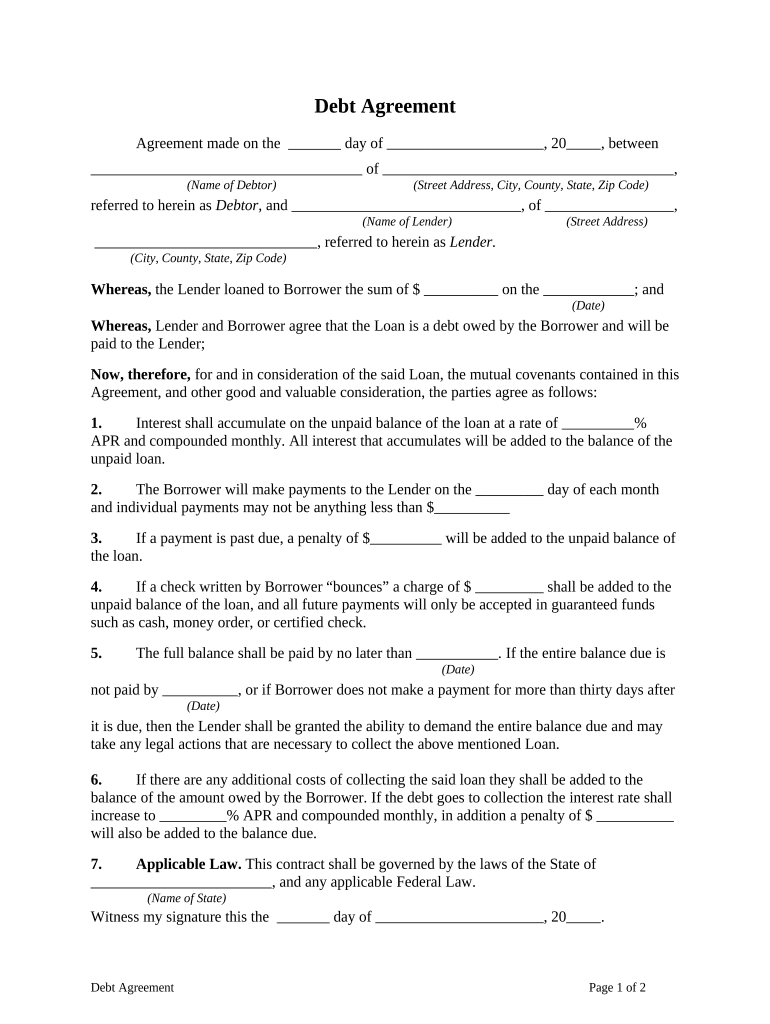
A debt contract template is a legally binding document that outlines the terms of a loan agreement between a debtor and a lender. It specifies the obligations of both parties, including the amount borrowed, payment terms, interest rates, penalties for late payments, and consequences in the event of default. By formalizing the terms of the agreement, both parties have a clear reference that helps prevent misunderstandings and disputes.
Key Features of a Debt Contract Template
- Loan Amount: Clearly states the principal amount of the loan.
- Interest Rate: Details the agreed-upon interest that will accrue on the unpaid balance.
- Payment Schedule: Specifies due dates for repayments and the frequency (monthly, quarterly, etc.).
- Late Fees: Describes penalties applicable if payments are not made on time.
- Default Conditions: Outlines actions that can be taken if the debtor fails to meet obligations.
Importance in Financial Relationships
Debt contracts are vital in establishing trust and accountability in financial dealings. Both parties have documented proof of their agreement, which is crucial for legal recourse if necessary. The template simplifies the process of creating such contracts, ensuring that all required clauses are included and conforming to legal standards.
Key Elements of a Debt Contract Template
A comprehensive debt contract template should contain several crucial elements to ensure clarity and enforceability.
Essential Components
- Identification of Parties: The document should identify the debtor and lender, including their full names and addresses.
- Loan Details:
- Amount: Clearly define the total sum lent to the debtor.
- Purpose: Optionally state the purpose of the loan, as this can affect repayment expectations.
- Terms of Repayment:
- Schedule: Outline the payment schedule (e.g., monthly payments).
- Interest Rate: Specify whether the rate is fixed or variable.
- Collateral: If applicable, describe any collateral backing the loan.
- Governing Law: State which jurisdiction's laws will apply in case of a dispute.
How to Use the Debt Contract Template
Using a debt contract template effectively involves several key steps, ensuring that all necessary details are accurately captured and that both parties understand their obligations.
Steps for Utilization
- Choose a Template: Select a reliable, legally-compliant debt contract template based on your needs.
- Fill in the Details:
- Input all required information such as loan amount, repayment terms, and personal details of both parties.
- Review for Accuracy: Both parties should thoroughly review the completed document to ensure all terms are agreed upon.
- Consult Legal Advice: Consider having a lawyer review the contract, especially for larger loans or complex agreements.
- Sign and Date: Both parties should sign and date the contract, with each keeping a signed copy for their records.
Importance of Clarity
Ensuring that each clause is detailed and clear helps prevent ambiguity, reducing the risk of disputes down the line. Misunderstandings about payment schedules or fees can lead to conflict, so taking the time to clarify all expectations is crucial.
Steps to Complete the Debt Contract Template
Properly completing a debt contract template involves several detailed steps that ensure all necessary information is included and that the contract is enforceable.
Detailed Completion Process
- Preparation:
- Collect necessary information and documentation, such as identification and financial details of both parties.
- Document Structure:
- Begin with the title: “Debt Contract”.
- Include the date of creation at the top.
- Parties Information:
- Enter full names, addresses, and contact information for both the debtor and lender.
- Financial Details:
- Provide the loan amount, interest rate, and payment due dates, ensuring numerical entries are clear.
- Conditions and Clauses:
- Define rights and obligations of each party, late fees, and default consequences.
- Signing Process:
- Ensure that both parties sign the document with witnesses if necessary, depending on state laws.
- Final Review:
- Each party should retain a signed copy, and optionally, the document may be notarized for added security.
Legal Use of the Debt Contract Template
Understanding the legal implications of a debt contract template is essential for both parties involved in the agreement.
Legal Considerations
- Regulatory Compliance: The debt contract must comply with state laws and regulations governing lending practices.
- Enforceability: To be enforceable, the contract should include all relevant details to avoid claims of fraudulent practices or misunderstanding.
- Dispute Resolution: It should outline mechanisms for resolving disputes, such as mediation or arbitration, to avoid lengthy court procedures.
- Consumer Protection: Depending on the jurisdiction, additional consumer protection laws may come into play, impacting the terms of the contract.
Potential Legal Issues
While a debt contract template aims to protect both parties, issues such as predatory lending practices or unclear terms can lead to legal challenges. It is crucial to ensure transparency and fairness in all clauses to maintain legality and avoid disputes. This establishes a solid foundation for the lender-debtor relationship.
Examples of Using the Debt Contract Template
Practical examples illustrate various scenarios in which a debt contract template might be utilized, showcasing its versatility and importance.
Common Applications
- Personal Loans: A friend loans $5,000 to another friend, documenting the terms in a debt contract template to avoid complicated social dynamics if repayment issues arise.
- Business Transactions: A small business borrows $50,000 from a local bank, using a debt contract template to secure favorable repayment terms, which includes collateral in the form of business assets.
- Peer-to-Peer Lending: An individual uses a debt contract template to formalize a loan sourced through a peer-to-peer lending platform, ensuring all terms align with both the platform requirements and personal expectations.
These examples highlight the flexibility and necessity for well-structured debt contracts in both personal and professional environments.