




Definition and Meaning of a Sample Letter of Explanation
A sample letter of explanation serves as a template for addressing particular situations or incidents that require clarification. This type of letter is often necessary in various contexts, including finance, employment, or legal matters. For example, individuals may need to explain missed payments, changes in circumstances, or specific incidents that could affect their professional or legal standing. The goal is to provide a clear, concise, and honest explanation that the recipient can understand easily.
Key Components of a Sample Letter of Explanation
- Salutation: A formal greeting addressing the recipient appropriately.
- Introduction: A brief opening statement that outlines the purpose of the letter.
- Body: A detailed explanation of the incident or situation at hand. This section should present a clear timeline and relevant facts, making sure to address the concerns of the recipient directly.
- Conclusion: A closing statement that reiterates the intention to provide clarity and expresses a willingness to provide further information if needed.
- Signature: A formal closing with the sender's name and contact information.
Steps to Write a Sample Letter of Explanation
-
Identify the Purpose of the Letter
Determine the specific reason for writing the letter and the information that needs to be conveyed. -
Gather Necessary Information
Collect all relevant details related to the incident. This may include dates, names, documents, or other pertinent data. -
Choose an Appropriate Format
Use a standard business letter format, ensuring it includes the sender's address, date, recipient's address, and a formal salutation. -
Draft the Letter
Start writing, following the key components listed earlier. Keep the language clear and professional, avoiding unnecessary jargon. -
Revise and Edit
Review the letter for clarity, coherence, and grammatical accuracy. Ensure that the tone remains respectful and professional.
Examples of Situations Requiring a Sample Letter of Explanation
- Employment: An employee may need to write a letter explaining gaps in employment due to personal reasons or health issues.
- Finance: A borrower might provide a letter explaining late payments due to unforeseen circumstances, such as medical emergencies or job loss.
- Insurance: In case of a claim denial, an insurance policyholder could submit a letter explaining any discrepancies that led to the denial.
Common Scenarios for Using an Explanation Letter
Financial Institutions
Lenders often request a letter of explanation when processing applications for loans or mortgages, especially if there are irregularities in the applicant's financial history. A clear articulation of the situation can assist in making informed decisions.
Legal Context
In legal scenarios, individuals may be required to write a letter of explanation regarding incidents that might affect court cases or administrative hearings. This helps to provide context and assist with the judge's or committee's understanding.
Format of a Letter of Explanation
A proper format should include:
- Sender’s Address: Include your current address at the top of the page.
- Date: The date on which the letter is written.
- Recipient’s Address: The name and address of the person or organization to whom the letter is addressed.
- Subject Line (optional): A brief subject line indicating the letter’s purpose.
- Body of the Letter: Organized into paragraphs for clarity.
- Closing: Formal closing like “Sincerely” or “Best regards,” followed by your name.
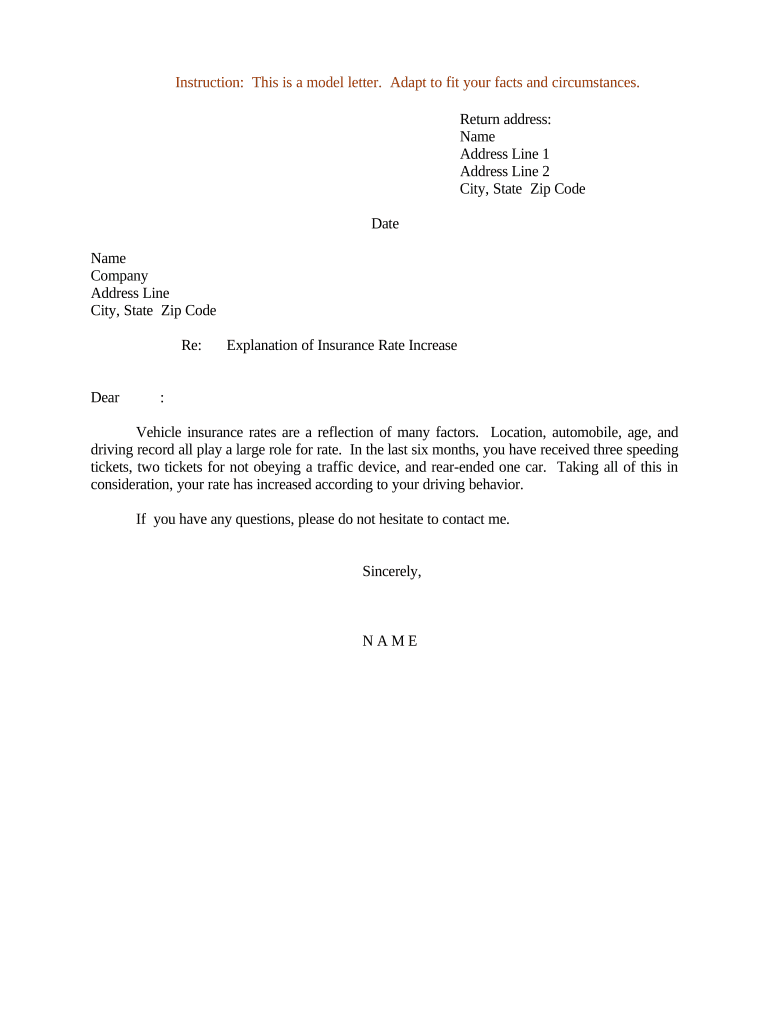
Sample Letter of Explanation for Insurance Rate Increase
When informing policyholders about increased insurance rates, a specific explanation letter may be needed. This letter should detail the reasons for the increase, such as recent claims or adjustments in risk assessment. It might look like this:
[Your Address]
[City, State, Zip Code]
[Email Address]
[Phone Number]
[Date]
[Recipient’s Name]
[Insurance Company Name]
[Company Address]
[City, State, Zip Code]
Subject: Explanation for Increased Insurance Premium
Dear [Recipient’s Name],
I am writing to explain the recent adjustment in your insurance premium, which has resulted in an increase. This adjustment is due to several factors, including recent claims made and changes to our overall risk assessment policies.
We understand that changes like this can be concerning and are committed to transparency in our processes. If you have any further inquiries regarding your insurance policy or wish to discuss this matter, please do not hesitate to reach out.
Thank you for your understanding.
Sincerely,
[Your Name]
By following these guidelines and examples, one can craft an effective sample letter of explanation that conveys the necessary information clearly and adequately addresses the recipient's concerns. This structured approach ensures that critical details are communicated effectively, potentially easing the resolution of the issues at hand.