
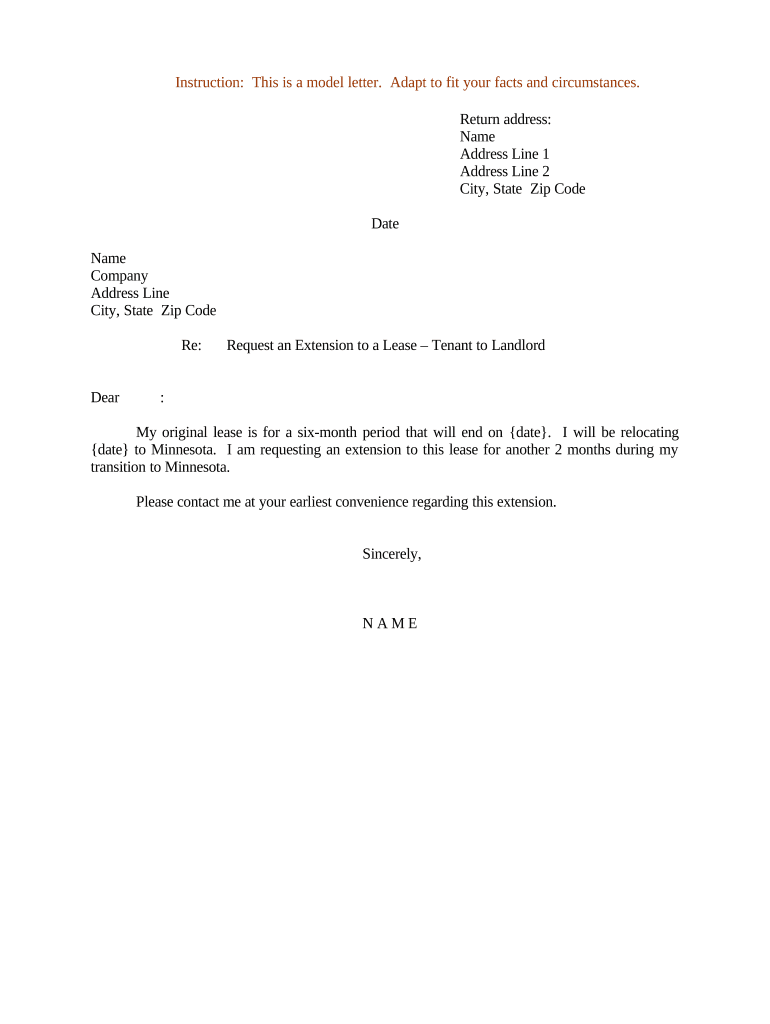







Definition and Meaning of Letter Extension
A letter extension refers to a written request or formal communication seeking additional time to fulfill a particular obligation or deadline. These letters can be employed in various contexts, such as leasing, payments, or academic submissions. The request often outlines the reasons for needing an extension and specifies the desired additional timeframe. Understanding the nuances of crafting an effective letter extension is vital for ensuring that your request is taken seriously.
Common Uses of Letter Extensions
- Lease Extensions: Tenants may use a letter extension to request more time on their lease agreements, allowing them to remain in their residences without penalties.
- Payment Extensions: Individuals or businesses can submit a letter requesting an extension for payment due dates, particularly for bills, rent, or loans.
- Academic Extensions: Students may need to request more time for submitting assignments or completing tests, often necessitating a formal letter to their instructors.
How to Use the Letter Extension Effectively
To utilize a letter extension properly, it is essential to follow a structured approach that ensures clarity and professionalism.
- Identify the Recipient: Address the letter to the appropriate party, such as a landlord, creditor, or professor, to ensure that it reaches the right hands.
- Explain Your Situation Clearly: Briefly describe your current circumstances, emphasizing the reasons behind your request. Be honest yet professional.
- State Your Request Directly: Clearly articulate what you are requesting, such as a specific duration for the extension. Avoid vague language.
- Express Gratitude: Ending with a note of appreciation for their consideration can foster goodwill and may improve your chances of a favorable response.
Steps to Complete the Letter Extension
When preparing a letter extension, follow these organized steps for effective completion:
- Choose the Correct Format: Whether it's an email or a printed letter, ensure the presentation is clear and professional.
- Begin with Your Information: Include your name, address, and contact information at the top of the letter.
- Date the Document: Ensure your letter includes the current date, as this establishes the timeline of your request.
- Include the Recipient's Information: After your details, add the recipient's name, title, and address.
- Draft the Body of the Letter: Structure the body by explaining your situation and request. Maintain a professional tone throughout.
- Proofread: Always check for spelling, grammar, and clarity to present a polished document.
- Send the Letter: Choose your preferred method of delivery—email or postal service—ensuring it reaches the recipient in a timely manner.
Key Elements of the Letter Extension
Several critical components should be included in any letter extension to increase efficacy:
- Subject Line or Title: Clearly indicate that this is a letter requesting an extension.
- Polite Salutation: Use an appropriate greeting, addressing the recipient formally, such as "Dear [Landlord's Name]."
- Contextual Background: Provide context for your request, referencing any previous communications or agreements as necessary.
- Specific Request: Outline the exact nature of the extension, including the dates and any relevant details.
- Contact Information: Ensure your phone number or email is available for follow-up discussions.
Examples of Using the Letter Extension in Real Scenarios
To illustrate the application of a letter extension, consider the following examples:
-
Sample Letter to Landlord Asking for More Time to Move Out: This letter format includes essential details such as the original lease term and a legitimate reason for requesting additional time (e.g., personal circumstances or housing market challenges).
-
Sample Letter Requesting Extension of Time for Payment: In cases where financial strain is experienced, this letter would address the need for a delay in payment, including a suggested new due date and indicating efforts to resolve the situation.
Important Terms Related to Letter Extensions
Understanding specific terms associated with letter extensions is essential for clarity:
- Deadline: The original date by which obligations must be met.
- Extension Period: The additional time requested to complete a task or obligation.
- Compliance: Adhering to the terms specified in a lease or contract, which can include deadlines for payments or responsibilities.
Legal Use of the Letter Extension
The legal implications of a letter extension can be significant. When requesting lease or payment extensions, ensure that your letters comply with any relevant laws and contractual obligations. This compliance protects you from potential penalties or misunderstandings:
- Contractual Obligations: Always reference the applicable terms in your lease or agreement.
- Written Documentation: Many agreements require requests for extensions to be made in writing for enforcement and clarity.
Conclusion
A letter extension is an essential tool for managing deadlines across various situations—whether related to lease agreements, payments, or academic obligations. By understanding how to craft a thoughtful and professional letter extension, you can effectively communicate your needs while maintaining positive relationships.




