




01. Edit your free pet health record template online
Type text, add images, blackout confidential details, add comments, highlights and more.

Type text, add images, blackout confidential details, add comments, highlights and more.

Draw your signature, type it, upload its image, or use your mobile device as a signature pad.

Send vet records template via email, link, or fax. You can also download it, export it or print it out.
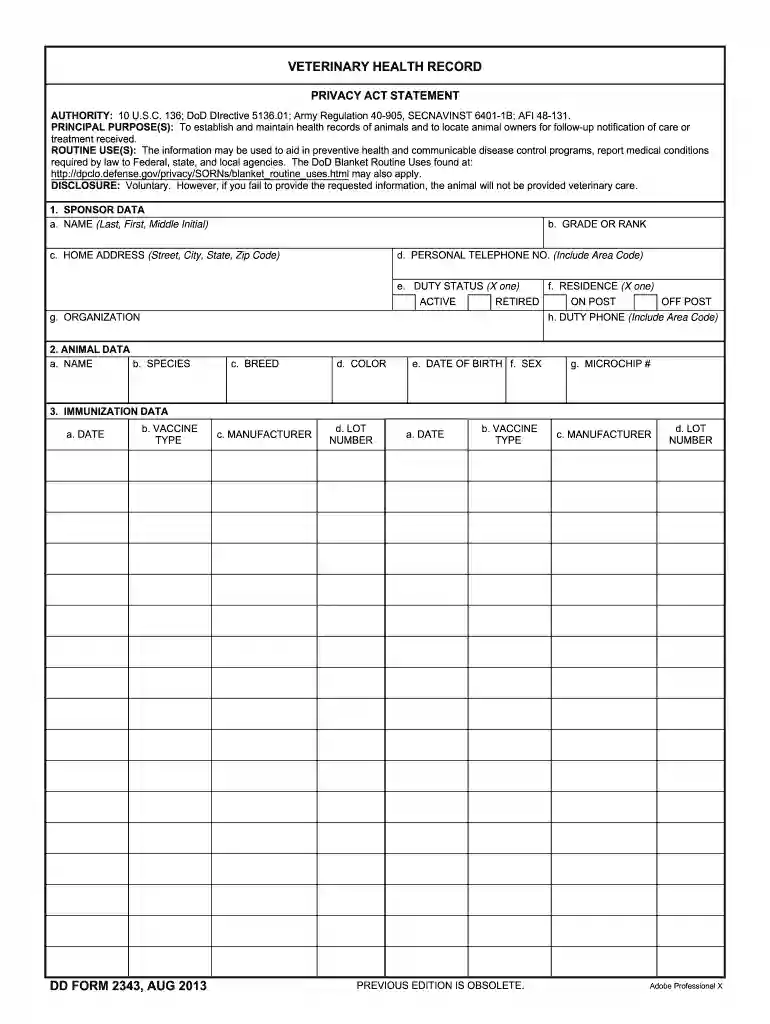
A veterinary health record is a comprehensive document that maintains detailed information about an animal's medical history, treatments, and health assessments. This record is utilized by veterinarians to ensure that animals receive appropriate and timely medical care. It serves not only as a historical account of an animal's health but also as a crucial tool for tracking vaccines, medications, and medical procedures performed over time.
Maintaining an accurate veterinary health record is vital for ensuring continuity of care, particularly if the animal requires treatment from different veterinarians or specialists.
Using a veterinary health record effectively requires a systematic approach. Here are steps to utilize this document for optimal care:
Filling Out Initial Information: Upon acquiring a new pet, the owner should complete the initial sections of the veterinary health record that include personal and animal details.
Documentation of Visits: Each visit to the veterinarian should be meticulously recorded. This includes the date, purpose of the visit, observations from the vet, diagnosis, and the treatment plan.
Tracking Medications and Vaccinations: It is crucial to keep updated records of all vaccinations and prescribed medications. This helps in scheduling future vaccinations and ensuring ongoing treatments are correctly followed.
Reviewing Medical History: Prior to any veterinary appointment, reviewing the pet's medical history can provide the vet with insights that may impact treatment decisions.
Completing the veterinary health record involves several steps that ensure comprehensive coverage of an animal’s health. Follow these steps:
Initial Setup
Entering Medical History
Log Veterinary Visits
Update Regularly
Review and Revise
Veterinary health records are used by various stakeholders in the animal care industry:


Veterinary health records are subject to legal protections regarding privacy and data management. Compliance with regulations is essential to protect the rights of pet owners and their animals.
Confidentiality: Veterinary health records are confidential and should not be shared without the owner's consent, except under specific legal obligations.
Record Retention: Veterinarians must adhere to state-specific requirements related to the duration for which health records should be maintained. This often includes a mandate to retain records for several years after the last service date.
Client Access: Pet owners have the right to access their veterinary health records and request corrections if necessary. Veterinarians should ensure a transparent process for clients wishing to review their records.
Understanding these legal implications is fundamental for both pet owners and veterinary practices to ensure compliance and maintain trust within the veterinarian-client relationship.
We've got more versions of the free pet health record template form. Select the right free pet health record template version from the list and start editing it straight away!
At DocHub, your data security is our priority. We follow HIPAA, SOC2, GDPR, and other standards, so you can work on your documents with confidence.
Please provide an explanation of any gaps longer than 6 months in your pets medical records during the 12 months prior to your policy effective date.Read more
Steps. 1. Recommended or Approved Drug List. Early in your discussion with your herd health veterinarian you need to make a narrow list of drugs toRead more
The My Veterinarian Record page provides a way for veterinarians to view their own records within VSPS. The records are organized using 6 tabs of information:Read more


