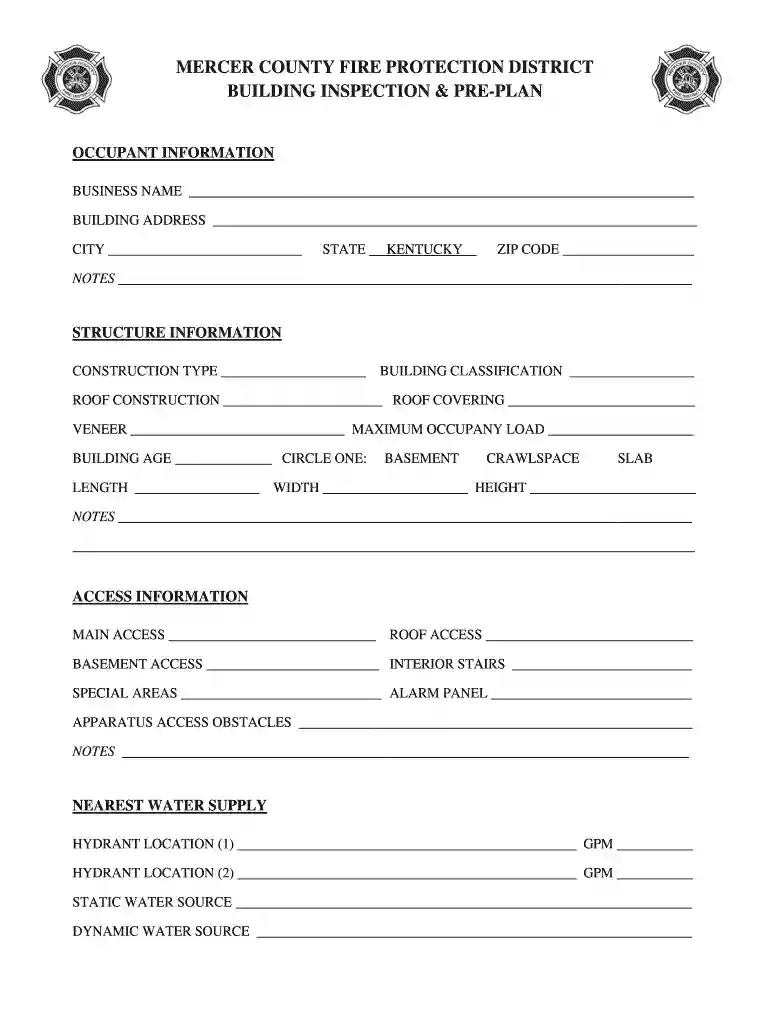
Pre fire plan template 2026

Get Form
fire department pre plan template Preview on Page 1

Here's how it works

01. Edit your fire department pre plan template online
Type text, add images, blackout confidential details, add comments, highlights and more.

02. Sign it in a few clicks
Draw your signature, type it, upload its image, or use your mobile device as a signature pad.

03. Share your form with others
Send fire department pre plan form via email, link, or fax. You can also download it, export it or print it out.

Understanding Pre Fire Plans and Their Importance

A pre fire plan template is a vital document used by fire departments and businesses to ensure safety and preparedness in the event of a fire incident. This structured plan typically outlines important details that help fire professionals effectively manage emergencies, protecting lives, property, and the environment.

  • Purpose: A pre fire plan is designed to provide critical information about building layout, occupancy types, and potential hazards. It aids firefighters in familiarizing themselves with structures and identifying key features necessary for response, such as access points and water supply sources.
  • Components: These plans often incorporate multiple elements, including but not limited to the building's operational procedures, locations of hazardous materials, and emergency exit routes.

This template ensures that vital information is readily accessible during emergencies, enhancing response effectiveness.

Key Features of a Pre Fire Plan Template

When crafting or utilizing a pre fire plan template, several essential features should be included to ensure comprehensive coverage of safety procedures and building information.

  • Building Information: Include the name, address, and contact details of the business to facilitate communication with emergency responders.
  • Occupancy Details: Document the number of occupants and their typical activities, as this can influence evacuation strategies.
  • Site Access: Clearly depict access points and designated routes for emergency vehicles, assisting firefighters in quickly reaching the scene.
  • Hazard Identification: List any hazardous materials present on-site, complete with safety information, to prepare response teams for potential risks.

An effective template lays the groundwork for thorough safety planning and provides a clear reference during emergencies.

Steps to Create a Comprehensive Pre Fire Plan

Building a thorough pre fire plan involves several structured steps to ensure all necessary information is accurately documented and easily understood.

  1. Data Collection: Gather relevant information about the building's structure, such as floor plans and occupancy types.
  2. Hazard Assessment: Identify potential fire hazards, such as flammable materials or equipment, and assess their risks.
  3. Access and Egress Planning: Outline access points for emergency responders and establish clear evacuation routes for occupants.
  4. Plan Drafting: Utilize a pre fire plan template to draft the plan, integrating all collected data and assessments.
  5. Review and Revise: Share the draft with relevant stakeholders, such as fire department representatives, for feedback and necessary adjustments.

This sequential approach ensures that the final pre fire plan is thorough, detailed, and tailored to specific building needs.

Legal and Compliance Considerations for Pre Fire Plans

Understanding the legal implications associated with pre fire plans is crucial for businesses and organizations.

  • Regulatory Requirements: Various states and municipalities may have specific regulations dictating the content and form of a pre fire plan, necessitating compliance with local fire codes.
  • Document Retention: It's important to maintain an up-to-date pre fire plan, as outdated documents can result in violations or increased risks in emergency situations.
  • Liability Considerations: Properly documented plans can help organizations mitigate liability by demonstrating due diligence in safety planning.

Navigating these legal frameworks helps organizations develop effective and compliant fire safety plans.

Examples of Effective Pre Fire Plan Templates

Utilizing real-world examples of pre fire plans can provide valuable insights for businesses developing their templates.

  • Manufacturing Facilities: A pre fire plan for a manufacturing plant might include specifics about machinery locations, flammable substances, and emergency shut-off procedures.
  • Office Buildings: An office pre fire plan typically details access points, stairwell locations, and procedures for safely evacuating individuals with disabilities.
  • Restaurants: In restaurants, the plan may focus on kitchen hazards, layouts of cooking equipment, and nearby fire suppression systems.

These examples illustrate how templates can be tailored to meet the unique needs of different industries while fulfilling the fundamental requirements of a pre fire plan.

Essential Checklist for Pre Fire Plans

Incorporating a checklist into the pre fire plan ensures that all critical elements are considered and documented.

  • Contact Information: Include lists of emergency contacts such as local fire departments, health services, and key organizational personnel.
  • Evacuation Routes: Mark all evacuation routes and exits clearly within the plan.
  • Fire Control Systems: Document the locations and types of fire control systems, such as sprinklers or extinguishers, and ensure they are inspected regularly.
  • Regular Reviews: Schedule periodic reviews and drills to ensure the plan remains current and effective.

This checklist serves as a practical guide for maintaining compliance and enhancing fire safety readiness.

Training and Drill Implementation for Pre Fire Plans

Training employees on pre fire plans and conducting regular drills is essential for effective emergency response.

  • Staff Training: Provide employees with training sessions that cover the key components of the pre fire plan, including how to respond in case of an emergency.
  • Drills and Simulations: Conduct regular fire drills to familiarize staff with evacuation procedures, ensuring they understand their roles during an emergency.
  • Feedback and Improvement: After drills, gather feedback to identify areas for improvement in both the pre fire plan and employee readiness.

Implementing these training protocols helps to cultivate a culture of safety and preparedness within the organization.

be ready to get more

Complete this form in 5 minutes or less

Get form

Got questions?

We have answers to the most popular questions from our customers. If you can't find an answer to your question, please contact us.
Contact us
NFPA 1620 details the end-to-end pre-planning process, covering topics ranging from physical and site considerations and occupancy considerations to water supplies and fire protection systems, incident operations, and plan maintenance.
Fire prevention plan requirements At a minimum, your fire prevention plan must include: A list of all major fire hazards, proper handling and storage procedures for hazardous materials, potential ignition sources and their control, and the type of fire protection equipment necessary to control each major hazard.
Pre fire planning and inspection is the process of gathering and recording information that could be critical for firefighters making life-saving decisions at an incident. Property and lives can be saved when firefighters have access to this critical information about the building and its contents.
Pre-incident, or pre-fire, planning is the process of gathering, managing and presenting operational intelligence or risk-critical information about premises that present potential hazards in the event of an emergency.

Security and compliance

At DocHub, your data security is our priority. We follow HIPAA, SOC2, GDPR, and other standards, so you can work on your documents with confidence.

Learn more
ccpa2
pci-dss
gdpr-compliance
hipaa
soc-compliance