




01. Edit your form 4006 online
Type text, add images, blackout confidential details, add comments, highlights and more.

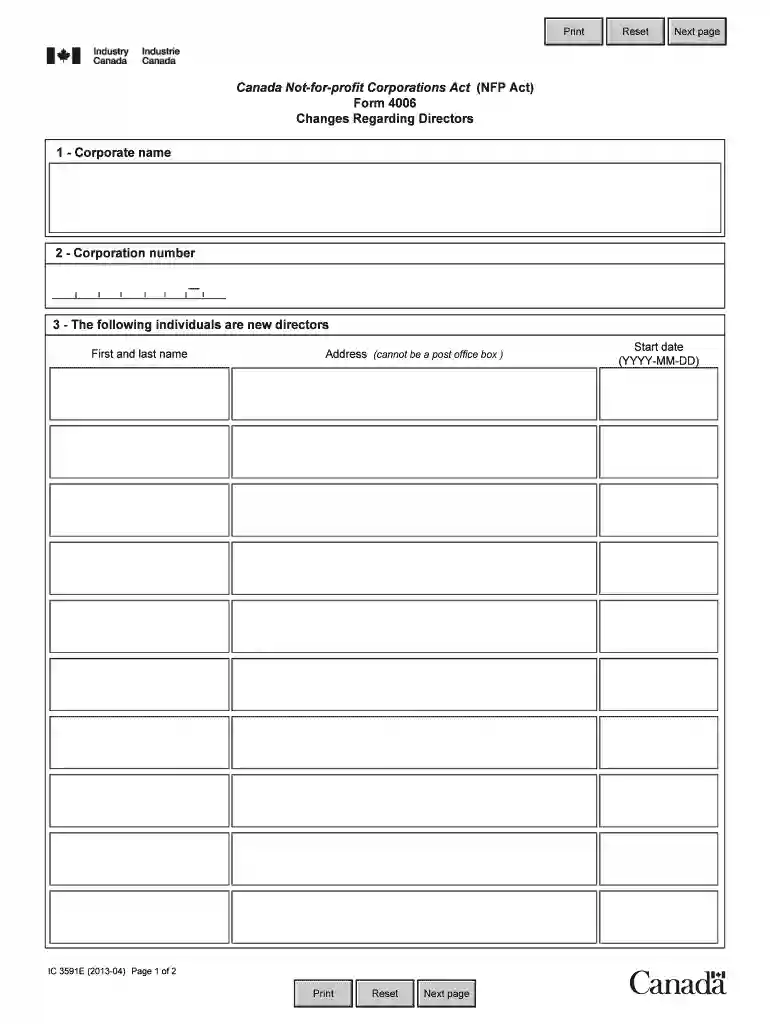
Type text, add images, blackout confidential details, add comments, highlights and more.

Draw your signature, type it, upload its image, or use your mobile device as a signature pad.

Send form 4006 changes regarding directors via email, link, or fax. You can also download it, export it or print it out.
Form 4006 is a specific document utilized under the Canada Not-for-profit Corporations Act (NFP Act). It serves a critical function for not-for-profit organizations by facilitating the reporting of changes regarding directors within the corporation. This form is essential for maintaining accurate and up-to-date records, which is mandatory for compliance with legal obligations.
Not-for-profit corporations must report any changes in their board of directors, including the addition of new directors, the removal of existing ones, updates to the addresses of directors, and any changes in their roles. By submitting Form 4006, organizations ensure that the relevant authorities are informed, which helps maintain transparency and accountability in their governance structures. This proactive management of governance details is not only a regulatory requirement but also fosters trust among stakeholders, including members, funders, and the public.
Completing Form 4006 involves several key steps to ensure accuracy and compliance. Follow this structured process:
Gather Required Information:
Choose the Appropriate Sections:
Fill Out the Form:
Review for Accuracy:
Declaration of Knowledge:
Submit the Form:
Understanding key terminology associated with Form 4006 is crucial for accurate completion and compliance. Here are several important terms defined:
Understanding these terms enhances the ability to properly complete the form and navigate the associated legal requirements.
Form 4006 is primarily utilized by not-for-profit corporations operating in Canada. Key users include:
These users play a critical role in the governance of the organization and must be familiar with the process for accurately completing and submitting Form 4006.
Failure to submit Form 4006 when required can lead to several legal and operational consequences for not-for-profit organizations. The legal implications include:
Understanding these legal implications underscores the importance of consistent and accurate reporting via Form 4006.
We've got more versions of the form 4006 form. Select the right form 4006 version from the list and start editing it straight away!
At DocHub, your data security is our priority. We follow HIPAA, SOC2, GDPR, and other standards, so you can work on your documents with confidence.
Mar 19, 1996 b. Complainant: Complainant means anyone who may be denied the benefits of a community college to include an employee, job.Read more
Special Instructions: The GSA 4006 form is for internal GSA use only. Search for another form. PDF versions of forms use DocHubRead more
This regulatory guide is being issued in draft form to involve the public in the early stages of the development of a regulatory position in this area. ItRead more


