




01. Edit your sample written response to negative performance review pdf online
Type text, add images, blackout confidential details, add comments, highlights and more.

Type text, add images, blackout confidential details, add comments, highlights and more.

Draw your signature, type it, upload its image, or use your mobile device as a signature pad.

Send sample written response to negative performance review via email, link, or fax. You can also download it, export it or print it out.
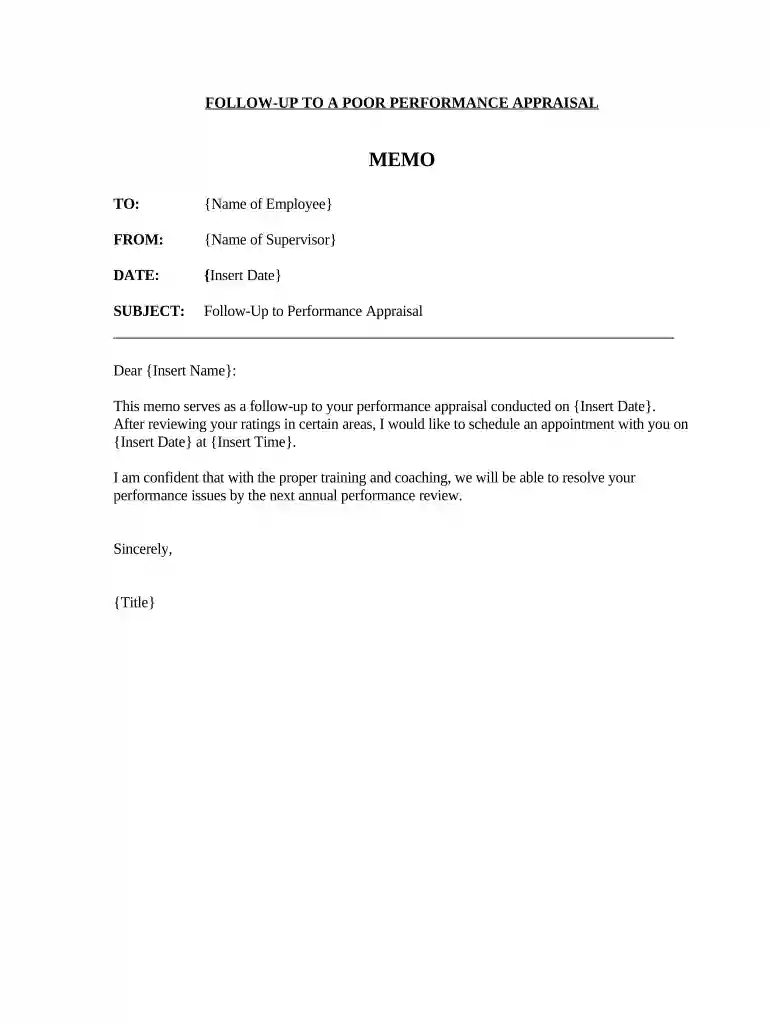
The Memo - Follow-up to a Poor Performance Appraisal is a formal document issued by a supervisor or manager aimed at addressing employee performance issues identified during a performance appraisal. This memo serves several purposes:
The memo typically addresses specific shortcomings in the employee's performance and suggests structured paths for improvement. By effectively communicating these elements, the memo fosters a supportive environment that emphasizes growth and development.
Using the Memo - Follow-up to a Poor Performance Appraisal involves several strategic steps to ensure it is effective and constructive for the employee:
Timeliness: Issue the memo shortly after the appraisal meeting to reinforce discussions and align expectations.
Personalization: Tailor the content to reflect the specific performance issues of the individual employee. Avoid generic phrases to make the employee feel valued and understood.
Constructive Tone: Maintain a supportive tone throughout the memo, focusing on improvement and development rather than solely on shortcomings.
Clear Objectives: Clearly define the goals expected from the employee, such as improvement timelines and evaluation checkpoints.
Feedback Mechanism: Encourage the employee to share their thoughts or feedback on the memo and the proposed action plan. This engagement promotes a collaborative approach and can enhance employee motivation.
By adhering to these best practices, managers can transform performance appraisal memos into effective management tools that drive positive change.
When crafting a Memo - Follow-up to a Poor Performance Appraisal, it is critical to include specific key elements that ensure clarity and utility:
Header Information: Include the date, recipient's name, sender's name, and subject line for easy identification.
Performance Issues: Provide a detailed description of the specific performance deficiencies identified during the appraisal. Use concrete examples to illustrate the issues.
Suggested Improvements:
Follow-up Plan: Specify a timeline for follow-up meetings to assess progress. Indicate when the employee can expect feedback and reassessment of their performance.
Supportive Language: Use positive, encouraging language. Reinforce that the intent of the memo is to help the employee succeed in their role.
Incorporating these elements ensures that the memo serves its purpose effectively, providing a useful framework for both the employee and management.
To exemplify the effective use of the Memo - Follow-up to a Poor Performance Appraisal, consider the following scenarios:
These examples illustrate how the memo can be customized to address unique situations while providing constructive feedback.
Completing a Memo - Follow-up to a Poor Performance Appraisal involves a systematic approach to ensure clarity and effectiveness. Here is a step-by-step guide:
Gather Information: Collect specific data related to the employee’s performance, including feedback from appraisal discussions and metrics or examples of shortcomings.
Draft the Memo: Start with a structured format, including header information, introduction of the purpose, and body content that details the identified issues and suggestions for improvement.
Review and Edit: Ensure that the memo is clear and free of jargon. It should be supportive and professional in tone.
Seek Feedback: If possible, have a colleague or supervisor review the memo for clarity and tone. This can help ensure that the message is constructive.
Distribute the Memo: Share the memo with the employee in a private setting, allowing time for discussion and questions about the content.
Follow Up: Schedule a follow-up meeting to discuss the employee’s progress and any additional support they may need.
Through these steps, the memo serves as a powerful tool for employee development and performance improvement.
At DocHub, your data security is our priority. We follow HIPAA, SOC2, GDPR, and other standards, so you can work on your documents with confidence.




The purpose of the closing a project process is to officially confirm the acceptance of the project product.Read more
Below are examples of comments that would support individual ratings. These are generic in nature and examples only.Read more
The purpose of this Guide is to help you address and resolve poor performance and ensure the smooth functioning of the Federal government.Read more


