Employee memo 2026

Get Form
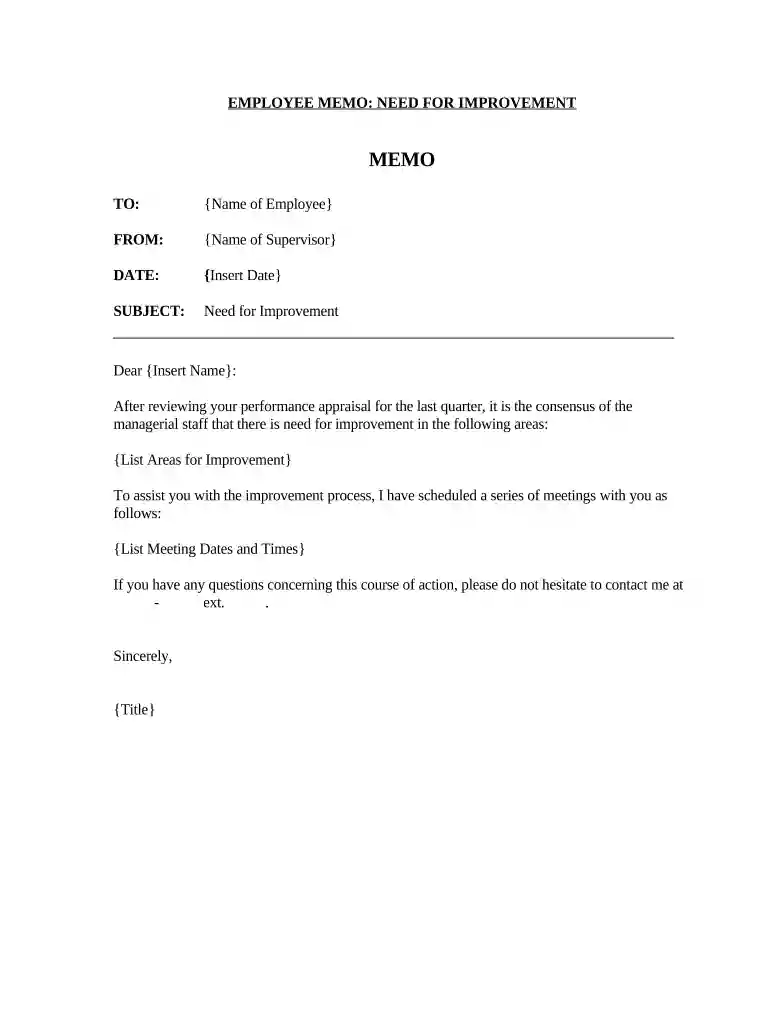
memo examples to employees Preview on Page 1

Here's how it works

01. Edit your memo examples to employees online
Type text, add images, blackout confidential details, add comments, highlights and more.

02. Sign it in a few clicks
Draw your signature, type it, upload its image, or use your mobile device as a signature pad.

03. Share your form with others
Send sample memo to employees via email, link, or fax. You can also download it, export it or print it out.

Definition and Purpose of an Employee Memo

An employee memo is a formal written communication tool used within organizations to convey important messages or updates to employees. It serves various purposes, including:

  • Performance Feedback: Often used to address performance issues or commend achievements, indicating areas of improvement based on appraisals.
  • Policy Updates: Informing employees about changes in company policies, procedures, or benefits to ensure all staff are aligned with current organizational practices.
  • Meeting Schedules: Notifying employees of upcoming meetings or events, detailing agendas and expectations to promote effective participation.

Memos are characterized by their straightforward and concise format, which allows for quick dissemination of information without the need for lengthy discussions.

How to Use an Employee Memo Effectively

Using an employee memo effectively involves adhering to specific guidelines to ensure clarity and purpose. Consider the following steps:

  1. Identify the Audience: Clearly define who the memo is intended for, ensuring that the language and tone are suitable for the audience.
  2. State the purpose clearly: Begin with a relevant subject line that outlines the memo's intent, such as "Performance Improvement Plan" or "Changes to Health Benefits".
  3. Concise and Clear Content: Use brief paragraphs and bullet points where appropriate to enhance readability. Avoid jargon that may not be familiar to all employees.
  4. Call to Action: Clearly outline any required responses or actions from the employees, such as attending a meeting or submitting feedback by a specific date.

Including contact information for follow-up questions can also streamline information requests.

Key Elements of an Employee Memo

A well-structured employee memo should contain several key elements:

  • Header: The top section should include the date, the recipient's name, the sender's name, and the subject line.
  • Opening Paragraph: A brief introduction that summarizes the purpose of the memo, setting the context for the information presented.
  • Body of the Memo: Detailed sections elaborating on the key points. This may involve addressing specific issues, outlining procedures, or explaining policies.
  • Closing: A conclusive section that reiterates any action points and may include an offer for further assistance.

Each of these components plays a critical role in ensuring the memo is informative and actionable.

Examples of Employee Memos

There are various scenarios in which an employee memo can be applicable. Below are a few examples:

  • Performance Improvement Memo: A memo that outlines specific areas a team member needs to improve, supported by feedback and scheduled check-in meetings.
  • Announcement of New Policies: A memo to notify all staff about new workplace policies regarding remote work or health and safety guidelines.
  • Leave of Absence Notification: A memo that communicates an employee's leave of absence, detailing how their responsibilities will be handled in their absence.

Each type of memo serves a specific function, and understanding these examples helps in crafting effective communications.

Legal Considerations of Employee Memos

When drafting employee memos, it is essential to understand the legal implications involved. This includes:

  • Confidentiality: Ensure that the content respects employee privacy and does not disclose sensitive information without consent.
  • Non-Discrimination: Memos should adhere to laws against discriminatory practices by ensuring that all communications are equitable and inclusive.
  • Retention Policies: Understand how long to retain copies of employee memos, as this may be subject to organizational policy or legal requirements.

Keeping these legal considerations in mind can help mitigate risks associated with miscommunication or compliance issues.

Common Formats of Employee Memos

Employee memos may vary in their format depending on organizational culture and specific needs. Common formats include:

  • Formal Memo: Adhering to business standards with a structured layout and professional language; suitable for performance-related communications.
  • Informal Memo: A more casual approach that may be used for internal announcements or team updates, allowing for a more conversational tone while still being clear and concise.

Familiarizing yourself with different formats can enhance your ability to choose the right style for each communication scenario.

Who Typically Uses Employee Memos?

Employee memos are utilized by a range of personnel within organizations, including:

  • Managers: Often the primary issuers of memos, managers use them to communicate performance feedback and departmental updates.
  • Human Resources: HR frequently employs memos to disseminate policy changes or conduct training notifications.
  • Team Leaders: Sending team-specific updates or reminders helps in ensuring all members are informed.

Understanding the typical users of memos aids in recognizing their importance as a tool for effective communication within an organization.

Tips for Writing an Effective Employee Memo

To ensure your memo communicates its intended message effectively, consider the following tips:

  • Keep it Professional: Use formal language and avoid slang or overly casual expressions.
  • Be Direct: Get straight to the point of the memo, and avoid unnecessary details that may dilute the message.
  • Proofread: Miscommunications can arise from typographical errors or unclear language. Review your memo before sending it out.

These practices contribute to clear and effective communication, which is essential in maintaining a positive workplace environment.

Conclusion

The employee memo serves as a vital communication tool within organizations, allowing for the clear and efficient dissemination of important information. By observing best practices in memo writing and understanding its various applications, organizations can enhance communication and foster a more informed workforce.

be ready to get more

Complete this form in 5 minutes or less

Get form

Got questions?

We have answers to the most popular questions from our customers. If you can't find an answer to your question, please contact us.
Contact us
Memo Example 3: A Memo Example to Students Dear Students, This is to let you know there is a mistake in the reading list for this week. The literature list you all received is from last year and is outdated. We have since made changes, and these changes are outlined below.
A memo should include the following. Heading. To. From. Date. Subject. Opening statement. Context. Call to action and task statement. Discussion. Closing.
There is a standard format for all memos, but there are four different types of memos based on their other purposes. Those memos are the response memo, meeting minutes memo, status memo, and field report memo. What are the four parts of writing a memo? A memo features four main sections.
memo | Business English a written message sent from one person or department to another within a company or organization: in a memo (to sb) In a memo to employees, the chief executive outlined plans to increase the shared costs of health-care coverage.
A memo or memorandum is a message used to communicate information within a business. You can use memos to announce new policies, remind employees of existing rules and generally keep people informed. A memo is less formal than a letter, which you can use when communicating with those outside of an organization.

Security and compliance

At DocHub, your data security is our priority. We follow HIPAA, SOC2, GDPR, and other standards, so you can work on your documents with confidence.

Learn more
ccpa2
pci-dss
gdpr-compliance
hipaa
soc-compliance
be ready to get more

Complete this form in 5 minutes or less

Get form