
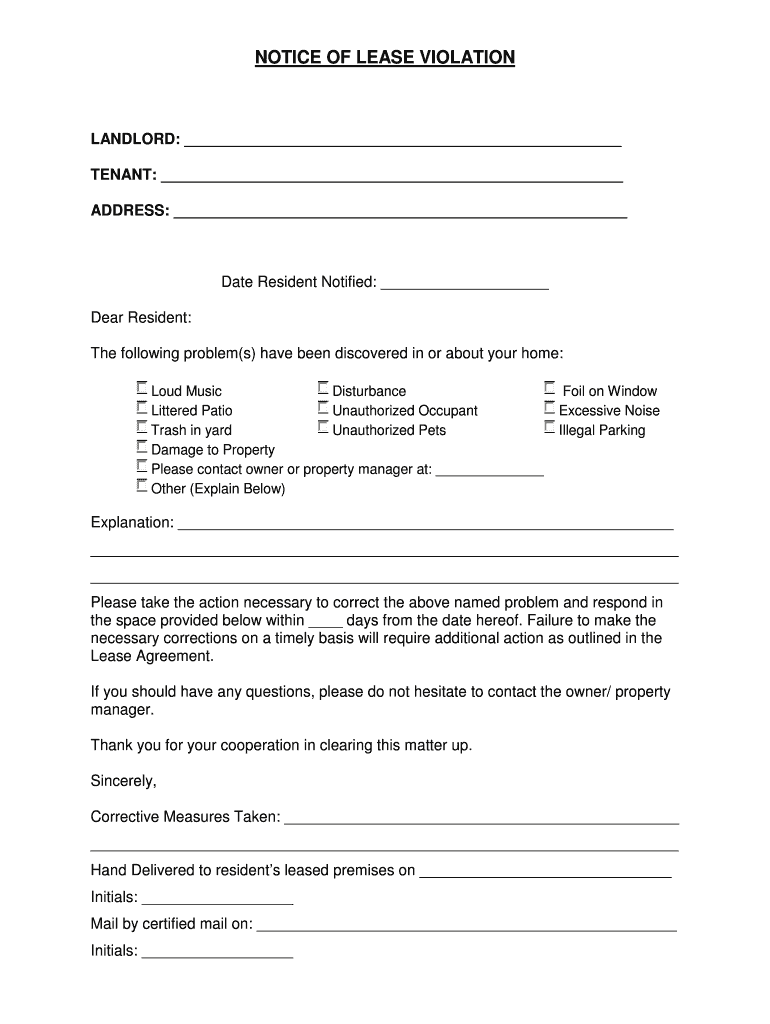







Definition and Meaning of a Lease Violation Notice
A lease violation notice is a formal document issued by a landlord or property manager to inform a tenant of specific breaches of the lease agreement. This notice serves as a written record of the issue and outlines the necessary steps the tenant must take to rectify the violation. Common reasons for issuing a notice include:
- Unauthorized Occupants: When individuals who are not listed on the lease agreement reside in the rental property.
- Noise Disturbances: Excessive noise or disruptions, such as loud music or parties, that disturb neighbors or other tenants.
- Property Damage: Actions that result in damage to the property beyond normal wear and tear.
- Non-Payment of Rent: Failure to pay rent on time as stipulated in the lease agreement.
Providing clarity on what constitutes a violation helps tenants understand their responsibilities, while also protecting landlords' rights in managing their properties.
Key Elements of a Lease Violation Notice
An effective lease violation notice includes several critical components to ensure clear communication. These elements are essential for both legal and practical purposes.
- Date of Notice: Indicates when the violation was noted and the notice was issued.
- Identification of Tenant: Clearly states the tenant's name and rental property address.
- Description of Violation: A detailed account of the violation, specifying what terms of the lease are being breached.
- Required Actions: Clear instructions on how the tenant can resolve the issue, including any necessary repairs or compliance actions.
- Timeframe for Resolution: Specifies a deadline by which the tenant must address the violation to avoid further action, such as eviction.
- Consequences of Inaction: Outlines potential next steps if the tenant fails to rectify the situation, such as legal action or termination of lease.
Including these elements in the lease violation notice helps prevent misunderstandings and serves to document the issue for potential future proceedings.
Steps to Complete a Lease Violation Notice
Creating a lease violation notice involves a series of structured steps to ensure it is comprehensive and legally sound.
- Review the Lease Agreement: Start with a thorough review of the lease document to understand the specific terms and conditions that have been violated.
- Document the Violation: Gather evidence or documentation related to the violation. This might include dates, photographs, or witness statements.
- Draft the Notice: Use a lease violation notice template to draft the document. Ensure all key elements are included as outlined above.
- Set a Reasonable Deadline: Provide an appropriate timeframe for the tenant to respond or take corrective action, typically ranging from five to fourteen days, depending on the severity of the violation.
- Deliver the Notice: Ensure that the notice is delivered according to local laws, which may require personal delivery, mailing with a return receipt, or even posting at the property.
- Keep a Record: Retain a copy of the notice and any related correspondence for your records in case further action is needed.
Following these steps ensures clarity and compliance with legal requirements, mitigating the risk of disputes.
Legal Use of the Lease Violation Notice
A lease violation notice serves both legal and practical purposes in the landlord-tenant relationship. Legally, it establishes a documented attempt to notify the tenant of the breach and provides a clear record of the issue. This can be crucial in case of eviction proceedings or disputes.
- Legal Grounds for Eviction: If a tenant does not rectify the violation within the specified timeframe, the landlord may have grounds to pursue eviction, provided that proper legal procedures have been followed.
- Adherence to Local Laws: Different states have various requirements regarding the content and delivery of lease violation notices. Landlords should ensure compliance with local regulations to avoid potential legal issues.
- Dispute Resolution: The notice can serve as a stepping stone for mediation if disputes arise between landlords and tenants regarding the lease agreement and its terms.
Understanding the legal implications of issuing a lease violation notice is vital for landlords to protect their interests while also upholding tenants' rights.
Who Typically Uses a Lease Violation Notice?
A variety of parties may utilize lease violation notices in managing rental properties:
- Landlords: Property owners who rent out residential or commercial spaces often use lease violation notices to address tenant non-compliance.
- Property Managers: Professionals responsible for managing rental properties on behalf of landlords regularly issue these notices as part of their duties.
- Real Estate Agents: Agents may assist landlords and property managers in drafting and delivering lease violation notices to maintain property standards and tenant compliance.
- Tenants: In some cases, tenants may issue notices to landlords for lease violations, such as failure to maintain the property or address health and safety concerns.
Understanding the roles of these various parties can help streamline communication and resolution processes in rental agreements.




