




01. Edit your form online
Type text, add images, blackout confidential details, add comments, highlights and more.

Type text, add images, blackout confidential details, add comments, highlights and more.

Draw your signature, type it, upload its image, or use your mobile device as a signature pad.

Send it via email, link, or fax. You can also download it, export it or print it out.
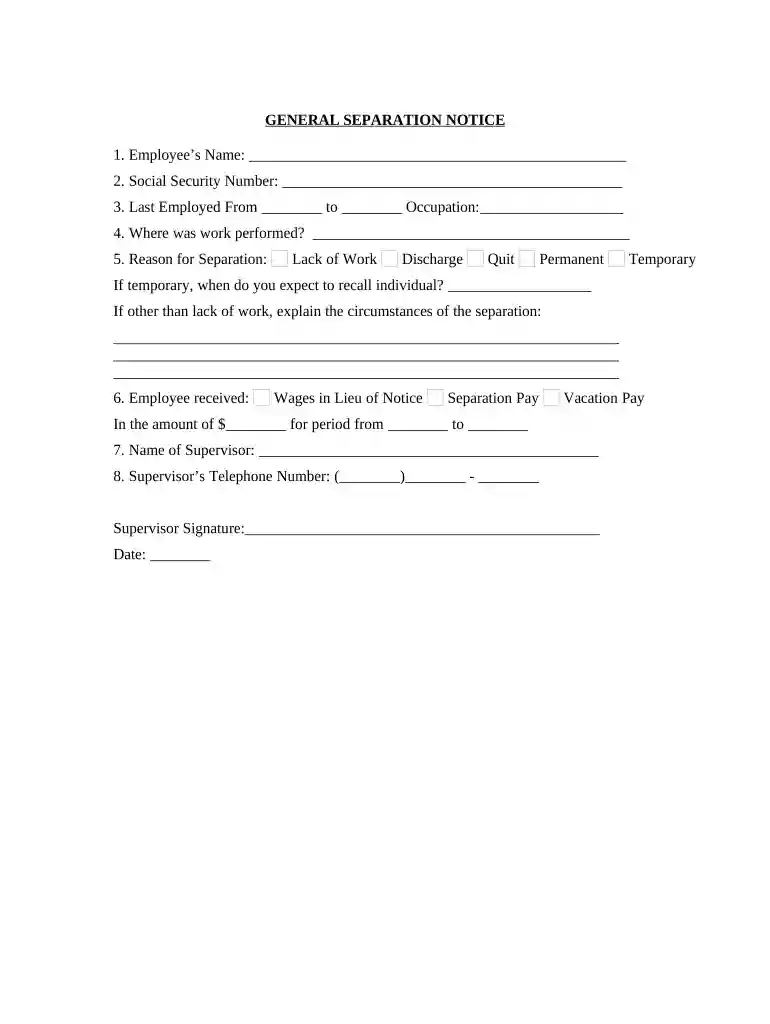
A separation notice is an official document used to formally communicate the details regarding an employee's termination from a company, whether voluntary or involuntary. Typically issued by employers, this notice serves multiple purposes, including recording the circumstances of an employee's departure, establishing eligibility for unemployment benefits, and fulfilling legal obligations under state employment laws.
In essence, the separation notice captures several key details:
Understanding the separation notice is critical for both employers and employees to ensure compliance with legal standards and provide clarity in the termination process.
Proper usage of the separation notice is essential for documenting employment terminations effectively. To utilize this form, follow these steps:
Fill in Employee Information: Enter the employee’s name, address, and identification details clearly. Accurate information will ensure proper processing and reduce errors.
Indicate Employment Dates: Clearly state the start date and end date of employment. This information is crucial for calculating eligibility for re-employment services or benefits.
Document the Reason for Separation: Specify whether the termination was voluntary (e.g., resignation) or involuntary (e.g., layoff or termination for cause). Providing an accurate reason can help prevent disputes regarding unemployment claims.
Detail Final Compensation: Include any financial entitlements that the employee will receive upon departure, such as severance pay, accrued vacation pay, or bonuses. This transparency is important for both the employer and the employee.
Distribution: Provide a copy of the completed separation notice to the employee and retain a copy for company records. This ensures that both parties are aware of the terms of the separation, fostering clearer communication.
Adhering to these steps can help organizations navigate the complexities of employee separation while maintaining legal compliance and fostering goodwill.
The separation notice comprises several critical elements, each serving a specific purpose in documenting the termination process:
These components are foundational for producing an effective separation notice, aiding in compliance with state regulations and protecting the rights of both parties involved.
Understanding the terminology associated with a separation notice is vital for navigating employment law and the implications of separation. Key terms include:
Being familiar with these terms assists both employers and employees in understanding their rights and responsibilities during the termination process.
The legal implications of a separation notice are significant, as it serves as an official record of the employment termination process. Several legal aspects to consider include:
Understanding the legal framework surrounding separation notices aids in mitigating risks and ensuring compliance with employment laws.
At DocHub, your data security is our priority. We follow HIPAA, SOC2, GDPR, and other standards, so you can work on your documents with confidence.




Separation Notices do not have to be given to any employee who has been in your employ for less than a week or who will be recalled within seven days.Read more
This notice shall be used where the employer-employee relationship is terminated and shall not be used when employer-filed claims (partial) or mass separation (Read more


