






Definition and Meaning of Telephone Reference Check
A telephone reference check is a critical tool used by employers to verify the qualifications and past work experience of a job candidate. This process involves contacting individuals listed by the applicant—often former supervisors or colleagues—to gather insights regarding the applicant's performance, skills, work ethic, and overall suitability for the position being applied for. This method is particularly valuable as it allows employers to gain firsthand accounts of how a candidate performs in a professional setting.
During a telephone reference check, standard questions may revolve around the applicant's job responsibilities, reliability, ability to work in a team, strengths and weaknesses, and any relevant achievements. The responses can significantly inform hiring decisions by providing context that a resume or job interview might not fully capture. Given the competitive nature of job markets, conducting thorough reference checks is essential for ensuring a good match between the candidate and the company's requirements.
Steps to Complete the Telephone Reference Check
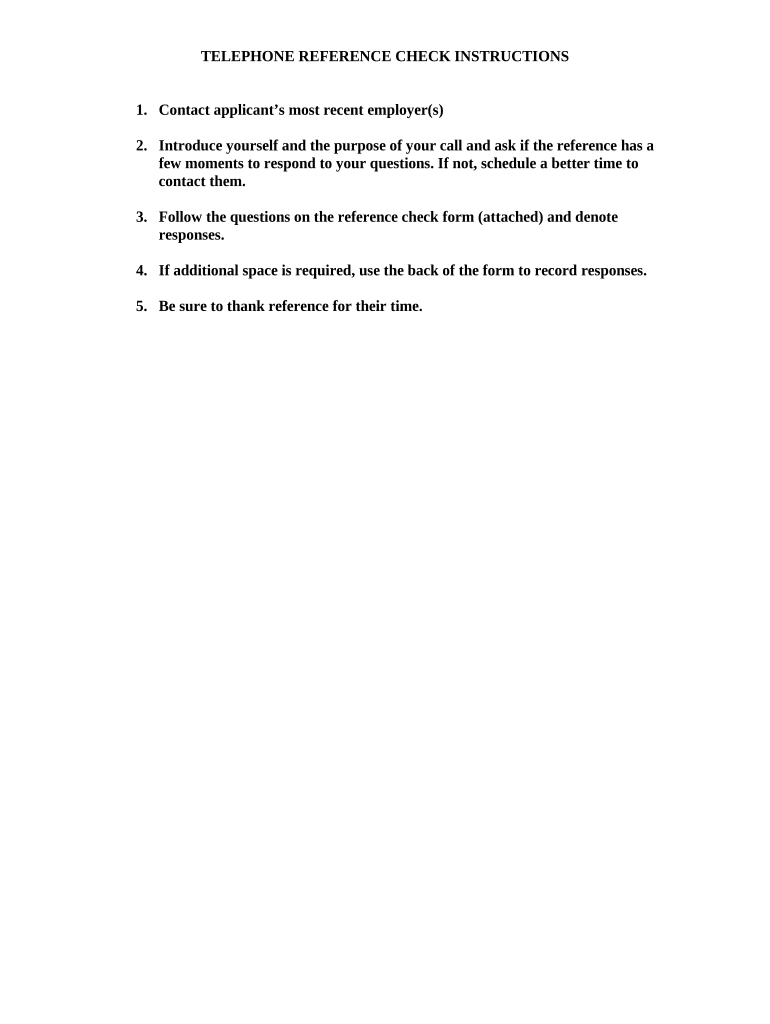
Completing a telephone reference check involves a structured approach that ensures all pertinent information is collected effectively. Here are the key steps:
-
Prepare Questions
Draft a list of specific questions that focus on the applicant’s skills, experiences, and behavior in a work environment. This could include inquiries about their strengths, areas for improvement, and work habits. -
Contact References
Reach out to the applicant’s references via phone. It’s important to introduce yourself and explain the context of the call. Using the reference’s need for confidentiality, stress the significance of their feedback. -
Conduct the Interview
Ask your prepared questions while remaining open to follow-up queries based on the reference's responses. This conversational technique can yield more detailed insights. -
Record Responses
Document the responses accurately to maintain an objective overview of the feedback received. Note key points or quotes that could be useful for discussions later. -
Express Gratitude
Thank the reference for taking the time to provide their input. This not only shows appreciation but also helps foster professional relationships. -
Evaluate Information
After gathering information from all references, compare the feedback with the candidate’s qualifications and fit for the role. This assessment can help support or contest the applicant's assertions during the interview process.
Important Terms Related to Telephone Reference Check
Familiarity with terminology associated with telephone reference checks can enhance understanding of the process. Here are some vital terms:
- Reference: An individual who can speak to a candidate’s qualifications, character, and previous job performance. Typically, these are former employers or colleagues.
- Confidentiality: The assurance that information shared during a reference check will be kept private, fostering an open dialogue.
- Verification: The act of confirming information provided by an applicant against what references report.
- Feedback: The input received from references concerning an applicant's skills and behavior.
- Hiring Decision: The conclusion reached by employers based on insights gathered from various assessment methods, including reference checks.
Understanding these terms can help streamline the process and ensure that both the individuals conducting reference checks and the candidates involved are on the same page regarding expectations and outcomes.
Why Should You Conduct a Telephone Reference Check?
Conducting a telephone reference check serves several essential functions in the hiring process, significantly bolstering the validity of candidate assessments. Key reasons for implementing this practice include:
-
Confirmation of Information: A reference check can verify the accuracy of the information provided in the applicant's resume and interviews, such as job titles and dates of employment.
-
Insight into Work Ethic: References can provide subjective evaluations of the applicant's work habits, reliability, and effectiveness on the job, giving potential employers a clearer picture of how the candidate might perform.
-
Identification of Red Flags: Unplanned references often reveal discrepancies or potential concerns, helping hiring managers make more informed decisions and weeding out candidates who may not be a good fit.
-
Cultural Fit Assessment: Information gathered from references can help determine if a candidate aligns with the company's culture, values, and team dynamics, thus contributing to long-term retention.
-
Risk Reduction: A thorough reference check can decrease the risk of hiring individuals who may pose challenges, such as poor performance or conflicts within the workplace.
Employing telephone reference checks can ultimately strengthen the hiring process, ensuring that organizations make confident and informed decisions.
Examples of Using the Telephone Reference Check
Telephone reference checks can take various forms depending on the nature of the job and the information required. Here are several practical scenarios illustrating this process:
-
Job Performance Evaluation: If a candidate applies for a management position, you might ask their previous supervisor about their leadership style, ability to resolve conflicts, and effectiveness in managing a team. For example, a question could be, "Can you describe a situation where the candidate successfully led a project team?"
-
Cultural Fit Assessment: For a role that heavily emphasizes teamwork, you might inquire about how the candidate interacted with peers and whether they contributed positively to team dynamics. A potential question could be, "How would you describe the candidate’s ability to collaborate with colleagues?"
-
Work Ethic and Reliability: Inquiring about the candidate's attendance and punctuality is critical, especially for roles requiring a high level of commitment. A relevant question could include, "How often did the candidate meet deadlines, and can you provide an example of their reliability in your organization?"
By tailoring your questions to specific job considerations, you can extract valuable insights that influence hiring decisions effectively.