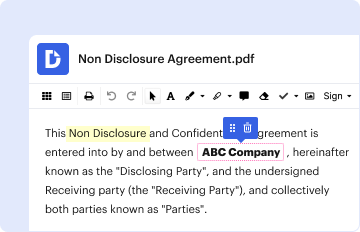
Type text, add images, blackout confidential details, add comments, highlights and more.
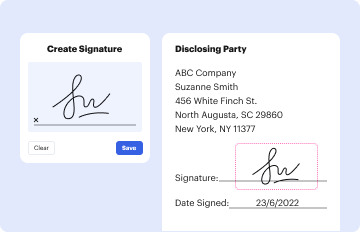
02. Sign it in a few clicks
Draw your signature, type it, upload its image, or use your mobile device as a signature pad.
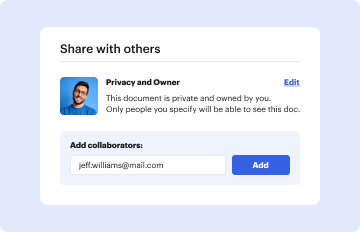
03. Share your form with others
Send tennessee quit claim deed requirements via email, link, or fax. You can also download it, export it or print it out.
How to use or fill out Quitclaim Deed by Two Individuals to Husband and Wife - Tennessee with our platform
Ease of Setup
DocHub User Ratings on G2
Ease of Use
DocHub User Ratings on G2
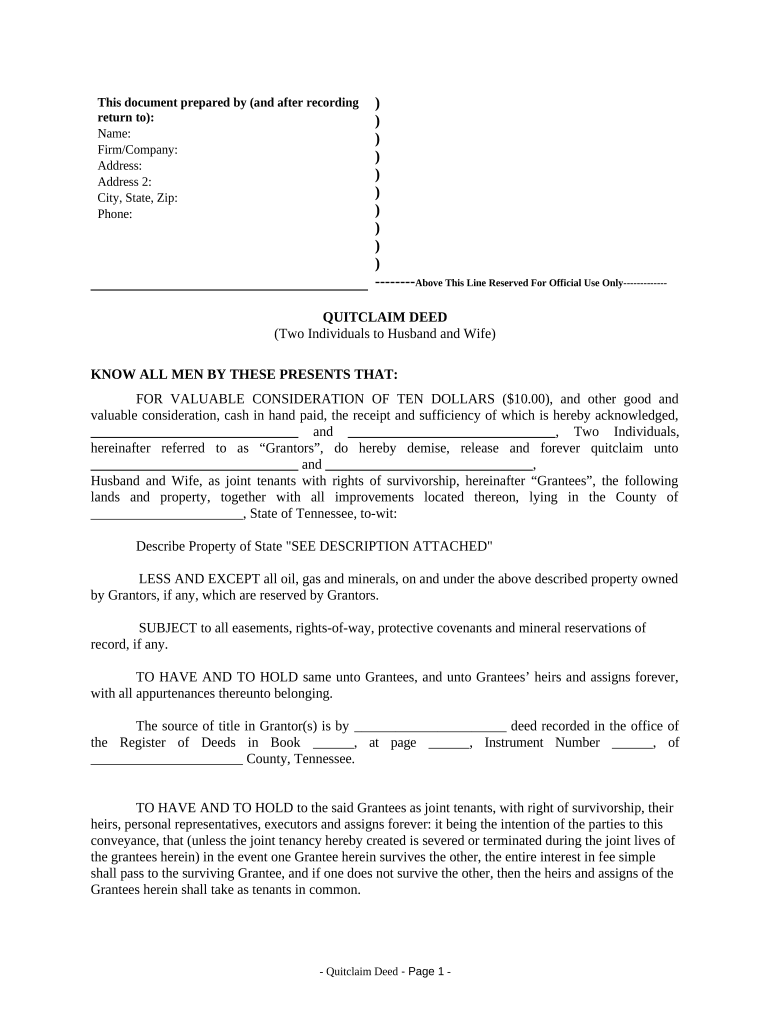
Click ‘Get Form’ to open the Quitclaim Deed in the editor.
Begin by entering the names of the Grantors (the individuals transferring the property) in the designated fields. Ensure that both names are clearly typed.
Next, fill in the Grantees' names (the husband and wife receiving the property). This section is crucial as it establishes ownership.
In the property description section, either type a brief description of the property or attach a detailed document if necessary. Make sure to include any relevant details about easements or reservations.
Complete the source of title section by indicating how the Grantors acquired their interest in the property, including deed information.
Finally, ensure all parties sign and date where indicated. Don’t forget to include notary information for validation.
Start using our platform today to easily complete your Quitclaim Deed for free!
Fill out Quitclaim Deed by Two Individuals to Husband and Wife - Tennessee online It's free
General warranty deeds provide the most legal protection for the Grantee when conveying property interest. The Grantor warrants to the Grantee that they have equitable legal title and there are no other claims to the property.
What are quitclaim deeds most often for?
A quitclaim deed is a simple tool for transferring interest in a property without guaranteeing that the grantor has valid ownership. Its most commonly used in non-sale situations, such as transfers between family members, or to update or clarify ownership titles.
What are the disadvantages of quitclaim?
The big drawback is it doesnt offer guarantees. The person getting the property takes it as is. They risk the seller not really owning the property. This makes quitclaim deeds less ideal for most real estate deals. Warranty deeds offer more protection.
Who benefits the most from a quitclaim deed?
The quitclaim deed simply transfers any interest they may have to the other party. Because of the lack of title guarantees, quitclaim deeds are most often used to transfer property between two parties who know and trust each other, such as family members.
Who can prepare a quit claim deed in Tennessee online?
We provided quitclaim services online. An experienced Tennessee divorce family law attorney will prepare your quitclaim deed and all related documents for you. We also provide you with detailed instructions.
add spouse to deed
Tennessee quit claim deed form PDFQuitclaim deed Tennessee formQuit claim deed loopholesQuit Claim deed tn costRepercussions of a quit claim deedHow long does a quitclaim deed give you ownershipQuit Claim Deed Shelby County TennesseeQuit claim deed Tennessee divorce
Security and compliance
At DocHub, your data security is our priority. We follow HIPAA, SOC2, GDPR, and other standards, so you can work on your documents with confidence.
Sole Ownership in Tennessee Tennessee does not recognize community property, homestead, or dower and curtesy. This means that spouses can buy, sell, or own property without the involvement of the non-owner spouse. The only exception to this is when using a deed of trust.
How strong is a quitclaim deed?
In conclusion, a quitclaim deed can help transfer property ownership in California, especially among family members or in situations where trust is established. However, its important to understand that this type of deed offers no guarantees about the propertys title.
What are the requirements for a quitclaim deed in Tennessee?
Your completed Tennessee quitclaim deed should include the following details: The grantors and grantees names and addresses. A legal description of the property. The preparers name and address. The amount of consideration exchanged. The grantors signature.
adding someone to a deed
Register of Deeds Filing Fees
$0.50 - Each Page Exceeding Ten Pages (a husband and wife are considered two Including Warranty Deeds, Quit Claim Deeds, Deeds of Trust, Amendments
Cookie consent notice
This site uses cookies to enhance site navigation and personalize your experience.
By using this site you agree to our use of cookies as described in our Privacy Notice.
You can modify your selections by visiting our Cookie and Advertising Notice.