Legal Last Will and Testament Form with All Property to Trust called a Pour Over Will - South Dakota 2026

Get Form
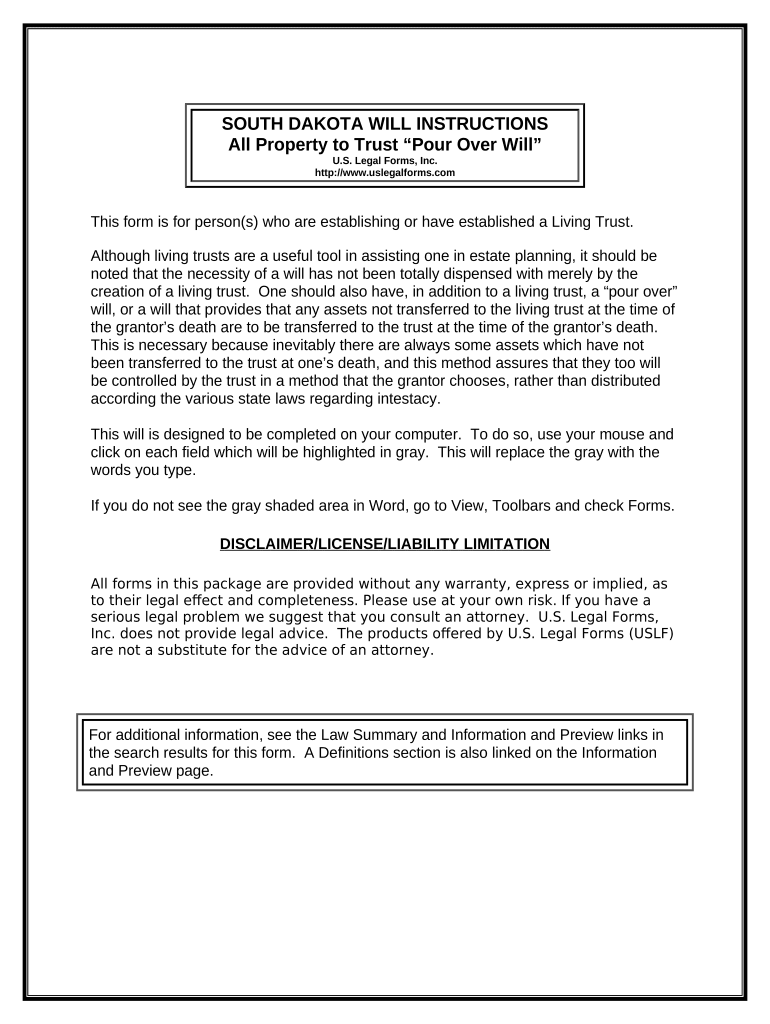
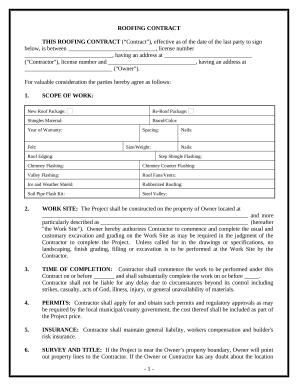
last will and testament form south dakota Preview on Page 1

Here's how it works

01. Edit your last will and testament form south dakota online
Type text, add images, blackout confidential details, add comments, highlights and more.
02. Sign it in a few clicks
Draw your signature, type it, upload its image, or use your mobile device as a signature pad.
03. Share your form with others
Send south dakota will forms via email, link, or fax. You can also download it, export it or print it out.

How to use or fill out Legal Last Will and Testament Form with All Property to Trust called a Pour Over Will - South Dakota

Form edit decoration
9.5
Ease of Setup
DocHub User Ratings on G2
9.0
Ease of Use
DocHub User Ratings on G2
  1. Click ‘Get Form’ to open it in the editor.
  2. Begin by entering your full name and county of residence at the top of the form. This identifies you as the testator.
  3. In Article One, specify the date of your Living Trust and its name. This section conveys all property not already transferred to the trust.
  4. For Article Two, list any debts or expenses that should be paid from your estate. Ensure clarity on who will handle these payments.
  5. If applicable, complete Article Three by indicating if you have minor children and naming a guardian for them.
  6. In Article Four, appoint a Personal Representative who will manage your estate according to your wishes.
  7. Review Articles Five through Seven for waivers and powers granted to your Personal Representative, ensuring they align with your intentions.
  8. Finally, sign the document in front of witnesses as required by South Dakota law, ensuring all signatures are completed correctly.

Start using our platform today to easily fill out your Pour Over Will for free!

be ready to get more

Complete this form in 5 minutes or less

Get form

Got questions?

We have answers to the most popular questions from our customers. If you can't find an answer to your question, please contact us.
Contact us
Pour-over wills are almost always used in conjunction with a living trust. A living trust is a special legal arrangement between the trustor, their beneficiaries, and a designated successor trustee.
Some clients ask us if a will can override an irrevocable trust, and thats a simple NO. A trust can replace a will in some circumstances, meaning it can serve the same purposes of a will after death.
Assets undergoing a pour-over must still undergo probate, meaning they arent entirely shielded from court proceedings. However, this may be a minor inconvenience if the peace of mind it provides outweighs the potential cost of probate.
A pour-over will is an invaluable document for anyone who has created a living trust as part of their estate plan. Its a specialized last will and testament, designed to catch assets that have not been retitled or transferred into your living trust, pouring them into the trust upon your death.
For smaller estates, South Dakota provides a simplified process via small estate affidavits. If youre a legal heir, you can claim and transfer both real and personal property without undergoing the formal probate process by filing an affidavit asserting your entitlement to a particular asset or real property.

Security and compliance

At DocHub, your data security is our priority. We follow HIPAA, SOC2, GDPR, and other standards, so you can work on your documents with confidence.

Learn more
ccpa2
pci-dss
gdpr-compliance
hipaa
soc-compliance

People also ask

When settling an estate, trust assets are distributed to beneficiaries as the grantor instructed. A pour-over will covers assets not placed in the trust by the grantor, whether accidentally or intentionally, before death. It acts as a safety net.
There is no right answer in regards to whether a Living Trust is better than a Will, or vice versa. Each individual should establish their own preference based on their personal circumstances. Some may choose a Living Trust over a Will from the standpoint of removing assets from the probate process.

Related links