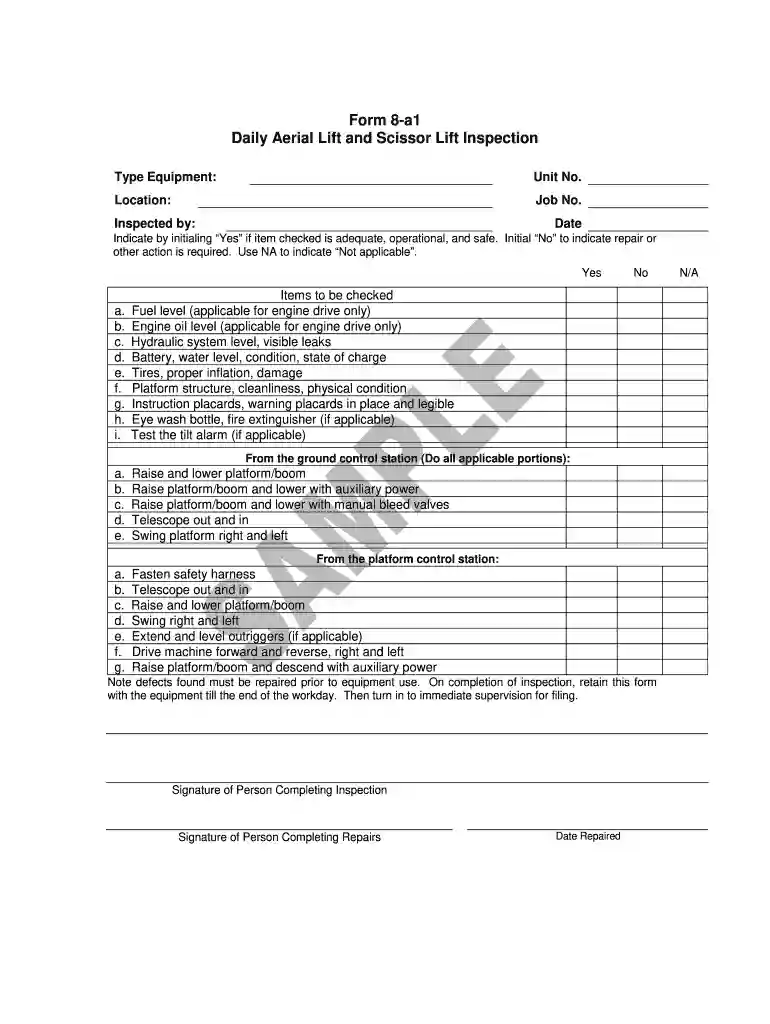
Scissor lift inspection form 2026

Get Form
genie scissor lift annual inspection form Preview on Page 1

Here's how it works

01. Edit your genie scissor lift annual inspection form online
Type text, add images, blackout confidential details, add comments, highlights and more.

02. Sign it in a few clicks
Draw your signature, type it, upload its image, or use your mobile device as a signature pad.

03. Share your form with others
Send genie lift annual inspection via email, link, or fax. You can also download it, export it or print it out.

Understanding the Scissor Lift Inspection Form

The scissor lift inspection form is a crucial document used to ensure the safety and operational effectiveness of scissor lifts before use. This form captures various inspection components that are vital for maintenance and regulatory compliance. Through thorough inspections, potential hazards can be identified, helping to mitigate risks associated with lift operations.

Key Elements of the Scissor Lift Inspection Form

The inspection form includes essential elements that need to be evaluated for every lift. The key components typically covered are:

  • Operational Checks: Inspectors evaluate if the lift operates smoothly, checking systems such as hydraulic functionality and battery status.
  • Safety Features: Review safety components including emergency stop buttons, safety gates, and guardrails.
  • Fluid Levels: Assessment of hydraulic fluid, fuel, and coolant levels is critical in determining operational readiness.
  • Physical Condition: Inspectors should check for wear, corrosion, and structural integrity to identify any potential issues that could impair safety or functionality.
  • Electrical Systems: Verify that all electrical components are functioning correctly, including switches and indicator lights.

Each of these components plays a critical role in ensuring that the scissor lift is safe for operation. Failure to assess these elements thoroughly can lead to accidents and injuries.

How to Complete the Scissor Lift Inspection Form

Completing the inspection form requires a methodical approach to ensure all necessary checks are performed.

  1. Gather Required Tools: Before starting the inspection, collect tools such as a checklist, pen, and any additional equipment needed for testing.
  2. Review Documentation: Understand the specific form being used and any previous inspection reports for context on the lift’s operational history.
  3. Perform Walkaround Inspection: Conduct a physical inspection of the scissor lift from the ground up, documenting the condition of each part noted on the form.
  4. Complete Each Section of the Form: As you assess each component, mark whether it meets safety standards or requires repairs. Be specific in your notes regarding any issues found.
  5. Obtain Necessary Signatures: After completing the inspection, ensure that you and any repair personnel sign the form to acknowledge the findings and required actions.

This structured approach helps in maintaining thorough records, which are often required for regulatory compliance.

Common Compliance Standards and Regulations

In the United States, scissor lift inspections must adhere to guidelines set by organizations like OSHA (Occupational Safety and Health Administration). Key compliance standards include:

  • Regular Inspection Frequency: Standard guidance suggests that inspections must occur before each use and regularly scheduled maintenance inspections should be conducted to ensure ongoing safety.
  • Documentation: Properly filled inspection forms serve as official documentation of compliance with safety regulations.
  • Training Requirements: Operators must be trained not only in how to use the equipment but also in identifying safety concerns during inspections.

Understanding these standards is vital for ensuring that your operation is compliant with local and federal laws, thereby reducing liability.

Importance of Interactive Features in Scissor Lift Forms

Utilizing an interactive scissor lift inspection form can enhance the efficiency of inspections. Features that may be beneficial include:

  • Fillable Fields: This allows inspectors to quickly complete required fields, minimizing the chances of oversight.
  • Digital Signatures: Electronic signatures streamline processes and ensure documentation is quickly available when needed.
  • Automated Reminders: Digital platforms can send reminders for inspection schedules, ensuring compliance and promoting safety.

Such features contribute to a more modern and efficient approach to lift inspections, ultimately supporting workplace safety.

Insights on Documentation and Record Keeping

Proper documentation of inspections is essential for multiple reasons:

  • Accountability: Completed inspection forms hold individuals accountable for conducting necessary checks.
  • Historical Tracking: Records allow for tracking the maintenance history of the scissor lift, helping identify recurring issues or maintenance needs.
  • Legal Protection: In the event of an incident, having well-documented inspection records can provide legal protection by demonstrating due diligence.

It's essential to store these documents securely, as they may need to be referenced during audits or investigations.

Addressing Common Issues Observed During Inspections

During scissor lift inspections, certain recurring issues may arise. Identifying common problems includes:

  • Worn Components: Regularly check for wear and replace components like tires or hydraulic hoses that could affect safety.
  • Leaks: Inspect for fluid leaks which may indicate the need for immediate repairs.
  • Malfunctioning Controls: Test the lift’s controls to ensure all systems respond as expected.

Regular training and communication about these issues among personnel can foster a safety-first culture, reducing the potential for incidents.

Conclusion on Scissor Lift Inspection Processes

While a thorough understanding of the scissor lift inspection form is essential, consistently applying structured inspection methods and documenting findings ensures the safety and compliance of lift operations. Adhering to established protocols supports a safer workplace and promotes confidence in lift operations.

be ready to get more

Complete this form in 5 minutes or less

Get form

Got questions?

We have answers to the most popular questions from our customers. If you can't find an answer to your question, please contact us.
Contact us
2:18 4:00 On make sure that your key is switched over to the ground controls. And not the basket. Controls. WeMoreOn make sure that your key is switched over to the ground controls. And not the basket. Controls. Were going to push this up which will lower the pothole bars down from the base of the. Machine.
An inspection checklist, when used properly, is an assurance that a particular piece of equipment has been inspected. As each item on the checklist is ticked off, the person doing the inspection is verifying that each component of the equipment is in correct working order.
Daily electric scissor lift inspections typically include: Checking for visible leakages (oil or battery fluids) or foreign objects. Looking for dents, weld or metal cracks or other visible damage. Checking the machine decals and placards to be sure they are clean and legible.
In addition to daily visual checks, the following inspections should be carried out monthly: Functionality test of safety features, such as the foot protection safety edge and emergency stop button. Inspection of cables and connectors for damage.

Security and compliance

At DocHub, your data security is our priority. We follow HIPAA, SOC2, GDPR, and other standards, so you can work on your documents with confidence.

Learn more
ccpa2
pci-dss
gdpr-compliance
hipaa
soc-compliance
be ready to get more

Complete this form in 5 minutes or less

Get form