

Notice of Default in Payment of Rent as Warning Prior to Demand to Pay or Terminate for Nonresidential or Commercial Property - District of Columbia 2025

Get Form
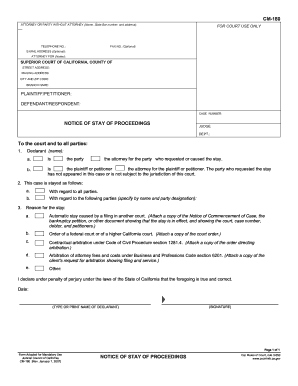
Notice of Default in Payment of Rent as Warning Prior to Demand to Pay or Terminate for Nonresidential or Commercial Property - District of Columbia Preview on Page 1

Here's how it works

01. Edit your form online
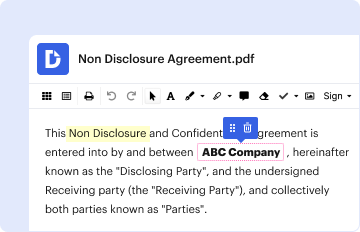
Type text, add images, blackout confidential details, add comments, highlights and more.
02. Sign it in a few clicks
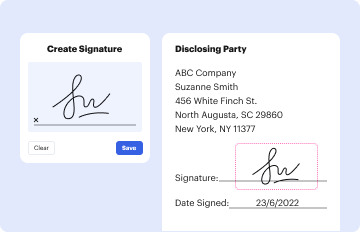
Draw your signature, type it, upload its image, or use your mobile device as a signature pad.
03. Share your form with others
Send it via email, link, or fax. You can also download it, export it or print it out.

How to use or fill out Notice of Default in Payment of Rent as Warning Prior to Demand to Pay or Terminate for Nonresidential or Commercial Property - District of Columbia

Form edit decoration
9.5
Ease of Setup
DocHub User Ratings on G2
9.0
Ease of Use
DocHub User Ratings on G2
  1. Click ‘Get Form’ to open it in the editor.
  2. Begin by entering the tenant's name(s) in the designated 'TO' field. This ensures that the notice is correctly addressed.
  3. In the 'FROM' section, input your name as the landlord along with any relevant contact information.
  4. Fill in the address of the leased premises where the tenant resides. This is crucial for clarity and legal purposes.
  5. Specify the month for which rent has not been paid in the blank space provided. This highlights the specific payment issue.
  6. Indicate the due date for rental payments in the appropriate field, reinforcing when payments are expected according to your lease agreement.
  7. List all amounts due, including rent, late charges, and any other fees. Ensure accuracy to avoid disputes.
  8. Sign and date the notice at the bottom, confirming its authenticity before delivery.
  9. Complete the proof of delivery section by indicating how you delivered this notice to ensure proper documentation.

Start using our platform today to streamline your document editing and ensure timely communication with tenants!

be ready to get more

Complete this form in 5 minutes or less

Get form

Got questions?

We have answers to the most popular questions from our customers. If you can't find an answer to your question, please contact us.
Contact us

Upload your Notice of Default in Payment of Rent as Warning Prior to Demand to Pay or Terminate for Nonresidential or Commercial Property - District of Columbia to DocHub (once you’ve created an account for this). If you need to fill out fields in it, use appropriate tools from the upper pane. For example, add Signature Fields, assign each to a particular person, and click on Sign → Request signatures from others. Change your message for your recipients and click Send Request. You can also send your form by fax or as a Signing link instead of using email (you’ll find these options by navigating to the Menu → Send)

If you are searching for a state-specific Notice of Default in Payment of Rent as Warning Prior to Demand to Pay or Terminate for Nonresidential or Commercial Property - District of Columbia sample, you can find it in our DocHub Forms & Templates catalog. Use the search field, key in your form’s name, and search through the results for your state. You can also filter out irrelevant results while searching our catalog by groups.

In most states, you are allowed to evict tenants without a motive, meaning a no-cause notice to vacate would be accepted. Certain state laws, such as Californian law, restrict tenant evictions, and a no-cause notice to vacate is not accepted until you give a specific reason.
Many courts allow you to stop the eviction if you pay all rent owed, plus late fees and court costs, before the eviction date. Some jurisdictions will even stay the eviction (pause it) if you file a motion or an Order to Show Cause, which asks the judge to give you time to catch up.
The statute of limitations sets an effective deadline for landlords to pursue unpaid rent payments through the court system. The specific timeframe varies by state but generally ranges from 3 to 6 years. Depending on the state, the period could last up to 10 years.
be ready to get more

Complete this form in 5 minutes or less

Get form