






Definition and Purpose of Maryland State Tax Form
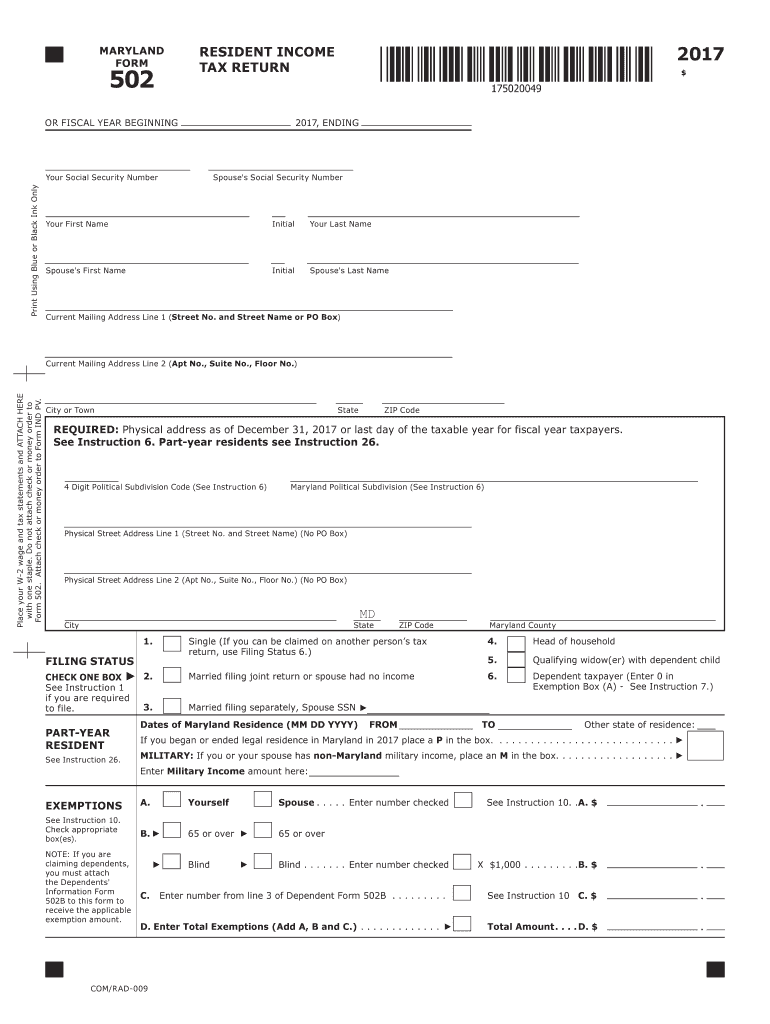
Maryland State Tax Form 502 for 2017 is a document used by residents of Maryland to file their state income tax returns. The form gathers essential information such as personal details, income levels, and deductions to compute the tax liability for the year 2017. It includes sections for reporting various income sources, including wages, dividends, and rental income, and allows taxpayers to claim against common exemptions and deductions. Filing Form 502 is necessary for determining whether residents owe additional taxes to the state or are eligible for a refund. This form ensures compliance with Maryland's tax regulations and helps in maintaining accurate tax records.
How to Use the Maryland State Tax Form
To properly utilize the Maryland State Tax Form 502 for 2017, taxpayers must first gather all pertinent financial information, including W-2s, 1099s, and records of any other income received throughout the year. The form is designed to guide users through each section step-by-step, beginning with filing status and personal identification details. Taxpayers should carefully follow instructions related to income reporting, deductions, and credits to ensure accuracy. After completing the form, users must determine their tax liability by referencing the Maryland state tax tables for 2017. Finally, the completed form can be submitted either electronically via the state's e-file system or through traditional mail to the Maryland Comptroller's office.
Obtaining the Maryland State Tax Form
Maryland residents can obtain the 2017 State Tax Form 502 from multiple sources. It is available for download directly from the Maryland Comptroller's website, ensuring immediate access in a printable PDF format. Alternatively, residents can pick up a physical copy at public libraries and post offices across Maryland. Taxpayer assistance centers, located throughout the state, may also provide copies of the form. Additionally, tax preparation software platforms like TurboTax often include downloadable forms within their systems to facilitate easy filing.
Steps to Complete Maryland State Tax Form
Completing the Maryland State Tax Form 502 for 2017 involves several steps:
- Gather Information: Start by collecting all necessary documents such as W-2s, 1099s, and receipts for tax-deductible expenses.
- Enter Personal Information: Fill in your name, address, Social Security Number, and filing status at the top of the form.
- Report Income: Accurately record various income streams, using physical and electronic tax documents as references.
- Calculate Deductions and Exemptions: Input eligible deductions and exemptions, including retirement contributions and educational expenses.
- Determine Tax Liability: Calculate using the tax tables provided with the form to ascertain any owed amounts or eligible refunds.
- Submit the Form: Once completed, the form can be submitted electronically or mailed to the Maryland Comptroller's office.
Key Elements of the Maryland State Tax Form
The Maryland State Tax Form 502 for 2017 is comprised of several critical elements, including:
- Filing Status: Selection influences tax rates and eligibility for certain credits.
- Income Details: Comprehensive reporting of earnings from wages, interest, dividends, and capital gains.
- Deductions and Exemptions: Includes standardized and itemized deductions alongside personal exemptions.
- Tax Computation: Utilizes state tax rates to determine the precise tax due or refunds due to you.
- Payment and Refund Sections: Allows for direct deposit of refunds or electronic funds withdrawal.
Filing Deadlines and Important Dates
For the 2017 tax year, Maryland State Tax Form 502 was due on April 15, 2018. If this date fell on a weekend or holiday, the deadline extended to the next business day. Taxpayers who could not meet the deadline could apply for a six-month extension, provided they submit the request by the original due date. An extension only provided additional time to file, not to pay any taxes owed; thus, an estimated payment was required along with the extension request to avoid interest and penalties.
Legal Use and Compliance
The Maryland State Tax Form 502 for 2017 complies with state legislation and must be accurately completed and submitted to avoid legal issues. Compliance means providing truthful answers and supporting documentation where necessary. Any omissions or inaccuracies can lead to penalties or audits by the Maryland Comptroller's office. Taxpayers must ensure they are using the 2017 version of the form when reporting income for that specific year. Failure to comply with state tax laws could result in fines or further legal action by tax authorities.
Penalties for Non-Compliance
Failure to file the Maryland State Tax Form 502 for 2017 on time or accurately can result in several penalties, including:
- Late Filing Penalty: Charged if the form is submitted beyond the stipulated deadline without an approved extension.
- Late Payment Penalty: Applied when taxes owed are not paid by the due date.
- Accuracy-Related Penalty: Charged for underreporting income or overstating deductions due to negligence.
Taxpayers are encouraged to seek extensions if necessary to avoid such penalties and to ensure the complete accuracy of all submitted information.