Type text, add images, blackout confidential details, add comments, highlights and more.
02. Sign it in a few clicks
Draw your signature, type it, upload its image, or use your mobile device as a signature pad.
03. Share your form with others
Send it via email, link, or fax. You can also download it, export it or print it out.
How to use or fill out Letter to Lienholder to Notify of Trust - Connecticut with DocHub
Ease of Setup
DocHub User Ratings on G2
Ease of Use
DocHub User Ratings on G2
Click ‘Get Form’ to open it in the editor.
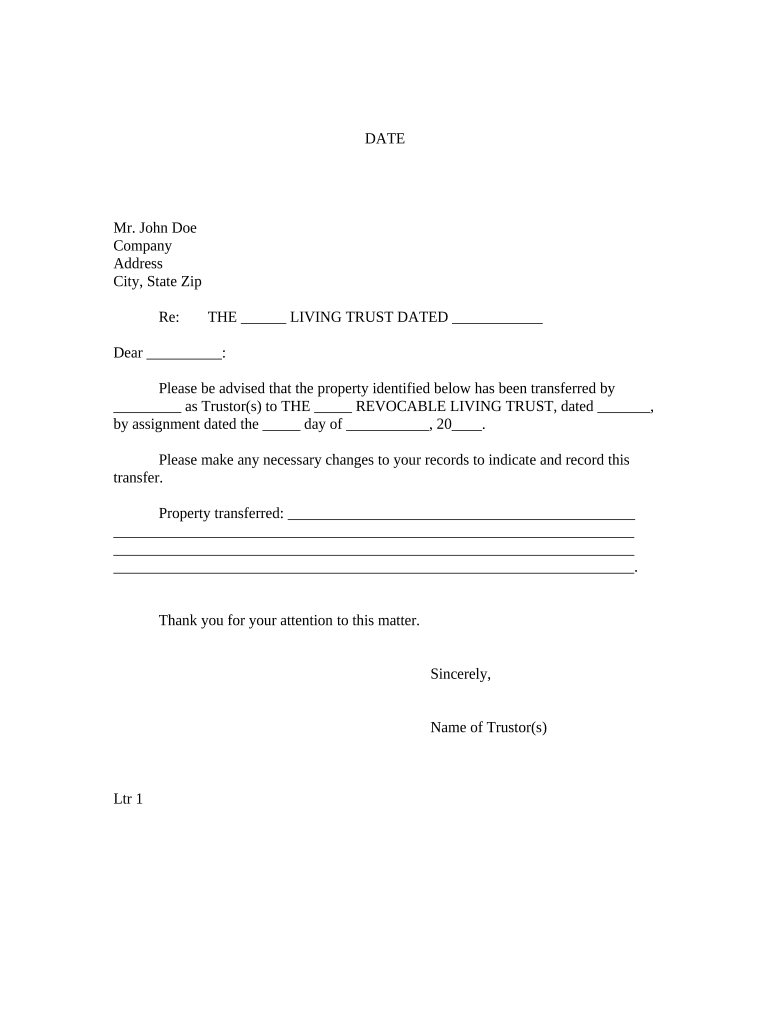
Begin by entering the date at the top of the document. This is essential for record-keeping purposes.
Fill in the recipient's name, company, and address in the designated fields. Ensure accuracy to avoid any delays in processing.
In the 'Re:' section, specify the name of the trust and its date. This identifies which trust is being referenced.
Complete the body of the letter by detailing who transferred the property and to whom it was transferred. Include all relevant dates and descriptions of the property.
Sign off with your name as Trustor(s) at the bottom of the letter.
Finally, complete the notary section by filling in necessary details about your notary public, including their name and commission expiration date.
Start using our platform today to easily fill out your Letter to Lienholder for free!
Fill out Letter to Lienholder to Notify of Trust - Connecticut online It's free
Letter to lienholder to notify of trust connecticut templateFree letter to lienholder to notify of trust connecticutLetter to lienholder to notify of trust connecticut docCT DMV replacement title onlineLien release letter CT DMVCT DMV supplemental assignment of ownershipCt Uniform Trust CodeCT DMV Title status
Security and compliance
At DocHub, your data security is our priority. We follow HIPAA, SOC2, GDPR, and other standards, so you can work on your documents with confidence.
Tip: If youre using Form H-6B in place of the current Connecticut title, and there is currently a lien on the vehicle, youll need a lien release letter.Read more
Trust Receipt and the Problem of Recordation or Notice
by HM CARTER Cited by 14 THE TRUST RECEIPT AND THE PROBLEM. OF RECORDATION OR NOTICE FILING. HAROLD M. CARTER t. The trust receipt as a security device originated in connection.Read more
Cookie consent notice
This site uses cookies to enhance site navigation and personalize your experience.
By using this site you agree to our use of cookies as described in our Privacy Notice.
You can modify your selections by visiting our Cookie and Advertising Notice.