Type text, add images, blackout confidential details, add comments, highlights and more.
02. Sign it in a few clicks
Draw your signature, type it, upload its image, or use your mobile device as a signature pad.
03. Share your form with others
Send it via email, link, or fax. You can also download it, export it or print it out.
How to use or fill out Colorado Easement with our platform
Ease of Setup
DocHub User Ratings on G2
Ease of Use
DocHub User Ratings on G2
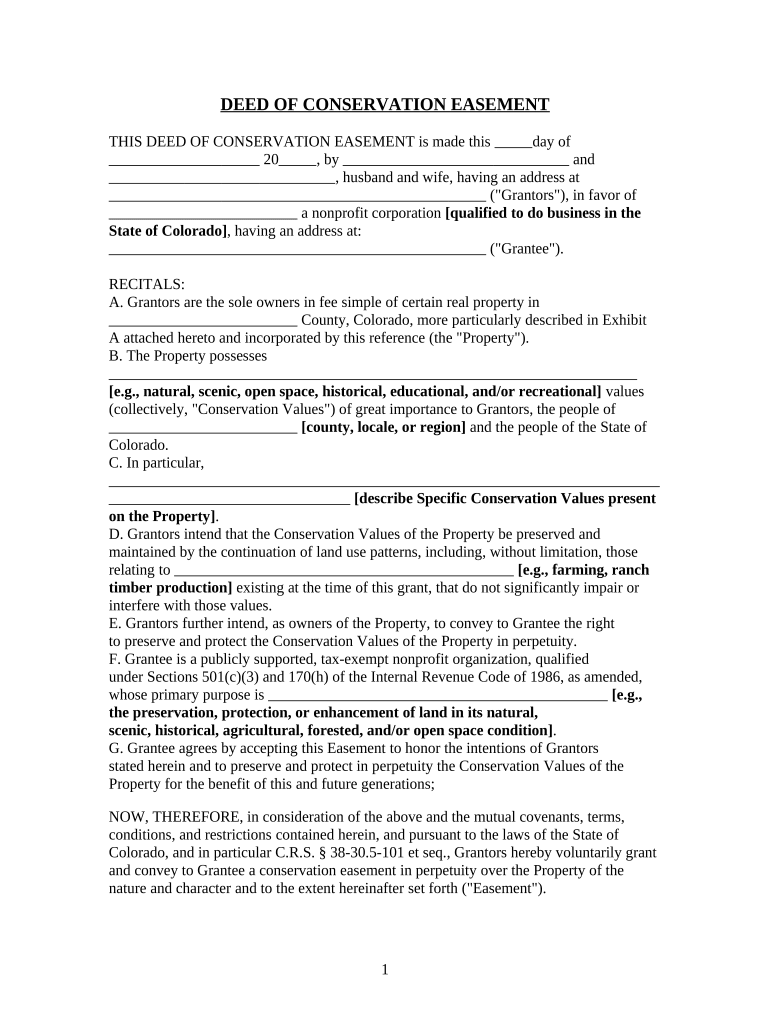
Click ‘Get Form’ to open the Colorado Easement document in the editor.
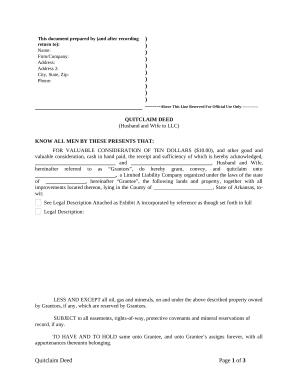
Begin by filling in the date and names of the Grantors at the top of the form. Ensure that all parties involved are accurately represented.
In the Recitals section, describe the property and its Conservation Values. This includes detailing any natural, scenic, or historical significance.
Proceed to outline the purpose of the Easement in Section 1. Clearly state how you intend to maintain and protect these values.
Complete the Baseline Documentation Report section by confirming if a report has been prepared or will be created within six months.
Fill out rights and responsibilities for both Grantors and Grantee as outlined in Sections 3 through 5, ensuring clarity on prohibited uses and management plans.
Review all sections for accuracy before saving your changes. Utilize our platform's features to sign and share your completed document securely.
Start using our platform today to streamline your Colorado Easement process for free!
Colorado easement lawDitch easement law ColoradoUtility easementWhy conservation easements are badCan a property owner block an easementEasement in grossColorado Springs easement lawsPrescriptive easement
Security and compliance
At DocHub, your data security is our priority. We follow HIPAA, SOC2, GDPR, and other standards, so you can work on your documents with confidence.
Matterhorn Express Gas Pipeline - Global Energy Monitor
Sep 25, 2025 In March 2023, WhiteWater Midstream received the permit to build Blackfin, a 48-inch pipeline of 193 miles from Colorado County to Jasper northRead more
COMaP features over 28,000 entries of protected lands parcels from over 300 different data sources, each of which contains a suite of attributes such as owner,Read more
Cookie consent notice
This site uses cookies to enhance site navigation and personalize your experience.
By using this site you agree to our use of cookies as described in our Privacy Notice.
You can modify your selections by visiting our Cookie and Advertising Notice.