Non-Foreign Affidavit Under IRC 1445 - Colorado-2026

Get Form
Non-Foreign Affidavit Under IRC 1445 - Colorado Preview on Page 1

Here's how it works

01. Edit your form online
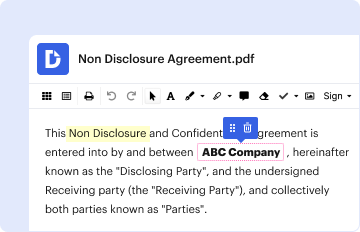
Type text, add images, blackout confidential details, add comments, highlights and more.
02. Sign it in a few clicks
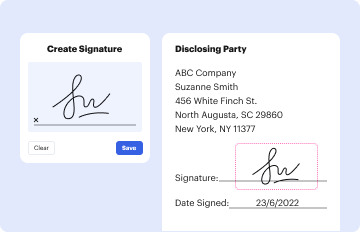
Draw your signature, type it, upload its image, or use your mobile device as a signature pad.
03. Share your form with others
Send it via email, link, or fax. You can also download it, export it or print it out.

How to use or fill out Non-Foreign Affidavit Under IRC 1445 - Colorado with DocHub

Form edit decoration
9.5
Ease of Setup
DocHub User Ratings on G2
9.0
Ease of Use
DocHub User Ratings on G2
  1. Click ‘Get Form’ to open the Non-Foreign Affidavit Under IRC 1445 - Colorado in our editor.
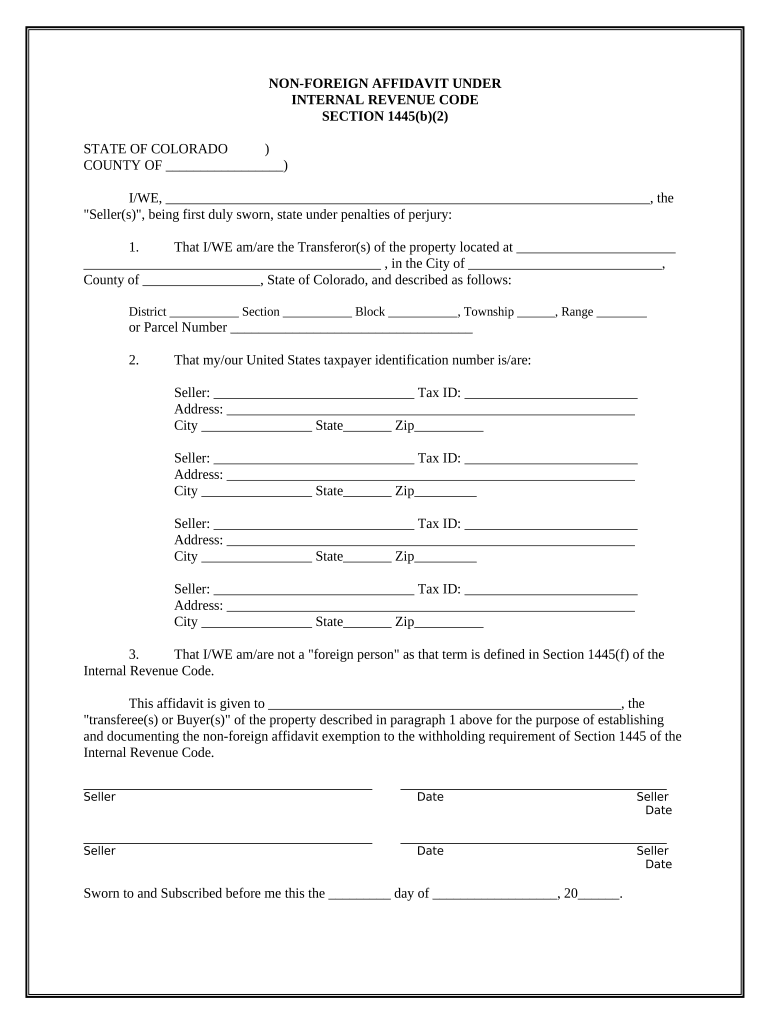
  2. Begin by filling in your name(s) as the Seller(s) at the top of the form. Ensure that all names are spelled correctly to avoid any discrepancies.
  3. In the property description section, provide the complete address of the property, including city, county, and state. Fill in additional details such as District, Section, Block, Township, Range, or Parcel Number as applicable.
  4. Enter your United States taxpayer identification number(s) for each seller listed. Include addresses and ensure accuracy for tax purposes.
  5. Confirm that you are not a 'foreign person' as defined by Section 1445(f). This is crucial for establishing your exemption from withholding requirements.
  6. Finally, sign and date the affidavit where indicated. If there are multiple sellers, ensure all signatures are collected before submission.

Start using our platform today to fill out your Non-Foreign Affidavit effortlessly and for free!

be ready to get more

Complete this form in 5 minutes or less

Get form

Got questions?

We have answers to the most popular questions from our customers. If you can't find an answer to your question, please contact us.
Contact us
Also known as an Affidavit of Non-Foreign Status, it is an IRS form a seller uses to docHub under oath that he/she isnt a foreign citizen. The form includes important information such as the name of the seller, U.S. taxpayer identification number as well as the home address.
A foreign affidavit is a written statement made under oath in one state or country but executed in another. This document is typically used to address legal matters that require verification or confirmation from a different jurisdiction.
Foreign status is your connection to a country outside the U.S. For example: If youre from Mexico and live in the U.S., your supporting documents must show your connection to Mexico.
US law requires that the transferee (buyer) on a sale or disposition of a United States Real Property Interest withhold a percentage (typically 15%) of the total amount realized (the sales price) at the time of disposition (closing of sale).
Whenever you sell real property in the United States, the buyer will require you to sign a FIRPTA affidavit swearing that you are or are not a foreign person. FIRPTA refers to the Foreign Investment in Real Property Tax Act of 1980.

Security and compliance

At DocHub, your data security is our priority. We follow HIPAA, SOC2, GDPR, and other standards, so you can work on your documents with confidence.

Learn more
ccpa2
pci-dss
gdpr-compliance
hipaa
soc-compliance

People also ask

Transactions involving the disposition of a U.S. real property interest (USRPI) by a foreign person (i.e., a nonresident alien individual or foreign entity, the seller) are subject to the Foreign Investment in Real Property Tax Act of 1980 (FIRPTA), and require income tax withholding, unless a specific exemption or
A qualified substitute may be (i) an attorney, title company, or escrow company (but not the Sellers agent) responsible for closing the transaction, or (ii) the Buyers agent.
(3) Foreign person. The term foreign person means any person other than -- (A) a United States person, and. (B) except as otherwise provided by the Secretary, an entity with respect to which section 897 does not apply by reason of subsection (l) thereof.

Related links