California living trust sample 2026

Get Form
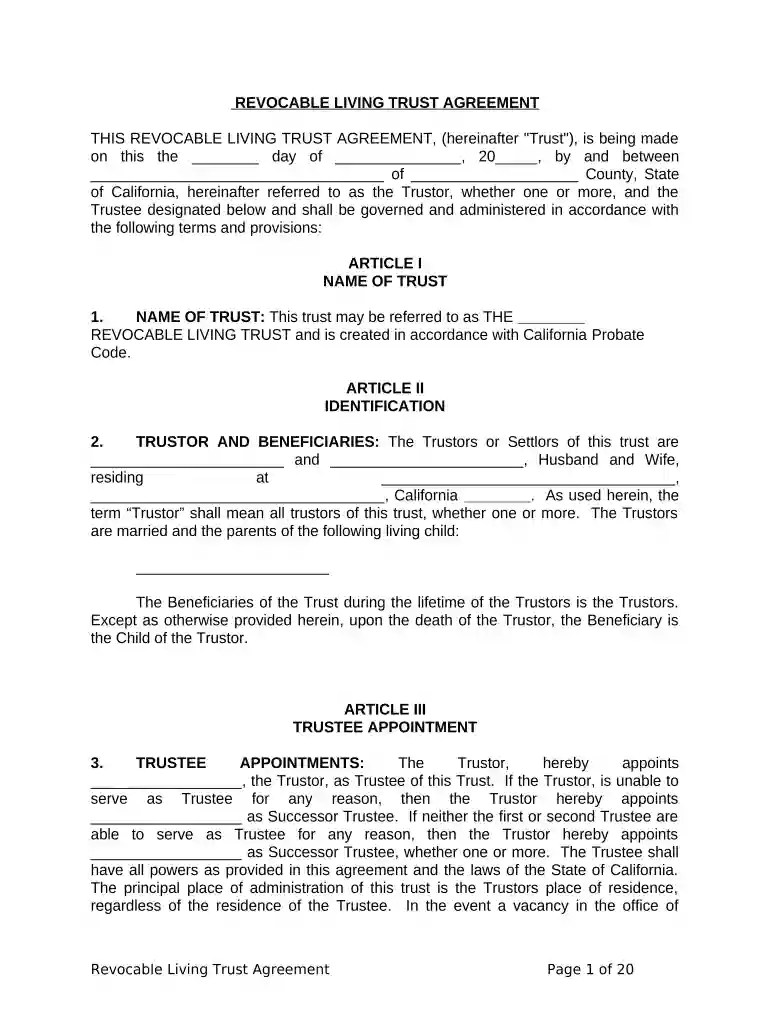
living trust template california Preview on Page 1

Here's how it works

01. Edit your living trust template california online
Type text, add images, blackout confidential details, add comments, highlights and more.

02. Sign it in a few clicks
Draw your signature, type it, upload its image, or use your mobile device as a signature pad.

03. Share your form with others
Send living trust california via email, link, or fax. You can also download it, export it or print it out.

Definition and Meaning of a California Living Trust

A California living trust is a legal document that allows individuals, known as Trustors, to manage their assets during their lifetime and provide instructions for asset distribution after death. This type of trust can be revoked or amended by the Trustor as long as they are competent and alive, making it a flexible estate planning tool. Typically, a living trust will identify the Trustor, the Trustee (who manages the trust), and the beneficiaries (those who receive the assets).

The primary purpose of a living trust is to avoid probate, the legal process through which a deceased person's estate is administered and distributed. Instead of subjecting the assets to probate, which can be time-consuming and costly, the assets held in a living trust can pass directly to the beneficiaries upon the Trustor's death, preserving privacy and expediting distribution.

Key Components of a Living Trust

  • Trustor: The individual who creates the trust and determines its terms.
  • Trustee: The person or institution appointed to manage the trust and its assets, following the guidelines set by the Trustor.
  • Beneficiaries: The individuals or organizations designated to receive benefits or assets from the trust.
  • Trust Property: The assets placed in the trust, which may include real estate, bank accounts, investments, or personal belongings.

How to Use a California Living Trust Sample

Utilizing a California living trust sample can simplify the creation of your own trust document. A sample provides a framework outlining specific sections and clauses typically included in a living trust agreement, making the drafting process more straightforward. Here is how to effectively use a living trust sample:

  1. Review the Sample: Examine the structure, terminology, and language of the sample California living trust. This will help you understand common provisions and essential components.

  2. Customize the Document: Modify the sample to reflect your specific needs, such as inserting your name as the Trustor, choosing your Trustee, and naming your beneficiaries. Adjust asset descriptions to fit your estate.

  3. Include Relevant Provisions: Ensure that essential elements are included, such as instructions for asset management during your lifetime, guidelines for distributions upon your death, and provisions for amendments or revocations.

  4. Consult with an Attorney: After drafting the trust using the sample, consider consulting with an estate planning attorney to ensure legal compliance and that your particular situation is adequately addressed.

  5. Execute the Trust: Once finalized, sign the document in accordance with California laws, which typically require notarization to make the trust legally binding.

Steps to Complete the California Living Trust Sample

Completing a California living trust involves several critical steps to ensure it is legally sound and accurately reflects your intentions. Here are the key steps:

  1. Gather Information:

    • Identify all assets intended to be placed in the trust.
    • Collect details about your chosen Trustee(s) and beneficiaries.
  2. Select a Trust Form:

    • Choose a relevant California living trust sample that matches your needs.
  3. Complete the Sample Document:

    • Fill out the trust with your personal information, asset details, and names of beneficiaries.
    • Clearly outline any specific terms for managing the trust assets.
  4. Consult Legal Counsel:

    • Review the completed trust with an attorney to identify any potential issues.
  5. Notarize the Document:

    • Sign and date the document in front of a notary public to make it legally binding.
  6. Fund the Trust:

    • Transfer ownership of your assets into the trust, which often requires additional documents for real estate and financial accounts.

Important Terms Related to California Living Trust Sample

Understanding key terminology associated with a California living trust is essential for drafting and managing the document effectively. Here are some important terms:

  • Trustor: The person who establishes the living trust and whose assets are included.
  • Trustee: The individual or institution responsible for managing the trust assets according to the terms specified in the trust document.
  • Beneficiary: Individuals or entities entitled to receive benefits from the trust, such as money or property.
  • Revocable Trust: A trust that can be altered or revoked by the Trustor during their lifetime.
  • Probate: The legal process of validating a will, paying debts, and distributing assets after the Trustor's death.

Legal Use of the California Living Trust Sample

A California living trust sample must adhere to state-specific legal requirements to be considered valid. The following legal considerations should be addressed:

  • Compliance with California Law: The document must comply with California Probate Code Sections that govern trusts. This includes specific language and formalities regarding the signing and notarization of the trust.
  • Clear Identification of Assets: The trust should precisely identify and describe each asset being transferred to avoid ambiguity regarding ownership.
  • Specific Instructions: It should include detailed provisions for how assets are to be managed during the Trustor's lifetime and distributed after death.
  • Admission of Proof: The trust may need to be presented in probate court if questions arise regarding its validity or the Trustor’s intent.

Examples of Using the California Living Trust Sample

Analyzing practical examples can clarify the application of a California living trust sample. Here are common scenarios for utilizing this document:

  • Married Couples: A couple may use a living trust to jointly manage assets and specify distributions to children while retaining the right to amend the trust as needed.
  • Single Individuals: An individual can create a living trust to maintain control over their assets and specify how they wish to distribute them upon death, minimizing complications for heirs.
  • Parents with Minor Children: A trust can designate guardianship for minor children and outline provisions for asset management until they reach adulthood, thereby protecting their financial interests.
  • Blended Families: In cases involving previous marriages, a living trust can clarify asset distribution among children from different relationships, helping avoid disputes and confusion.

These examples illustrate the versatility and importance of using a living trust to manage and protect one’s assets in accordance with personal wishes while ensuring smooth transitions for beneficiaries.

be ready to get more

Complete this form in 5 minutes or less

Get form

Got questions?

We have answers to the most popular questions from our customers. If you can't find an answer to your question, please contact us.
Contact us
Potential Drawbacks The financial aspects are an important factor to consider. You will need to fund activities such as setting up the trust, transferring the title of your home to the trust, and any ongoing administrative expenses that might arise throughout the trusts lifetime.
Living trusts may not always provide the desired level of protection against creditors. Depending on the circumstances, creditors may still have avenues to access the assets within the trust, raising concerns among those seeking robust asset protection.
Yes, handwritten trusts are legal in California, but they must meet specific requirements to be valid. Under California Probate Code, a trust must: Clearly express the grantors intent to create a trust. Name a trustee, the person responsible for managing the trusts assets.
The Seven Disadvantages of a Living Trust Exposed Why Theyre Really Advantages in California The Cost of Setting Up a Trust. Refinancing Hassle. No Asset Protection While Alive. Property Tax Hassles No Estate Tax Benefit. Possible Homestead Issues. As of January 1, 2025: Amendment Formalities.
Assets that should not be used to fund your living trust include: Qualified retirement accounts 401ks, IRAs, 403(b)s, qualified annuities. Health saving accounts (HSAs) Medical saving accounts (MSAs) Uniform Transfers to Minors (UTMAs) Uniform Gifts to Minors (UGMAs) Life insurance. Motor vehicles.

Security and compliance

At DocHub, your data security is our priority. We follow HIPAA, SOC2, GDPR, and other standards, so you can work on your documents with confidence.
Learn more
ccpa2
pci-dss
gdpr-compliance
hipaa
soc-compliance
be ready to get more

Complete this form in 5 minutes or less

Get form

People also ask

Draw up your Declaration of Trust. To create a living trust document in California, you have a few options: Use an online platform. You can use an online resource like FreeWill to create your California living trust for much cheaper than the cost of an attorney.
Like a Will and a testamentary trust, a Living Trust lets you decide specifically what will happen to your property after you die. You can also use a trust to control how your beneficiaries will spend their inheritance (to reduce the risk they may it on expensive vacations, cars, gambling, etc.).
Since a living trust is revocable, it has no income tax consequences during your lifetime; no separate tax return is even filed and all trust income is reported under your social security number.

living trust california pdf