






Definition & Meaning
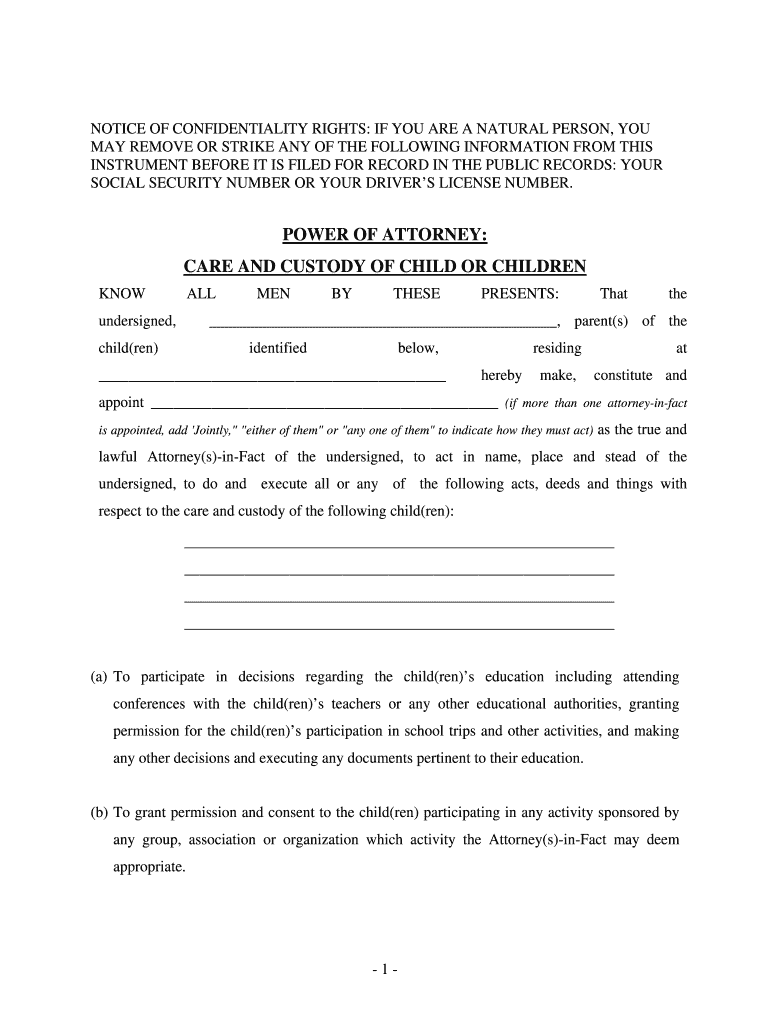
The medical power of attorney for a child in Texas is a legal document that grants a designated individual the authority to make healthcare decisions for a minor child. This authority includes decisions related to medical treatments, surgical procedures, and access to medical records. It ensures that in situations where the parent or guardian is unavailable, someone trusted can step in to make critical healthcare decisions for the child's well-being.
Key Elements of the Medical Power of Attorney for Child Texas
The document typically includes several key elements to ensure it is comprehensive and effective:
- Designation of Agent: Identifies the individual authorized to make medical decisions for the child.
- Scope of Authority: Clearly outlines the extent of the decisions the agent can make, including consent for medical treatments and access to health records.
- Duration: Specifies the validity period of the document, which can be limited to specific timeframes or events.
- Child's Information: Includes the child's full name, date of birth, and other identifying information.
- Signature and Notarization: Requires the signature of the parent or guardian and often notarization to ensure its authenticity and enforceability.
How to Use the Medical Power of Attorney for Child Texas
Using this form involves several steps to ensure it is legally recognized and effective:
- Complete the Form: Fill out all the necessary sections, ensuring accurate and complete information about the child and the designated agent.
- Sign and Notarize: Both the parent or guardian and the appointed agent should sign the document in the presence of a notary.
- Distribute Copies: Provide copies of the signed document to the child's healthcare providers, the designated agent, and any relevant schools or institutions.
- Review Regularly: Update the document as necessary, especially if there are changes in circumstances or the designated agent.
How to Obtain the Medical Power of Attorney for Child Texas
Obtaining this form can be done through several avenues:
- Online Resources: Many legal websites offer templates and guidance for completing the form.
- Legal Assistance: Consulting with a lawyer can ensure the document is tailored to specific needs and legally sound.
- Local Courthouses: Some county courthouses provide forms for public use and may offer guidance on completion and filing.
Legal Use of the Medical Power of Attorney for Child Texas
This document is legally significant, as it temporarily transfers parental rights regarding healthcare decisions while respecting state laws:
- Health Care Consent: The agent can consent to medical procedures on behalf of the child.
- Access to Records: Provides the agent with the authority to access the child's medical records for informed decision-making.
- Exclusions: Frequently, the document omits authority over major life decisions such as marriage or adoption, focusing solely on health-related matters.
State-Specific Rules for the Medical Power of Attorney for Child Texas
Texas has specific requirements and rules regarding this document to ensure it aligns with state laws:
- Notarization: Typically, Texas requires the document to be notarized to be considered valid.
- Agent Eligibility: The designated agent must be an adult with the capacity to make informed medical decisions.
- Revocation: The parent or guardian can revoke the power of attorney at any time through a written notice.
Steps to Complete the Medical Power of Attorney for Child Texas
To ensure the document is correctly filled out and enforceable, follow these steps:
- Gather Necessary Information: Include the child's details and the agent's information, ensuring there are no omissions.
- Specify Authority: Clearly outline what decisions the agent is allowed to make.
- Determine Effective Period: Decide the time frame during which the power of attorney is valid.
- Sign and Notarize: Both parties must sign the document in front of a notary public.
Important Terms Related to Medical Power of Attorney for Child Texas
Understanding the terminology is crucial for correctly implementing and interpreting this document:
- Principal: The parent or guardian granting authority.
- Agent: The person designated to make decisions on behalf of the child.
- Health Care Provider: The medical professionals responsible for the child's treatment.
- Capacity: The ability of the agent to understand and make decisions.
Who Typically Uses the Medical Power of Attorney for Child Texas
This form is commonly used by parents or guardians in various situations:
- Military Deployments: Parents in the military might designate an agent while deployed.
- Extended Travel: Parents traveling for work or personal reasons may use it to ensure continuity of healthcare decisions.
- Health Issues: Parents with health issues might appoint someone to act if they are incapacitated.
Every section and block of content here is crafted to provide comprehensive coverage, ensuring that readers have a full understanding of the medical power of attorney for a child in Texas.