






Definition and Purpose of the SSS R3 Form
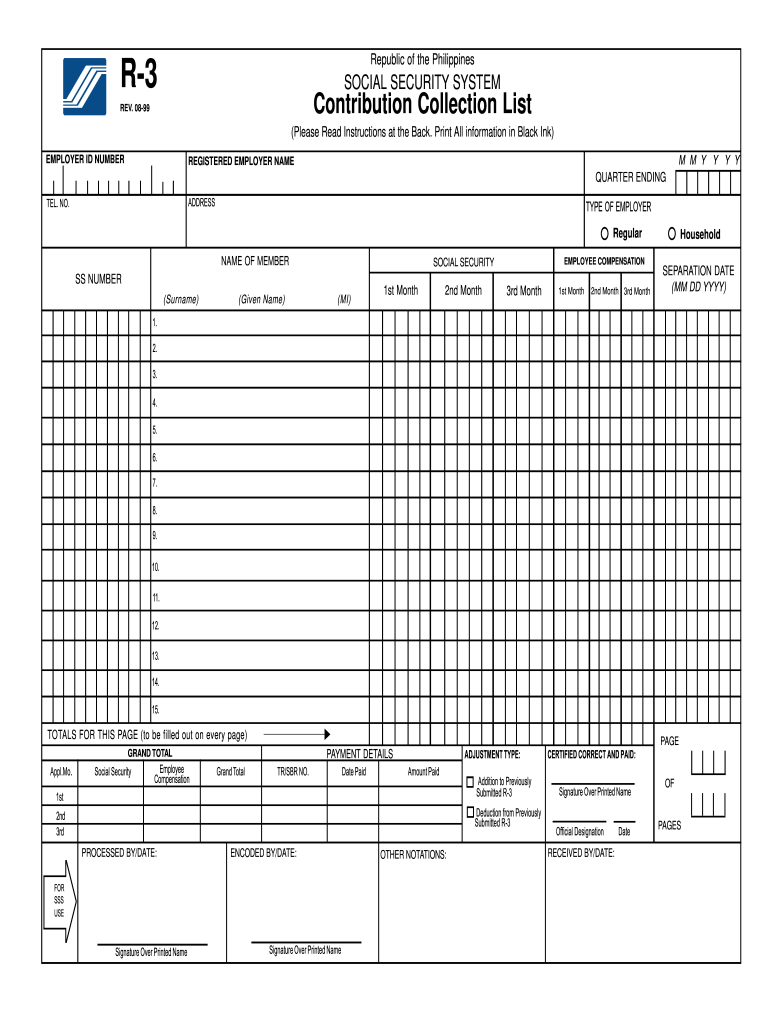
The SSS R3 form is essential for employers in the Philippines to report employee contributions to the Social Security System (SSS). This form captures vital information about both employer and employee contributions, ensuring compliance with national regulations. It serves as a systematic approach to document contributions, making it easier for the SSS to track and manage members' benefits.
To ensure accurate reporting, the SSS R3 form contains fields for recording various details, including:
- Employer information: This includes the registered name, address, and employer identification number.
- Employee details: Essential personal data such as the employee’s name, SSS number, and dates of employment are included.
- Contribution amounts: The exact contributions made by both the employer and employee must be detailed for accuracy.
By submitting the SSS R3, employers fulfill their legal obligations, ensuring their employees receive the entitled benefits without delays.
Steps to Complete the SSS R3 Form
Filling out the SSS R3 form requires careful attention to detail to prevent errors that could lead to penalties. Here’s a concise guide on how to accurately complete the form:
-
Gather Required Information:
- Collect all necessary documents, such as employee records and previous contribution receipts.
-
Fill in Employer Details:
- Enter the name, address, and identification number of your business in the specified sections.
-
Input Employee Information:
- Provide details of each employee, including their SSS number, name, and employment dates.
-
Calculate Contribution Amounts:
- Accurately compute the contribution amounts based on current SSS rates, ensuring both employer and employee contributions are included.
-
Review and Cross-Check:
- Scrutinize the information for accuracy. Double-check names and numbers to avoid discrepancies that could cause delays.
-
Submit the Form:
- Once completed, the form can be submitted via the SSS online portal, or printed and sent via mail or in person, following the specified submission guidelines.
Following these steps carefully helps employers avoid common mistakes and ensures timely processing of contributions.
Important Terms Related to the SSS R3 Form
Understanding key terminologies associated with the SSS R3 form is crucial for accurate reporting and compliance:
- Employee Contributions: These are the amounts deducted from employees' salaries for SSS benefits, often a percentage of their monthly salary.
- Employer Contributions: The amounts employers contribute on behalf of their employees, typically matching the employee contribution rate.
- SSS Number: A unique identifier assigned to each member of the SSS, used to track contributions and benefits.
- Contribution Rate: The percentage of an employee's salary that is contributed to the SSS, which can vary based on the employee's salary bracket.
Familiarity with these terms ensures that employers can navigate the reporting process effectively.
Filing Deadlines and Important Dates for the SSS R3
Timely submission of the SSS R3 form is critical to avoid penalties. Here are the key filing deadlines employers should be aware of:
- Monthly Submission: Employers are generally required to submit the SSS R3 form on a monthly basis, with deadlines typically set for the 10th day of the month following the reporting month.
- Annual Reconciliation: At the end of each fiscal year, an annual report may be required that consolidates the monthly submissions. This is often due by January 31 of the following year.
Employers should maintain a calendar of these deadlines to ensure compliance and avoid late submission penalties, which can add unnecessary costs.
Legal Use of the SSS R3 Form
The SSS R3 form is not merely a bureaucratic requirement; it has significant legal implications for employers and employees:
- Compliance with Labor Laws: By accurately submitting the SSS R3 form, employers comply with labor laws that mandate employee contributions to social security.
- Benefit Eligibility: Correct reporting affects employees' access to SSS benefits, including maternity, disability, and retirement benefits. Failing to report accurately can deny employees these essential benefits.
- Legal Penalties: Non-compliance with SSS reporting requirements can lead to fines and other legal consequences for employers. Adhering to the reporting guidelines helps mitigate these risks.
By understanding the legal importance of the SSS R3 form, employers can fulfill their obligations while providing essential benefits to their employees.