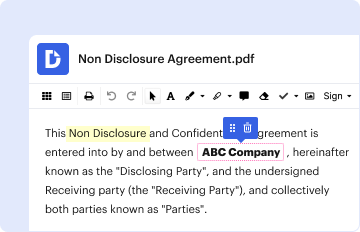
Type text, add images, blackout confidential details, add comments, highlights and more.
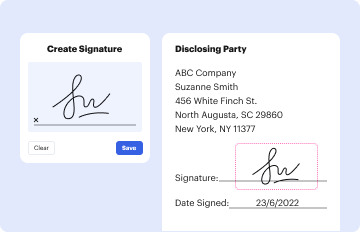
02. Sign it in a few clicks
Draw your signature, type it, upload its image, or use your mobile device as a signature pad.
03. Share your form with others
Send it via email, link, or fax. You can also download it, export it or print it out.
How to use or fill out Notice to Landlord to Immediately Remedy Defect in Essential Services for Residential from Tenant to Landlord - Alaska
Ease of Setup
DocHub User Ratings on G2
Ease of Use
DocHub User Ratings on G2
Click ‘Get Form’ to open it in the editor.
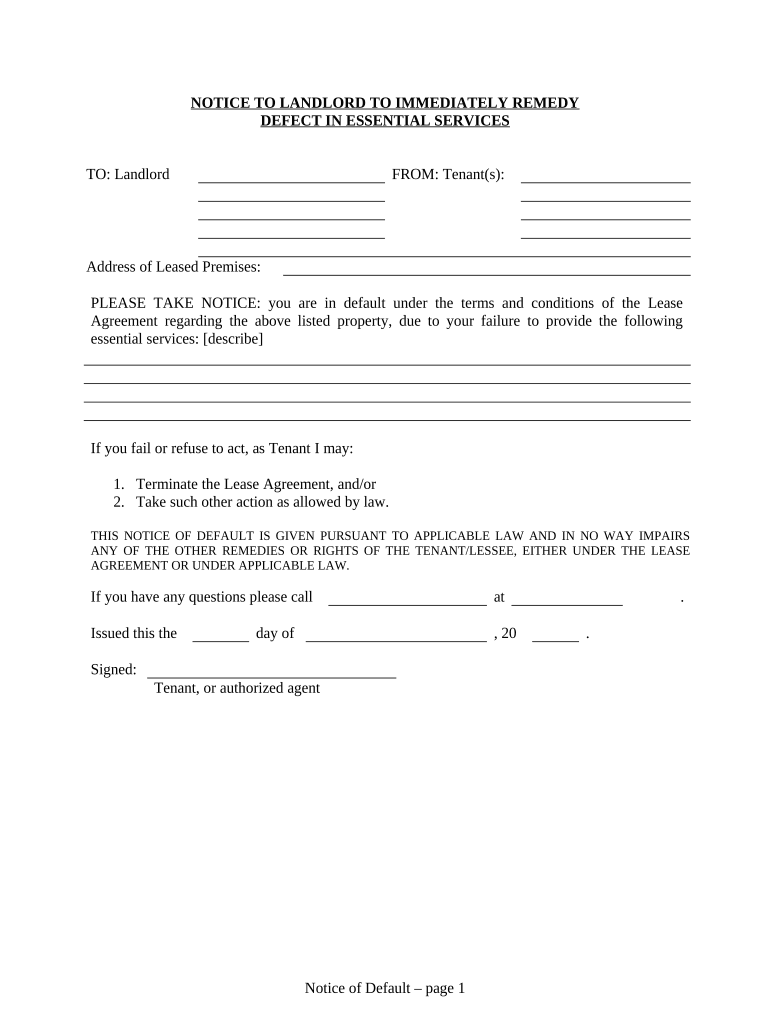
Begin by entering your name and address as the Tenant(s) in the designated fields. This ensures that the landlord knows who is issuing the notice.
In the section labeled 'PLEASE TAKE NOTICE', clearly describe the essential services that are lacking. Be specific about what has not been provided, as this will strengthen your case.
Review the consequences listed for failure to remedy, which include termination of the lease agreement. Ensure you understand these implications before proceeding.
Fill in the date of issuance and sign at the bottom of the form. If you are an authorized agent, indicate this accordingly.
Complete the 'PROOF OF DELIVERY' section by selecting how you delivered this notice (by hand, registered mail, etc.) and provide your signature and printed name along with the delivery date.
Start using our platform today to easily complete and manage your documents for free!
Fill out Notice to Landlord to Immediately Remedy Defect in Essential Services for Residential from Tenant to Landlord - Alaska online It's free
What is the most common action taken by landlords against tenants in bdocHub of contract?
Again, you must give your landlord written notice before you take any of these actions. The written notice must state what the problems are and that if the landlord does not fix the problem within 10 days of receiving the notice, you will move out in twenty days.
What can landlords not do in Alaska?
Eviction: If the court finds that there is a bdocHub of lease they will issue an Order of Restitution, which orders the Sherriff to remove the Tenant from the property. Attorneys fees may be available.
What cant a landlord do in Alaska?
In Alaska, landlords are prohibited from engaging in illegal discrimination, setting unfair occupancy limits, infringing upon tenants rights to privacy, entering rented premises without proper notice (except in emergencies), failing to maintain habitable living conditions, and unlawfully withholding security deposits,
How long does a landlord have to fix something in Alaska?
5 Things You Should Never Say When Renting an Apartment I hate my current landlord Every potential landlord is going to ask why youre moving. Let me ask you one more question I cant wait to get a puppy My partner works right up the street I move all the time
Can a landlord enter without permission in Alaska?
7. When Can My Landlord Enter My Home? Except in the case of an emergency, your landlord can enter the rental unit only if they give you at least 24 hours notice.
Related Searches
Alaska landlord-Tenant Act 30-day noticeWhat a landlord cannot do in Alaskalandlord/tenant act alaska pdfAlaska landlord-tenant HandbookAlaska landlord tenant Act abandoned propertyalaska landlord-tenant act security depositNotice to Quit AlaskaAlaska Landlord Tenant forms
Security and compliance
At DocHub, your data security is our priority. We follow HIPAA, SOC2, GDPR, and other standards, so you can work on your documents with confidence.
Yes, Alaska is generally considered a landlord-friendly state. There are no rent control laws, no statutory limits on late fees, and no mandatory grace periods. However, landlords must still comply with federal fair housing laws and Alaskas specific rental statutes.
How much can a landlord raise rent in Alaska?
020 states that The landlord may increase the rent required under a periodic tenancy by giving the tenant written notice of the increase at least 30 days before the rental due date specified in the notice. Unlike some states, Alaska does not impose any limits on how much a landlord can raise the rent.
Related links
The Alaska Landlord Tenant Act: what it means to you
NOTICE TO LANDLORD OF DEFECTS IN ESSENTIAL SERVICES Remedies for landlords failure to supply essential services. If the landlord deliberately or
To provide a useful estimate of future needs, the demand estimates focus on remaining cleanup work at sites where the remedies have not yet been chosen, and do
A College Students Guide to Landlord/Tenant Relations in
This publication also contains several sample forms that you can use to tell your landlord that there are problems with your apartment or that you want to move
Cookie consent notice
This site uses cookies to enhance site navigation and personalize your experience.
By using this site you agree to our use of cookies as described in our Privacy Notice.
You can modify your selections by visiting our Cookie and Advertising Notice.