




Definition and Meaning of the California DMV Lien Form
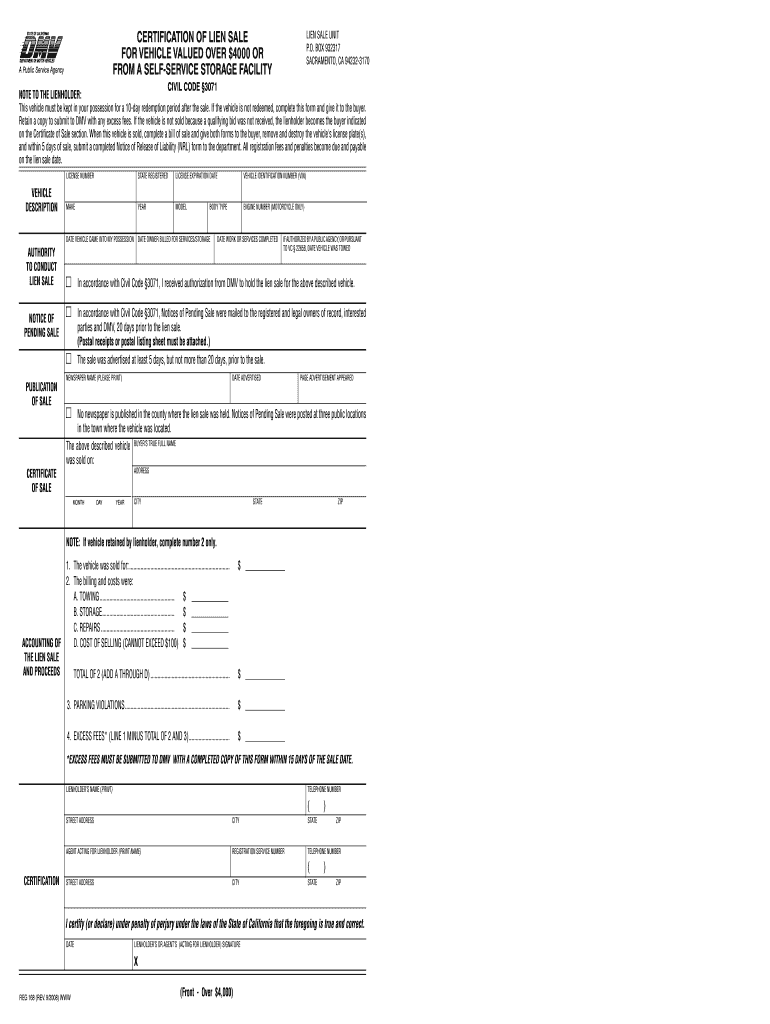
A California DMV lien form is a legal document that establishes a creditor's interest in a vehicle. The lien indicates that the creditor has the right to possess the vehicle until the debt owed by the vehicle's owner is paid off. This form is commonly utilized in various scenarios, such as loan agreements and storage facilities, where the lender or storage company retains a legal claim to the vehicle until obligations are fulfilled. Understanding this form is essential for both lienholders and vehicle owners to ensure proper compliance with California regulations surrounding lien sales.
Importance of the Lien Form Process
- Protects Creditor's Interests: The lien form serves to protect the rights of the creditor by legally recognizing their claim to the vehicle.
- Facilitates Vehicle Sales: In the case of lien sales, the form assists in the process of selling a vehicle when the owner has not settled their debts.
- Maintains Legal Transparency: Filing the lien ensures that all parties are informed about the existing claims on the vehicle, preventing any unauthorized sales.
Steps to Complete the California DMV Lien Form
Completing the California DMV lien form requires careful attention to detail to ensure accuracy and compliance with legal requirements. The following steps outline the necessary process:
- Obtain the Lien Form: You can acquire the California DMV lien form from the official DMV website or by visiting a local DMV office.
- Fill Out the Required Information:
- Vehicle Information: Include the vehicle identification number (VIN), make, model, and year.
- Lienholder Details: Provide the name, address, and contact information of the lienholder.
- Owner Information: Fill in the full name and address of the vehicle owner.
- Specify the Lien Amount: Clearly state the amount of the debt secured by the lien. This is essential in case of a lien sale.
- Certification of Information: The lienholder must include a statement certifying that the details provided are true and accurate. This may require a signature.
- Submission to the DMV: Submit the completed form to the California DMV office either in person or by mail, along with any applicable fees.
Important Considerations
- Double-check all entries: Ensure there are no misspellings or incorrect information, which could delay processing.
- Keep Copies: Make copies of the completed lien form for your records and future reference.
Key Elements of California DMV Lien Sale Paperwork
The California DMV lien sale paperwork involves several critical elements that ensure the legality and accuracy of the lien process. These elements include:
- Completion of the Lien Form: The primary document recording the lien.
- Preparation of Additional Documentation:
- Bill of Sale: A bill detailing the sale transaction, including the sale price and date.
- Notification Letters: Proof that interested parties were notified about the impending sale.
- Payment of Fees: Any fees associated with processing the lien sale must be paid, according to California DMV regulations.
Documentation Workflow
- Record Keeping: Maintain copies of all documents associated with the lien sale for at least four years after the sale, in case of any disputes or inquiries.
- Partner with Legal Professionals: Engaging an attorney who specializes in automotive law can help ensure all paperwork is properly completed and submitted.
Collaboration and Communication in Lien Sale Processes
Effective collaboration between lienholders, vehicle owners, and regulatory agencies can enhance the lien sale process. This may involve:
- Informing All Parties: The lienholder should communicate clearly with the vehicle owner about the lien status and any impending actions.
- Organizing Meetings: If issues arise, coordinating face-to-face discussions can clear up misunderstandings and expedite resolutions.
Effective Communication Strategies
- Written Notifications: Send formal letters to notify various parties about their rights and the status of the lien.
- Timely Updates: Provide status updates on the situation and possible outcomes to involved parties regularly.
Handling Objections to Lien Sales
Occasionally, disputes may arise regarding a lien sale. Addressing objections properly is vital to ensure compliance and protect all parties' interests. Consider the following steps if objections are raised:
- Identify the Objections: Determine what specifically is being contested, whether it is the lien amount, sales process, or the lien itself.
- Gather Documentation: Compile all relevant documents that support the lien, including the lien form, notices sent, and payment records.
- Seek Resolution: Engage in discussions with the objecting party to resolve the issue amicably. If necessary, consider mediation as a viable solution.
Legal Steps to Resolve Disputes
- Mediation Services: Employ mediation services for third-party facilitation of discussions if disputes arise.
- Legal Action: If resolution fails, legal action may be needed to uphold the validity of the lien, under advisement from a qualified attorney.
Compliance and Legal Consequences of Lien Sales
Understanding compliance is critical in the lien sale process to avoid penalties or legal repercussions. Lienholders must adhere to mandated timelines for notices and submissions to the DMV. Key compliance considerations include:
- Timely Notification: The lienholder must notify the vehicle owner and any other interested parties within the stipulated timelines as required by law.
- Accurate Reporting: All data submitted on forms must be accurate to ensure compliance and avoid penalties, which may include fines or reversal of the sale.
Consequences of Non-Compliance
- Fines and Penalties: Non-compliance can lead to financial penalties imposed by the DMV.
- Reversal of Legal Actions: If compliance is not met, previous lien actions might be invalidated, leading to further legal complications.
Additional Resources and Guidelines for California Lien Sales
Practicing due diligence and awareness of additional resources is crucial for successful lien management. Key resources include:
- California DMV Website: The official DMV website provides updated forms, filing instructions, and general guidelines.
- Legal Advisory Services: Consulting legal profession or automotive law specialists for tailored assistance can lead to better management of lien-related issues.
Staying Informed
- Attend Workshops: Consider attending workshops or webinars on lien sales hosted by legal or automotive organizations to stay current with changes in regulations and best practices.
- Join Community Forums: Engaging with other lienholders or industry professionals via online forums can provide insights and shared experiences beneficial for effective lien management.