Notice of Default for Past Due Payments in connection with Contract for Deed - Delaware 2026

Get Form
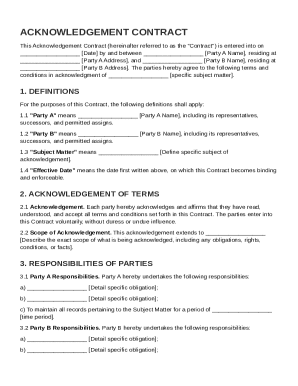
Notice of Default for Past Due Payments in connection with Contract for Deed - Delaware Preview on Page 1

Here's how it works

01. Edit your form online
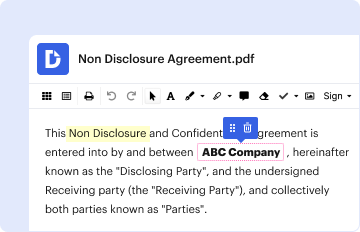
Type text, add images, blackout confidential details, add comments, highlights and more.
02. Sign it in a few clicks
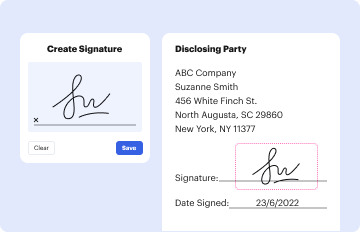
Draw your signature, type it, upload its image, or use your mobile device as a signature pad.
03. Share your form with others
Send it via email, link, or fax. You can also download it, export it or print it out.

How to use or fill out Notice of Default for Past Due Payments in connection with Contract for Deed - Delaware

Form edit decoration
9.5
Ease of Setup
DocHub User Ratings on G2
9.0
Ease of Use
DocHub User Ratings on G2
  1. Click ‘Get Form’ to open it in the editor.
  2. Begin by entering the names and addresses of both the seller and purchaser in the designated fields at the top of the form.
  3. Specify the property address related to the Contract for Deed, ensuring accuracy to avoid any legal issues.
  4. Clearly state the amount due for past payments, including a breakdown of each month’s payment that is overdue.
  5. Include any late fees applicable, ensuring that you calculate this correctly based on your contract terms.
  6. Fill in the deadline date by which the default must be cured, providing a clear timeframe for action.
  7. Finally, have the seller sign and print their name at the bottom of the form to validate this notice.

Start using our platform today to easily complete your Notice of Default form online for free!

be ready to get more

Complete this form in 5 minutes or less

Get form

Got questions?

We have answers to the most popular questions from our customers. If you can't find an answer to your question, please contact us.
Contact us
A notice of default is a statement sent by one contract party to notify another that the latter was in default by failing to fulfil the terms of an agreement and a legal action would follow if the latter continue to default.
A default occurs when a borrower does not make his or her mortgage loan payment and falls behind. When this happens, he or she risks the home heading into the foreclosure process.
While laws may vary from states to states, such a notice usually must include the owners claim showing the sums due at the time of the notice and the date when the sums became due and that the occupants right to use the storage space will be denied unless and until all sums due are paid by the occupant. notice of default | Wex | US Law | LII / Legal Information Institute Legal Information Institute - Cornell University wex noticeofdefault Legal Information Institute - Cornell University wex noticeofdefault
You will typically receive a default notice if youve not kept up-to-date on your payments for between three and six months. It is effectively a nudge from the lender to make your payments within a certain period of time, before things get more serious. Lenders legally have to give you at least 14 days to respond.
A default notice is a letter the people you owe send to warn that you are behind on payments and your account may default. The people you owe usually send this after six months of missed or reduced payments. They give you at least two weeks to make up missed payments.

Security and compliance

At DocHub, your data security is our priority. We follow HIPAA, SOC2, GDPR, and other standards, so you can work on your documents with confidence.

Learn more
ccpa2
pci-dss
gdpr-compliance
hipaa
soc-compliance

People also ask

Thirty days 30 days after contact, lender can record a Notice of Default Thirty days after contacting you, if you and the lender have not worked out a plan to avoid foreclosure, the lender can record a Notice of Default in the county where your home is located. Non-judicial foreclosure and homeowner rights | California Courts California Courts | Self Help Guide foreclosures nonjudicial California Courts | Self Help Guide foreclosures nonjudicial
If the buyer defaults or fails to make the monthly payments to the seller as required, the seller will need to file a court action called land contract forfeiture. Success in court will result in the buyer forfeiting, or giving up, all money paid to the seller for the property pursuant to the land contract. The Basics of Land Contracts - Nolo Nolo legal-encyclopedia the-basics-l Nolo legal-encyclopedia the-basics-l

Related links