
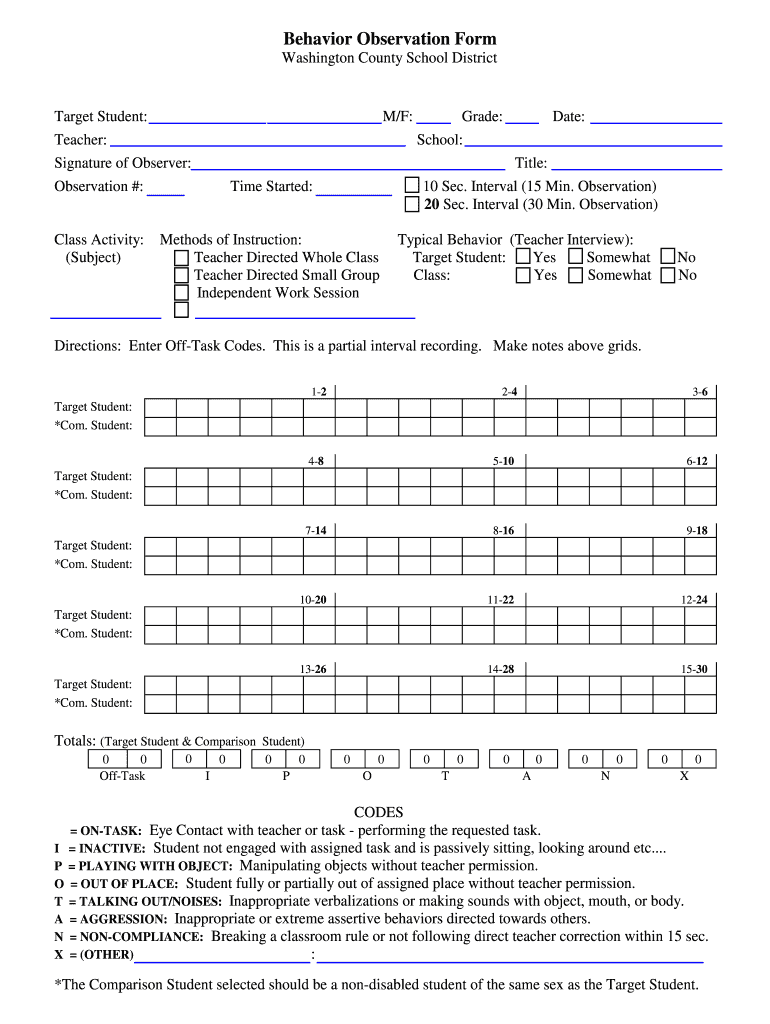







Overview of the Boss Observation Form
The boss observation form is a systematic tool designed to evaluate and document the performance of employees within various settings. It allows supervisors and managers to observe and record behaviors, skills, and contributions of their team members in a structured manner. This form can play a critical role in improving workplace dynamics, enhancing employee performance, and guiding professional development.
Key Components of the Boss Observation Form
The design of the boss observation form typically includes key sections that guide the observer in capturing detailed and relevant information:
-
Employee Information: This section identifies the individual being observed, including their name, position, and department. Accurate identification ensures that feedback is correctly associated with the right employee.
-
Observation Context: This part outlines when and where the observation takes place, detailing the specific activities or tasks being performed. Including context helps in understanding the environment and circumstances under which behaviors are noted.
-
Behavioral Assessment Criteria: A crucial segment where specific behaviors are highlighted, often categorized under skills, communication, teamwork, and productivity. Observers rate these behaviors using a predefined scale to provide clear feedback on performance levels.
-
Feedback and Recommendations: After observations are recorded, this section allows supervisors to offer constructive feedback. Recommendations might include areas for improvement or suggestions for professional development that aligns with observed performance.
Effective Use of the Boss Observation Form
The boss observation form can be utilized in various contexts to maximize its efficacy:
-
Performance Reviews: Regular observations can provide rich input into performance evaluations, ensuring that assessments are based on documented behaviors rather than memory alone.
-
Training and Development: The insights gathered can guide training needs by identifying skills gaps among employees. Structured observations can elucidate areas needing further training or support.
-
Goal Setting: Observational data can help in formulating achievable employee goals, aligning individual objectives with organizational expectations and standards.
-
Enhancing Team Dynamics: Observing interactions within a team context can uncover strengths and weaknesses in collaboration. Insights gathered can foster better teamwork strategies.
Benefits of Using the Boss Observation Form
Utilizing a boss observation form holds several key advantages for organizations looking to boost overall performance:
-
Standardized Evaluation: Implementing this structured approach ensures that observations are consistent across different employees, reducing bias and enhancing fairness in assessments.
-
Actionable Insights: The specificity of the observations allows organizations to develop targeted action plans, ensuring that feedback translates into meaningful performance enhancements.
-
Documentation Base: This form provides a reliable archive of performance observations that can be referenced in future discussions about employee development, promotion, or disciplinary actions.
Legal Considerations in Using the Boss Observation Form
When deploying a boss observation form, it's vital to consider various legal aspects that may impact its use:
-
Confidentiality: Observations should be handled with discretion to protect employee privacy. It is essential to implement measures that secure sensitive information involved in the observation process.
-
Compliance with Employment Laws: Organizations must ensure that their observation methods and documentation adhere to applicable labor laws and regulations, particularly regarding employee evaluations.
-
Record Keeping: Accurate records should be maintained to comply with legal reporting requirements and to protect the organization against potential disputes over performance evaluations.
Practical Examples of the Boss Observation Form in Action
Consider the following scenarios demonstrating the effective application of the boss observation form:
-
Scenario One: A manager observes a team member during a project meeting and notes their proactive contributions and commendable collaboration skills. This observation can later be referenced during performance reviews, aiding in crafting an impactful evaluation.
-
Scenario Two: During routine work duties, a supervisor identifies that an employee struggles with specific tasks. Observations noted in the form allow the supervisor to create a targeted development plan that directly addresses the competencies needing improvement.
-
Scenario Three: In a team-building workshop, managers utilize the boss observation form to benchmark team interactions. Following the event, they compile insights to facilitate discussions on team dynamics and improvement strategies.
Documenting observations with this form ultimately enhances the quality of feedback and creates a structured approach to employee development within organizations.




