




01. Edit your free bill of sale print out online
Type text, add images, blackout confidential details, add comments, highlights and more.

Type text, add images, blackout confidential details, add comments, highlights and more.

Draw your signature, type it, upload its image, or use your mobile device as a signature pad.

Send mobile home bill of sale without notary via email, link, or fax. You can also download it, export it or print it out.
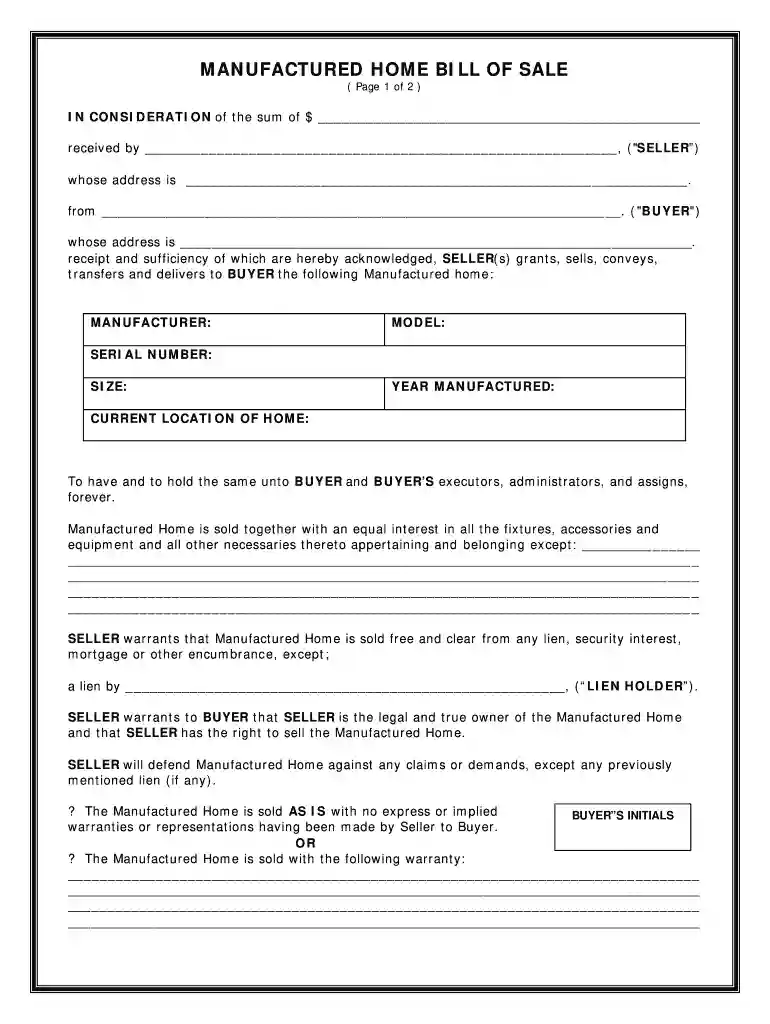
The mobile home bill of sale is a legal document that outlines the transaction between a seller and a buyer for a manufactured or mobile home. This contract encompasses vital information regarding the sale, including the identities of the parties involved, the purchase price, and specific details about the mobile home itself. Buyers and sellers in the United States should understand the key components and the significance of this document to ensure a smooth transfer of ownership.
A comprehensive mobile home bill of sale typically includes several critical pieces of information:
When creating a mobile home bill of sale, follow these essential steps to ensure all necessary details are captured effectively:
Having a properly executed bill of sale is critical for several reasons:
Different states may have specific variants of the mobile home bill of sale or additional required documents, such as the title transfer form or tax forms. Buyers and sellers should verify local statutes and ensure compliance with all legal requirements specific to their state. For example:
Understanding the elements, significance, and proper execution of a mobile home bill of sale is vital for ensuring a successful and legally compliant transaction in the housing market for manufactured homes.
At DocHub, your data security is our priority. We follow HIPAA, SOC2, GDPR, and other standards, so you can work on your documents with confidence.




Notice of Sale and/or Bill of Sale for a Motor Vehicle,. Mobile Home, Off-Highway Vehicle or Vessel. Notice of Sale (Seller must complete sections 1 3).Read more
BILL OF SALE. BUYERS. Printed Name: Address: City: Date Sold: State: Zip: State: Zip: Home Phone: Home Phone: Cell Phone: Work: Cell Phone: Work:.Read more
We suggest that you attach your Bill of Sale to this page so that you will have all the information you need in one place should the need for service orRead more


