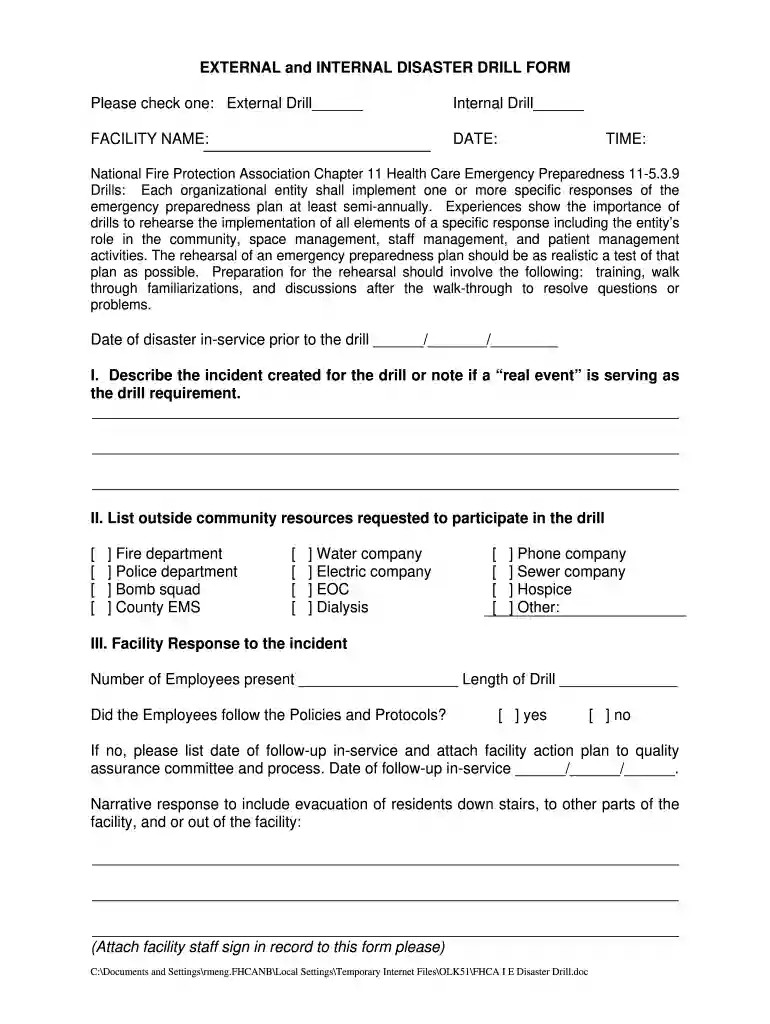
Definition and Importance of the Disaster Drill Form
The disaster drill form is a crucial tool used in various sectors, especially within healthcare and emergency management, to document and evaluate disaster preparedness drills. These forms guide organizations in conducting training sessions for emergency response plans, ensuring that all participants understand their roles and responsibilities during a crisis.
Key aspects of the disaster drill form include:
- Documentation of Drill Details: It captures vital information about the drill, such as the date, time, location, and type of disaster simulated (e.g., fire, earthquake).
- Assessment of Response Protocols: The form allows organizations to evaluate how well their emergency procedures were executed, identifying areas of strength and those needing improvement.
- Collaboration with Local Emergency Services: By detailing community resource participation, the form fosters coordinated efforts between organizations and local response teams, which is essential during actual emergencies.
Fostering a culture of preparedness through scheduled drills ultimately enhances an organization’s resilience and ability to protect lives and property during real disaster events.
Steps to Complete the Disaster Drill Form
Completing the disaster drill form involves several structured steps to ensure that all relevant information is accurately recorded. This process aids in the effective assessment of the drill outcomes and in making improvements for future drills.
- Select the Appropriate Form: Begin by choosing the relevant disaster drill form that aligns with the type of drill being conducted, such as a fire drill form or an external disaster drill form.
- Fill in Basic Information: Document essential details, including the date and time of the drill, location, and names of participants, especially key staff and organizational leaders involved.
- Detail the Scenario: Clearly describe the disaster scenario being simulated. This may include specifics on the type of emergency, potential risks involved, and objectives of the drill.
- Record Participation: Indicate which community resources and external agencies, if any, participated in the drill. This helps in assessing the collaborative aspect of the emergency response.
- Evaluate Response Actions: After the drill, assess how well protocols were followed. Record timelines, response times, and any deviations from the established procedures.
- Identify Strengths and Weaknesses: Use the form to highlight what went well during the drill and areas that need improvement. This section is critical for learning and development.
- Plan Follow-Up Actions: Conclude by detailing follow-up actions to address any weaknesses identified. This may include additional training sessions or revisions to existing emergency plans.
By following these steps, organizations can maintain a thorough record of their preparedness efforts and identify strategies for enhancing their emergency response capabilities.
Who Typically Uses the Disaster Drill Form
Various entities utilize the disaster drill form, each benefiting from its structured approach to documenting emergency preparedness exercises. Understanding the typical users provides insight into the broad applicability of this tool.
- Healthcare Facilities: Hospitals and clinics frequently use disaster drill forms to assess their readiness for responding to emergencies, such as mass casualty incidents or natural disasters. Regular drills ensure compliance with federal and state regulations for emergency preparedness.
- Educational Institutions: Schools conduct drills to prepare students and staff for potential emergencies, including lockdowns or evacuations. The disaster drill form helps in documenting the effectiveness of these training sessions.
- Corporate Environments: Businesses, particularly those in sectors like manufacturing or logistics, may implement disaster drills to enhance workplace safety and ensure that employees know their roles during emergencies.
- Public Safety Agencies: Fire departments, police, and emergency medical services rely on these forms to coordinate practices with other agencies and improve community response to disasters.
- Government Agencies: They may use disaster drill forms to meet legal obligations related to emergency preparedness and to foster collaboration between community resources during drills.
These varied users reflect the importance of the disaster drill form in fostering a culture of preparedness across multiple sectors.

Key Elements of the Disaster Drill Form
A well-structured disaster drill form contains several key elements essential for comprehensive documentation and assessment of the drill. These components ensure that all necessary information is captured for effective analysis.
- Basic Information Section: This includes the date, time, location, and type of disaster, setting the stage for the documented drill.
- Participant Details: Names of individuals involved, including employees, community responders, and key officials, should be clearly recorded.
- Emergency Scenario Description: A detailed account of the simulated disaster, outlining the specific challenges and objectives of the drill.
- Response Actions Taken: Documentation of actions carried out by participants, including adherence to protocols and timeliness of responses.
- Evaluation and Feedback: Sections dedicated to evaluating the performance during the drill, including strengths, weaknesses, and lessons learned.
- Follow-Up Action Plan: An outline of subsequent steps required to address identified issues, including training needs or procedural adjustments.
Incorporating these elements into the disaster drill form aligns with best practices for emergency preparedness and facilitates continuous improvement in organizational response readiness.
Examples of Using the Disaster Drill Form
Implementing the disaster drill form can take various forms, tailored to specific situations and objectives. A few examples illustrate how diverse organizations utilize the form for effective preparedness training.
- Fire Drills: A hospital conducts regular fire drills to ensure staff and patients can safely evacuate during an emergency. The disaster drill form captures participant reactions, response times, and adherence to evacuation plans, leading to improved protocols based on feedback.
- Active Shooter Scenario: Schools may simulate an active shooter situation, using the form to document staff and student responses. This provides critical data on the effectiveness of communication and emergency procedures, enabling them to enhance training sessions tailored to real-life scenarios.
- Natural Disaster Preparedness: Organizations in flood-prone areas may conduct drills focusing on evacuation routes and resource availability. The form records community agency participation and identifies potential challenges, ensuring that all stakeholders are prepared for actual events.
- Emergency Response Coordination: Fire departments and local emergency services can use the form during joint drills to document coordination efforts, allowing for better inter-agency collaboration in response to future disasters.
These examples highlight the utility of the disaster drill form in identifying areas of concern during drills while promoting safety and preparedness within various environments.