
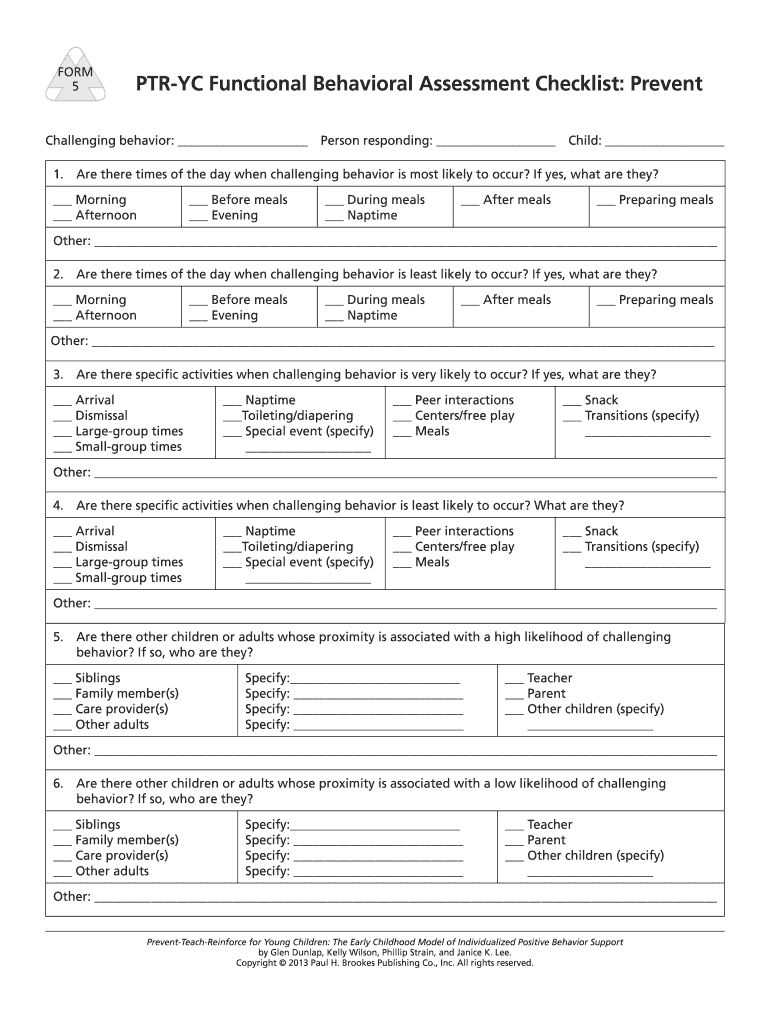







Comprehensive Overview of the Simple Functional Behavior Assessment Form
Definition and Purpose of the Simple Functional Behavior Assessment Form
The simple functional behavior assessment form is structured to identify and analyze the reasons behind specific behaviors exhibited by individuals, particularly in educational or therapeutic settings. This form serves as a tool for educators, clinicians, and caregivers to gather information on challenges that individuals, especially children, may face. By using this form, practitioners can pinpoint factors contributing to undesirable behaviors, enabling them to develop targeted intervention strategies.
- Goals of the Assessment: The primary aim is to collect comprehensive data that facilitates the understanding of behavioral functions, which include gaining attention, escaping tasks, accessing tangible rewards, or self-stimulation.
- Target Population: The form is commonly utilized for children in educational settings, but it can be adapted for use with adults experiencing behavioral challenges.
How to Effectively Use the Simple Functional Behavior Assessment Form
Proper utilization of the simple functional behavior assessment form involves careful completion and analysis of information gathered regarding an individual’s behavior. Practitioners should follow specific steps to ensure effective data collection and interpretation.
- Preparation: Familiarize yourself with the individual’s background, including any previous assessments or documented behavioral incidents.
- Observation: Conduct systematic observations in various settings (classroom, home, community) to gather data on when, where, and how behaviors occur.
- Completion of the Form:
- Identify Target Behaviors: Clearly define specific behaviors that are concerning.
- Collect Contextual Information: Document situations that precede and follow the behavior, noting the environment, time of day, and individuals involved.
- Analysis of Data: Review the completed form to uncover patterns that imply the reasons behind these behaviors (functions).
Key Components of the Assessment Form
A comprehensive simple functional behavior assessment form typically contains several crucial sections that facilitate detailed behavioral analysis. Each section aims to gather pertinent information that informs the understanding of the individual’s behavior.
- Demographics: Basic information about the individual (age, gender, etc.)
- Behavioral Incidents: Descriptions of specific behaviors observed, including frequency and duration.
- Triggers and Antecedents: Contextual factors that seem to prompt the behavior, such as specific events or interactions.
- Consequences: Outcomes associated with the behavior, which might reinforce it (e.g., attention received or avoidance of tasks).
- Other Factors: Considerations related to health, communication skills, or environmental influences that might affect behavior.
Examples of Behavior Patterns Identified Through the Form
Understanding various behavior patterns is essential for creating effective interventions. The simple functional behavior assessment form enables practitioners to categorize behaviors into observable patterns, aiding in targeted support.
- Attention-Seeking Behaviors: Instances where a child might shout or act out in class to gain peer or teacher attention, particularly during less engaging times.
- Escape Behaviors: Actions such as refusing to complete tasks or engaging in disruptive behavior to avoid non-preferred activities.
- Access to Materials: Behaviors where a child may act aggressively or cry to obtain a toy or snack, showcasing the need for immediate access to reinforcement.
Developing Interventions Based on Assessment Findings
Once the data is collected and analyzed, the next step is to develop interventions tailored to the individual’s specific needs. This process is often informed by the outcomes revealed in the assessment.
- Preventative Strategies: Modifying the environment or routines to reduce triggers identified in the assessment form.
- Teaching Replacement Behaviors: Encouraging alternative, more appropriate behaviors that fulfill the same function (e.g., teaching a child to ask for help instead of acting out).
- Data Monitoring: Implementing follow-up assessments to measure the effectiveness of the interventions over time.
Adjustments and Modifications for Different Populations
While the simple functional behavior assessment form is versatile, adaptations may be necessary to cater to different populations or contexts. Such modifications enhance the form's effectiveness and applicability.
- Language Modification: Simplifying language for younger children or using visual supports for individuals with communication challenges.
- Environmental Adaptations: Tailoring the assessment process when used in diverse settings, such as community centers versus educational institutions.
Legal and Ethical Considerations
When using the simple functional behavior assessment form, it is crucial to ensure compliance with legal and ethical guidelines governing data privacy and treatment efficacy.
- Confidentiality: All information gathered should be kept confidential, shared only with relevant parties involved in the individual's care.
- Informed Consent: Prior to conducting assessments, obtaining consent from guardians or individuals (where appropriate) is essential to uphold ethical standards.
Review and Updates of the Assessment Form
Periodic review and updating of the simple functional behavior assessment form ensures its relevance and effectiveness. By integrating feedback from users and advancements in behavioral research, practitioners can enhance the quality and applicability of the form.
- Feedback from Users: Regularly soliciting input from educators and clinicians who utilize the form to identify areas for improvement.
- Incorporation of Research: Staying informed about new findings in behavioral science and adapting the assessment form accordingly to reflect best practices.
The simple functional behavior assessment form not only supports effective data collection but allows for a nuanced understanding of behavior patterns, which is critical for developing meaningful interventions tailored to the individual's needs.




