
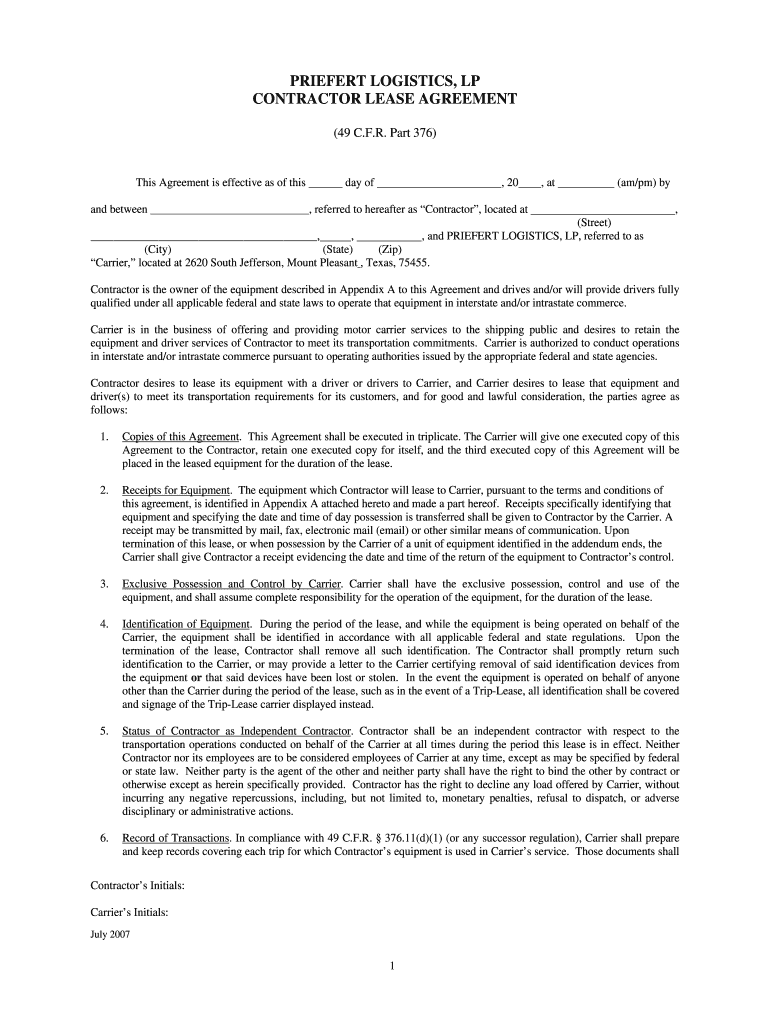







Definition and Meaning of Contractor Lease Agreement
A contractor lease agreement is a legally binding document that outlines the terms under which a contractor leases equipment or services, particularly in industries such as logistics, construction, and transportation. This agreement typically defines the relationship between the lessee (contractor) and the lessor (equipment owner), establishing clear responsibilities, compensation structures, and conditions under which the equipment can be operated. The unique nature of this contract emphasizes that the contractor operates independently rather than as an employee of the leasing company, thus outlining essential terms like rental rates, duration of the lease, and maintenance responsibilities.
Key components of the contractor lease agreement often include:
- Parties Involved: Identification of the contractor and the leasing firm.
- Equipment Specifications: Details of the equipment being leased, including model numbers and operational capabilities.
- Lease Duration: Start and end dates for the lease agreement.
- Payment Terms: Explicit compensation rates, including any penalties for late payments or terms for early termination.
- Liabilities and Responsibilities: Clarification of who is accountable for repairs, maintenance, and insurance of the leased equipment.
By establishing these terms, both parties can protect their interests and ensure the smooth operation of the services involved.
Key Elements of a Contractor Lease Agreement
To ensure clarity and avoid potential disputes, a contractor lease agreement must include several essential elements. The inclusion of these elements not only facilitates successful operations but also helps both parties understand their rights and obligations.
-
Contractor’s Responsibilities:
- Operation of Equipment: The contractor should ensure that all equipment is operated in a safe and efficient manner, adhering to all applicable regulations.
- Record-Keeping: The contractor may be required to maintain documentation of hours worked, maintenance performed, and any incidents that occur during the lease term.
-
Lessor’s Obligations:
- Equipment Maintenance: The lessor may need to guarantee that the equipment is in good working condition before the lease begins and that it meets all regulatory standards.
- Insurance Requirements: Obligations regarding the insurance coverage that the contractor must maintain while operating the rented equipment.
-
Compensation Structure:
- Payment Frequency: Clarification on how often payments will be made (weekly, bi-weekly, or monthly).
- Rates for Services Rendered: Detailed explanation of how compensation is calculated, whether it’s by miles driven, hours worked, or another metric.
-
Termination Clauses:
- Grounds for Termination: Conditions under which either party can terminate the agreement, including breaches of contract or failure to meet obligations.
- Return of Equipment: Procedures for the return of rented equipment at the end of the lease or upon termination of the agreement.
-
Legal Considerations:
- Indemnification Clauses: Terms outlining the extent to which each party is protected against legal claims resulting from the agreement.
- Dispute Resolution: Procedures for addressing conflicts that may arise, including mediation or arbitration options.
Including these elements ensures that the lease is comprehensive and protects both the contractor's and lessor's interests.
Steps to Complete the Contractor Lease Agreement
Completing a contractor lease agreement involves several steps to ensure accuracy and legal compliance. Follow these steps to create a thorough lease agreement:
-
Identify the Parties:
- Clearly state the names of the contractor and the leasing company, including contact information and business addresses.
-
Describe the Equipment:
- Accurately detail the equipment being leased, specifying any serial numbers and operational instructions. This can include trucks, trailers, or machinery.
-
Outline Terms of Use:
- Define how the equipment may and may not be used. Include restrictions such as geographic boundaries or prohibited uses (e.g., subleasing).
-
Specify Payment Terms:
- Detail payment amounts, schedules, and accepted payment methods. Discuss any applicable late fees, discounts for early payment, or adjustments for maintenance.
-
Include Liability Terms:
- Establish responsibilities for loss, theft, or damage to the equipment. Outline insurance requirements, including minimum coverage amounts and the types of policies required.
-
Signing and Notarizing:
- Ensure both parties review the agreement and sign it. In some cases, it may be beneficial to have the agreement notarized to enhance its legal enforceability.
By meticulously following these steps, both parties can create a solid framework for their working relationship, minimizing future disputes.
Examples of Using the Contractor Lease Agreement
Contractor lease agreements are widely applicable across various industries. Here are specific examples to illustrate their usage:
-
Trucking Industry: A trucking company may lease a truck with a contractor who provides drivers. The contractor will sign a lease agreement outlining the compensation structure based on mileage and responsibilities for vehicle maintenance.
-
Construction Sector: In construction, a contractor might lease heavy equipment such as excavators or bulldozers. The agreement would specify usage limits, insurance obligations, and terms for routine maintenance.
-
Logistics Services: A logistics firm may enter into a contractor lease agreement with an independent driver to lease delivery vans. The document would detail payment rates per delivery run and provide guidelines for on-time deliveries.
In the context of these scenarios, such agreements help streamline operations while ensuring both parties meet their obligations, further enhancing trust and accountability.
Important Terms Related to Contractor Lease Agreement
Understanding the terminology associated with contractor lease agreements is crucial for clarity and effective communication. Here are some important terms:
- Independent Contractor: A worker who provides services as a non-employee, responsible for their own taxes and insurance.
- Lessor and Lessee: The lessor is the party leasing the equipment, whereas the lessee is the party renting it.
- Compensation Rate: The payment rate agreed upon for the use of the leased equipment.
- Maintenance Responsibility: The obligations each party has concerning the upkeep of the leased equipment.
- Indemnification: A legal clause protecting one party from potential losses caused by the actions of the other party.
Familiarity with these terms can prevent misunderstandings and facilitate effective discussions about the agreement's provisions.
Legal Use of the Contractor Lease Agreement
The legal use of a contractor lease agreement varies depending on state and federal regulations. However, fundamental principles apply universally:
-
Compliance with State Laws: Each state may have specific laws governing lease agreements, including limitations on fees and responsibilities. Awareness of these guidelines is necessary.
-
Adherence to Industry Regulations: Industries such as trucking are regulated by agencies like the Federal Motor Carrier Safety Administration (FMCSA). Contractors must ensure the equipment leased adheres to these safety and compliance standards.
-
Protection of Rights: The contract should protect both parties' rights, ensuring that the independent contractor classification is clear to prevent misclassification issues.
Understanding and abiding by these legal parameters support the enforceability of the contractor lease agreement and help mitigate legal disputes.




