
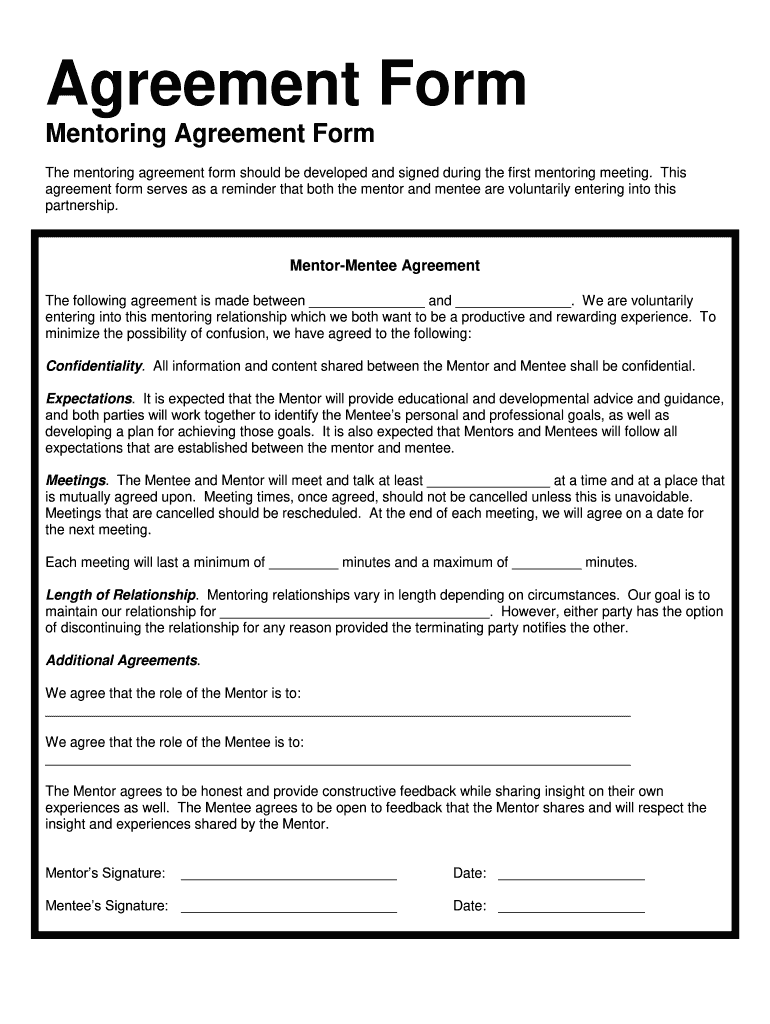







Understanding the Mentoring Agreement Form
A mentoring agreement form is a crucial document that defines the relationship and expectations between a mentor and mentee. This form outlines the terms of engagement, ensuring both parties are aligned and clear about their roles and responsibilities. It sets the tone for a productive partnership by emphasizing confidentiality, mutual goals, scheduled meetings, and the specific contributions each person is expected to make.
Key Components of the Mentoring Agreement Form
-
Parties Involved: Clearly identify the mentor and mentee, including their contact information and any relevant background details. This establishes accountability and facilitates communication.
-
Goals and Objectives: Define the mentorship’s objectives, such as skill development, industry-specific knowledge, or career guidance. It's vital for both the mentor and mentee to agree on these goals to measure progress effectively.
-
Confidentiality Clause: This section ensures that any personal or sensitive information shared during meetings remains confidential. It builds trust and encourages open communication, critical for a successful mentoring relationship.
-
Meeting Schedule: Specify how often the mentor and mentee will meet, along with the preferred method (in-person, video call, or phone). This commitment to a schedule helps maintain a productive relationship.
-
Duration of the Agreement: Indicate the length of the mentorship, whether it is a fixed term or ongoing. This creates a framework for commitment and allows for future evaluations and extensions of the relationship.
Customizing Your Mentoring Agreement
A mentoring agreement template can be customized to fit specific mentoring arrangements. Here’s how to tailor the template effectively:
-
Assess Needs: Both parties should assess their individual needs and preferences before customizing the agreement. This ensures that the final document addresses the unique dynamics of the mentoring relationship.
-
Add Specific Objectives: While general mentoring goals are essential, including specific short- and long-term goals can help track progress. For example, the mentee might aim to develop expertise in a particular software or industry process.
-
Include Feedback Mechanism: Incorporate a process for regular feedback. This could involve occasional check-ins to discuss what is working well in the mentoring dynamic and what can be improved.
-
Outline Responsibilities: Each party should detail their responsibilities. This may include preparation for meetings, communication frequency, and specific actions outside of meetings that can help achieve the outlined goals.
Signing the Mentoring Agreement Form
Once the mentoring agreement form is tailored to meet the needs of both the mentor and mentee, it should be signed to formalize the commitment. Signatures indicate that both parties acknowledge their roles and responsibilities outlined in the agreement.
Using the Mentoring Agreement Form Effectively
To maximize the potential of the mentoring agreement, the following practices can be adopted:
-
Regular Reviews: Schedule regular reviews of the agreement to assess progress toward the goals set. Adjustments can be made as needed to ensure ongoing growth and learning.
-
Documentation: Keep records of meetings and progress discussions. This documentation can help both parties reflect on the mentorship and make any necessary adjustments to the agreement.
-
Maintain Open Communication: Encourage a culture of feedback and open dialogue. This not only enhances relationship dynamics but also fosters a more engaging and effective mentoring experience.
By understanding and utilizing the mentoring agreement form effectively, both mentors and mentees can create a structured, supportive learning environment that leads to meaningful professional growth and development.




