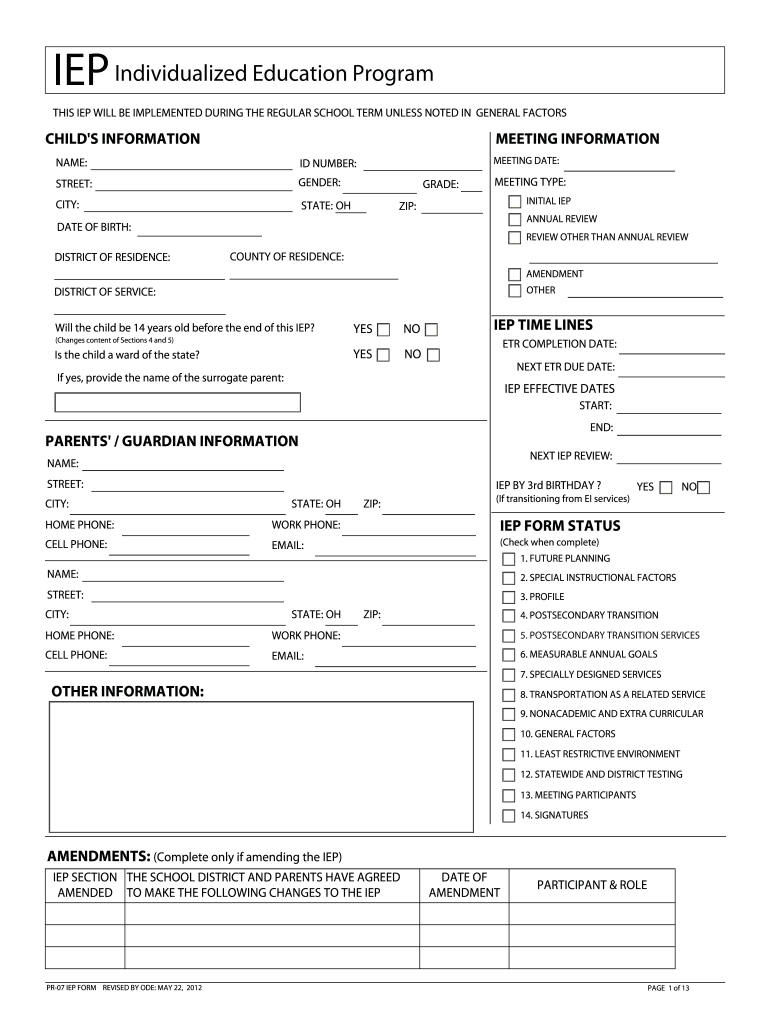





Oho iep 2026

Get Form
oho iep Preview on Page 1

Here's how it works

01. Edit your oho iep online
Type text, add images, blackout confidential details, add comments, highlights and more.
02. Sign it in a few clicks
Draw your signature, type it, upload its image, or use your mobile device as a signature pad.
03. Share your form with others
Send ohio iep form via email, link, or fax. You can also download it, export it or print it out.

Understanding the Oho IEP for Ohio Students

The Oho IEP, or Ohio Individualized Education Program, is a crucial document designed to ensure that children with disabilities receive appropriate educational support tailored to their specific needs. The IEP outlines not only the child's educational goals but also the services and accommodations required to meet those goals.

Key Components of the Oho IEP

The Oho IEP document contains several essential components that contribute to the overall educational planning for each child. These elements work together to ensure compliance with educational laws and to promote the child's learning.

  • Child’s Information: Basic details such as the child's name, age, and relevant background information help educators understand the unique context of each student.
  • Meeting Documentation: Information regarding the IEP meetings, including dates and attendees, maintains a clear record of discussions and decisions made during the planning process.
  • Present Levels of Performance: This section describes the child's current academic and functional performance, establishing a baseline from which to measure progress.
  • Measurable Annual Goals: Goals that are specific, measurable, achievable, relevant, and time-bound provide clear targets for the child’s educational development over the year.
  • Special Education Services: Details regarding any specialized instruction and related services the child will receive, including frequency, duration, and location of services.

Steps to Create an Oho IEP

Creating an Oho IEP requires collaboration between educators, parents, and specialists. The following steps outline the process for developing an effective IEP:

  1. Initial Evaluation: Conduct comprehensive assessments to determine the child's eligibility for special education services.
  2. IEP Team Meeting: Assemble a team that includes educators, parents, and specialists to discuss evaluation results and draft the IEP.
  3. Drafting the IEP: Collaboratively fill out the IEP form, ensuring that all required sections are addressed.
  4. Review and Finalization: Present the draft to the team for review, making any necessary adjustments before finalizing the document.
  5. Implementation: Share the finalized IEP with all relevant educators to ensure consistent application of the services and accommodations outlined in the plan.
  6. Annual Review: Schedule regular IEP meetings to evaluate the child’s progress and make adjustments to the plan as needed.

Oho IEP Templates and Examples

Using templates can help streamline the process of creating an Oho IEP. Various formats are available:

  • Blank IEP Template: A structured template that educators can fill out based on specific student needs and goals.
  • Sample IEP Formats: Examples of completed IEPs can serve as references for best practices and common formats approved by educational agencies.

Understanding Compliance with State Guidelines

The Oho IEP must adhere to regulations set forth by the Ohio Department of Education. Familiarity with these guidelines ensures that the IEP is compliant and reflects the necessary legal mandates for serving students with disabilities.

  • State-Specific Compliance: Adhering to Ohio's educational standards ensures that services provided meet both state and federal legislation.
  • ODE Forms: Utilizing official forms from the Ohio Department of Education facilitates compliance and standardization across districts.

Benefits of an Effectively Written Oho IEP

An individualized education program that is well constructed has several advantages:

  • Targeted Support: Tailors educational strategies to meet specific student needs, promoting better learning outcomes.
  • Parental Involvement: Engaging parents in the IEP process fosters a collaborative approach, leading to improved trust and communication.
  • Accountability: Clearly outlined goals and services hold educators accountable for delivering on the promises made within the IEP.

By understanding the components and processes involved in the Oho IEP, educators and parents can work together more effectively to ensure the best outcomes for Ohio students with disabilities.

See more oho iep versions

We've got more versions of the oho iep form. Select the right oho iep version from the list and start editing it straight away!
Versions Form popularity Fillable & printable
2021 4.9 Satisfied (33 Votes)
2017 4.3 Satisfied (25 Votes)
2012 4.9 Satisfied (411 Votes)
2009 4.4 Satisfied (63 Votes)
be ready to get more

Complete this form in 5 minutes or less

Get form

Got questions?

We have answers to the most popular questions from our customers. If you can't find an answer to your question, please contact us.
Contact us
Historically, intellectual disability has been defined by DocHub cognitive deficits, typically established by the testing of IQ and adaptive behaviors. There are no laboratory tests for ID; however, many specific causes and genetic factors for ID can be identified through laboratory tests.
Under federal and state law, students are eligible for special education under OHI if they have limited strength, vitality, or alertness (including a heightened alertness to environmental stimuli that results in limited alertness in the educational environment), that is due to chronic or acute health problems,
This includes, but is not limited to, asthma, attention deficit disorder or attention deficit hyperactivity disorder, Tourette syndrome, diabetes, epilepsy, a heart condition, hemophilia, lead poisoning, leukemia, nephritis, rheumatic fever, sickle cell anemia, and acquired brain injury.
Schools often resist IEPs (Individualized Education Programs) due to DocHub costs, heavy paperwork, staff shortages, and lack of resources, making it a legal, financial, and logistical burden, even though its a federal right for students with disabilities; this creates conflict as schools try to limit IEPs, while parents fight for necessary accommodations for their children. The core tension arises from underfunded mandates clashing with limited budgets and stressed staff, turning IEPs into a source of struggle rather than support. Financial Resource Constraints High Costs: IEPs can be expensive, requiring specialized staff, materials, and sometimes costly placements, straining school budgets. Underfunding: The federal government has historically failed to fully fund IDEA, leaving districts to cover most costs, which leads to delays and resistance, according to some sources. Staffing Training: Schools may lack trained special education teachers or adequate support staff, and existing staff are often overworked with paperwork and meetings, making implementation difficult. Administrative Logistical Burden Excessive Paperwork: The administrative demands of IEPs (meetings, documentation) add DocHub stress to teachers and administrators. Systemic Flaws: Bureaucracy and a focus on standardized testing can hinder effective IEP implementation, turning them into a bureaucratic task rather than a solution. Lack of Oversight: Theres often weak enforcement of IDEA, meaning schools face few real penalties for non-compliance, reducing incentives to fully comply, say some parents. Misaligned Goals Perceptions Containment vs. Transformation: Some critics argue IEPs focus on managing daily struggles within the school setting rather than addressing core learning issues, leading to fragmented or ineffective support. Stigma: A negative societal view of special education can contribute to school resistance and conflict with parents, even with well-documented needs. Liability: Schools may view IEPs as a legal liability, prompting them to limit the number of students on plans, especially if a student isnt severely disruptive but would benefit from accommodations. AI can make mistakes, so double-check responsesHow to Survive Special Education IEP Battles - Brain BalanceMany schools are reluctant to use IEPs for students because they are expensive and taxing. Often, parents have to advocate for aspBrain BalanceThe Dark Side of IEPs: What Most Parents Arent Told - Building Better BrainsBuilding Better Brains - Lorraine Driscoll
ODR provides a Facilitator to maintain open communication among all members and assist the members in resolving conflicts that may have come up in the past or arise during the meeting. The appointed Facilitator will not construct, write, or approve the individualized education program.

Security and compliance

At DocHub, your data security is our priority. We follow HIPAA, SOC2, GDPR, and other standards, so you can work on your documents with confidence.

Learn more
ccpa2
pci-dss
gdpr-compliance
hipaa
soc-compliance

People also ask

Other Health Impairment
In general, a student with an OHI can function on the same academic level as their peers, however with their medical condition; the learning process can be more difficult tough due to prolonged absences, frequent need for nursing services, and other related services.

blank iep template