





Definition & Meaning
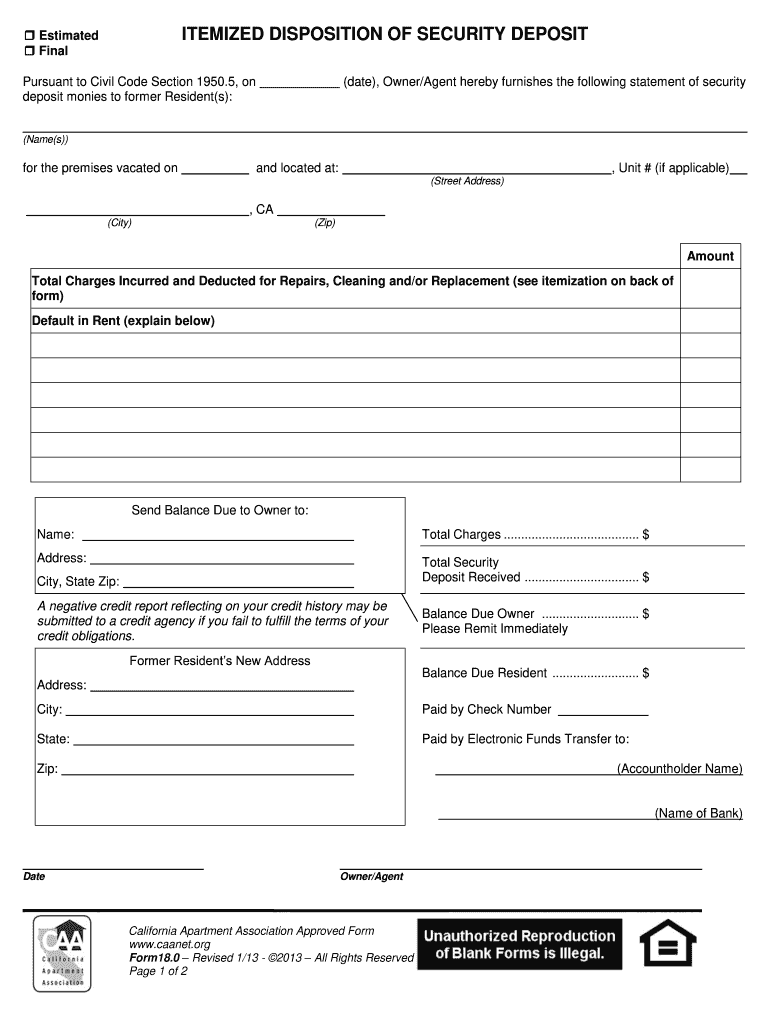
The security deposit form in California is an essential document utilized by landlords and property managers. Under California Civil Code Section 1950.5, this form serves as an itemized statement detailing the use of a tenant's security deposit. It provides transparency by documenting charges for repairs, cleaning, or replacements needed after a tenant vacates a rental property. This document ensures both parties—landlord and tenant—are aware of financial obligations post-tenancy, helping to avoid potential disputes.
Importance of the Security Deposit Form
The significance of the security deposit form lies in its ability to clearly outline the disposition of funds held as a security deposit. It provides legal protection, as it records all deductions made, allowing tenants to understand why they have or have not received their deposit back. Landlords in California are required to return the security deposit or a written explanation of deductions within 21 days of a tenant moving out.
How to Use the Security Deposit Form in California
Using the security deposit form correctly involves several key steps to ensure compliance with California law. Landlords should itemize every deduction from the deposit, specifying the reason for each cost. This includes describing repairs, cleaning fees, or replacements necessary beyond normal wear and tear. If receipts or invoices are available, they should be attached to the form for added transparency.
Detailed Steps for Using the Form
- Gather Information - Compile all necessary details, including tenant’s name, address, and the lease period.
- Document Charges - Itemize each charge with a clear description and the amount deducted.
- Attach Supporting Documents - Include copies of all relevant receipts or invoices.
- Complete the Payment Section - If any deposit remains, specify the payment amount to be returned.
- Review and Send - Ensure all information is accurate before providing the form to the tenant.
Steps to Complete the Security Deposit Form
Completing the security deposit form requires attention to detail and accuracy. Follow these steps to ensure compliance and clarity:
- Initial Assessment - Conduct a walk-through inspection of the property with the tenant if possible.
- Detailed Evaluation - Assess any damage or cleaning required that exceeds normal wear and tear.
- Calculate Costs - Accurately determine the cost of repairs or cleaning.
- Fill Out the Form - Use clear, concise language to list all deductions and remaining balance due (if any).
- Verification - Double-check all entries and attached documents for completeness and accuracy.
- Submission - Send the completed form and any remaining balance back to the tenant within the legal timeline.
Legal Use of the Security Deposit Form in California
In California, it's crucial to use the security deposit form in a legally compliant manner. The form must adhere to the requirements set forth by the California Civil Code. This includes providing a detailed breakdown of costs associated with any deductions made from the security deposit. Failing to provide this form or improperly completing it can result in legal consequences, including the potential return of the full deposit to the tenant.
Compliance Tips
- Ensure compliance with the 21-day return policy of returned deposits and forms.
- Include only charges that are legally deductible, avoiding standard maintenance costs.
- Maintain open communication with tenants to preemptively address any disputes.
Key Elements of the Security Deposit Form
Several key elements must be included in a security deposit form to ensure it fulfills its purpose. These elements guarantee clarity and legal adherence, providing both parties with detailed financial records.
- Tenant Information: Full names and contact details
- Property Address: The rental property’s location
- Lease Term Dates: Start and end dates of the lease
- Description of Charges: Clear itemization and rationale for deductions
- Amount Deducted: Specific costs associated with each item listed
- Remaining Balance: Total refund or balance due
- Supporting Documentation: Receipts and invoices as evidence
State-Specific Rules for California
California has specific rules governing the use and distribution of security deposits. These rules are designed to protect both landlords and tenants, ensuring fairness and transparency in all transactions related to tenancy termination.
Key Regulations
- Maximum Deposit: California law limits deposits to two times the rent for unfurnished properties and three times for furnished ones.
- Time to Return: Landlords have 21 days post-lease to return the deposit or provide an itemized list of deductions.
- Legal Deductions: Allowed deductions include unpaid rent, cleaning, and necessary repairs beyond normal wear.
Examples of Using the Security Deposit Form
Real-world examples highlight the practical use of the security deposit form. Here are a few scenarios where this form plays a vital role:
- Repairs Example: A tenant leaves holes in walls, requiring patching and painting. The cost, supported by invoices, is documented in the form, detailing each expense.
- Cleaning Costs: If a rental unit requires professional cleaning upon tenant departure, the expense is itemized, ensuring clarity on the deduction.
- Unpaid Rent: If deductions are made for unpaid rent, clearly list these charges and include relevant portions of the lease agreement.
Important Terms Related to the Security Deposit Form
Understanding the terminology associated with the security deposit form is crucial for accurate completion and compliance. Here are essential terms:
- Normal Wear and Tear: Refers to the expected degradation of a property due to regular use, which should not be deducted from the deposit.
- Itemized Statement: A detailed account of deductions made from the security deposit.
- Civil Code Section 1950.5: The legal framework governing security deposits in California.
- Deduction: Any amount subtracted from a tenant’s security deposit for specific, justified reasons.
By comprehensively understanding and applying this knowledge, landlords can effectively manage security deposits, ensuring a legally sound and transparent process.