

Complex Will with Credit Shelter Marital Trust for Large Estates - Kansas 2026

Get Form
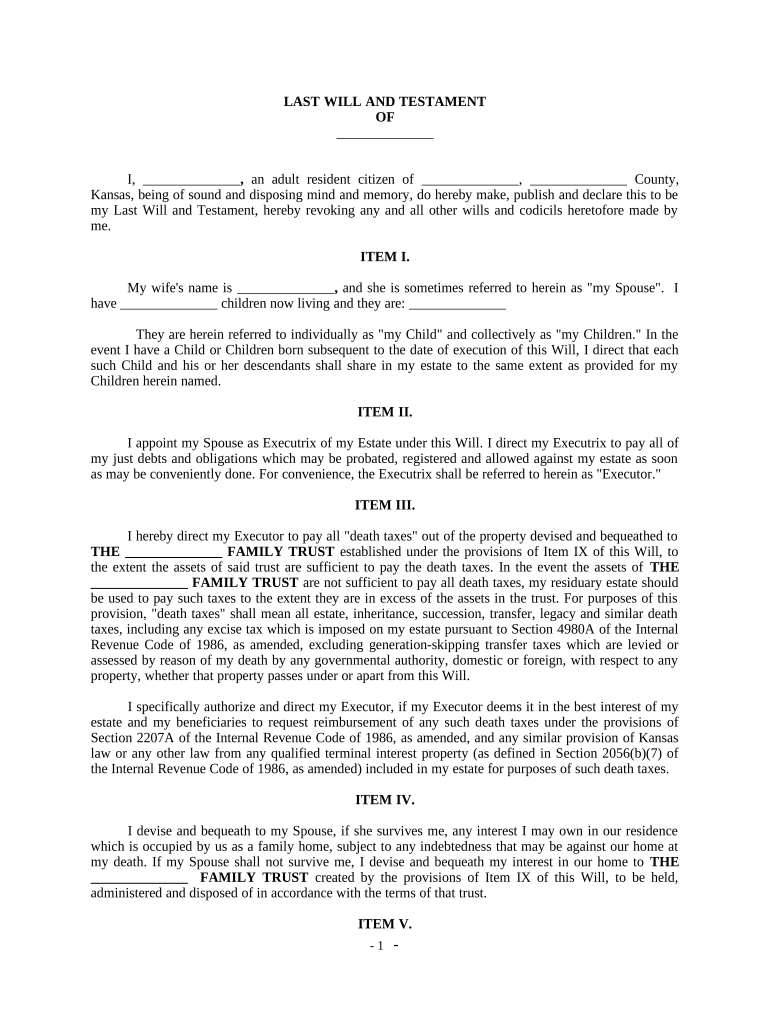
Complex Will with Credit Shelter Marital Trust for Large Estates - Kansas Preview on Page 1

Here's how it works

01. Edit your form online
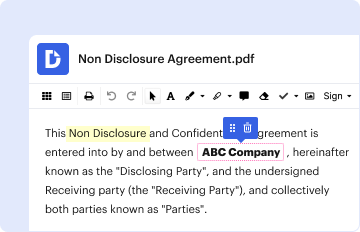
Type text, add images, blackout confidential details, add comments, highlights and more.
02. Sign it in a few clicks
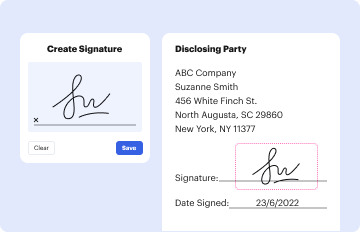
Draw your signature, type it, upload its image, or use your mobile device as a signature pad.
03. Share your form with others
Send it via email, link, or fax. You can also download it, export it or print it out.

How to use or fill out Complex Will with Credit Shelter Marital Trust for Large Estates - Kansas

Form edit decoration
9.5
Ease of Setup
DocHub User Ratings on G2
9.0
Ease of Use
DocHub User Ratings on G2
  1. Click ‘Get Form’ to open it in the editor.
  2. Begin by entering your full name and address in the designated fields at the top of the document. This identifies you as the testator.
  3. In Item I, provide your spouse's name and list your children. If applicable, include any future children born after this will is executed.
  4. For Item II, appoint your spouse as the Executor of your estate. Ensure that you clearly state their responsibilities regarding debts and obligations.
  5. In Item III, specify how death taxes should be paid from your estate or trust assets. Make sure to understand which assets are involved.
  6. Continue filling out Items IV through IX by detailing specific bequests to your spouse and children, including any trusts established for their benefit.
  7. Review all entries for accuracy and completeness before finalizing the document. Utilize our platform’s features to save and share your completed will securely.

Start using our platform today to easily create and manage your Complex Will with Credit Shelter Marital Trust for Large Estates - Kansas!

be ready to get more

Complete this form in 5 minutes or less

Get form

Got questions?

We have answers to the most popular questions from our customers. If you can't find an answer to your question, please contact us.
Contact us
When the surviving spouse dies, any remaining principal can be distributed to children or remain in trust for their benefit, as you direct. Even though the surviving spouse has access to income (and principal, if needed), the assets in the credit shelter trust are not considered part of the survivors taxable estate.
How Do I Terminate a Credit Shelter Trust? There are circumstances where if one spouse is deceased but the surviving spouse is still alive, the CST can be modified or terminated either by the trustee alone, by the trustee and all the beneficiaries, or by going to court.
Having a revocable trust in place can help you avoid probate, which is the process a court takes to finalize your legal and financial matters after your death. Probate can be lengthy and expensive for your loved ones.
Are There Disadvantages of Using a Marital Trust? While a marital trust offers many benefits, its essential to consider any limitations or drawbacks, such as loss of flexibility once established. Once established, an irrevocable trust cannot be easily altered or terminated.
If you want to avoid probate and ensure seamless asset transfer, get a living trust. If you have minor children or specific final wishes, you need a will. If you want full protection, you need both.

Security and compliance

At DocHub, your data security is our priority. We follow HIPAA, SOC2, GDPR, and other standards, so you can work on your documents with confidence.

Learn more
ccpa2
pci-dss
gdpr-compliance
hipaa
soc-compliance

People also ask

Upon the death of the second spouse, any assets in a credit shelter trust are passed to the beneficiaries estate tax-free. This is because the trust was funded with assets up to the exemption amount and any growth in those assets gets to pass without being subject to estate taxes.
The central idea of the credit shelter trust is to take full advantage of each spouses applicable exclusion amount. Federal tax law includes an unlimited marital deduction for transfers between spouses, so this technique is typically used for transfers to third parties such as the couples children.

Related links