Type text, add images, blackout confidential details, add comments, highlights and more.
02. Sign it in a few clicks
Draw your signature, type it, upload its image, or use your mobile device as a signature pad.
03. Share your form with others
Send it via email, link, or fax. You can also download it, export it or print it out.
How to use or fill out Notice to Beneficiaries of being Named in Will - Indiana with our platform
Ease of Setup
DocHub User Ratings on G2
Ease of Use
DocHub User Ratings on G2
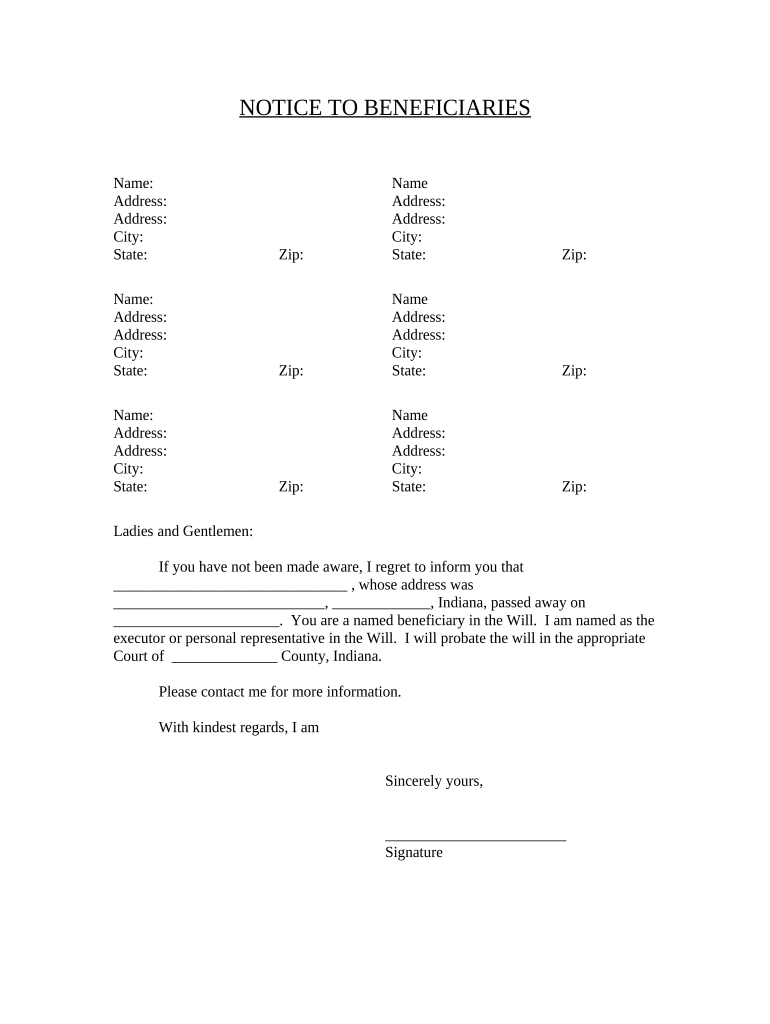
Click ‘Get Form’ to open the Notice to Beneficiaries in the editor.
Begin by entering your name and address in the designated fields at the top of the form. Ensure accuracy as this information is crucial for identification.
Next, fill in the details of the deceased, including their name and last known address. This section is vital for notifying beneficiaries.
In the body of the notice, specify the date of death and your role as executor or personal representative. This establishes your authority in handling the estate.
Complete any additional sections regarding beneficiaries, ensuring that all names and addresses are correctly listed. If any addresses are unknown, note them accordingly.
Finally, sign and date the document at the bottom. This confirms your acknowledgment and intent to notify all parties involved.
Start using our platform today to easily complete your Notice to Beneficiaries for free!
Fill out Notice to Beneficiaries of being Named in Will - Indiana online It's free
Do I need a will if I have named beneficiaries on most of my
Nov 17, 2016 The answer is generally Yes, you still need a will. There are several reasons. There are probably going to be some assets that you cant transfer using theseRead more
notice under this section to the following: (1) Any person named as a beneficiary in the testators will. (2) Any person who would be entitled to inheritRead more
Nov 19, 2024 freedom from pain, being at spiritual peace, and being with family ranking among the top three considerations by all three groups.393 End-ofRead more
Cookie consent notice
This site uses cookies to enhance site navigation and personalize your experience.
By using this site you agree to our use of cookies as described in our Privacy Notice.
You can modify your selections by visiting our Cookie and Advertising Notice.