Professional corporation form 2026

Get Form
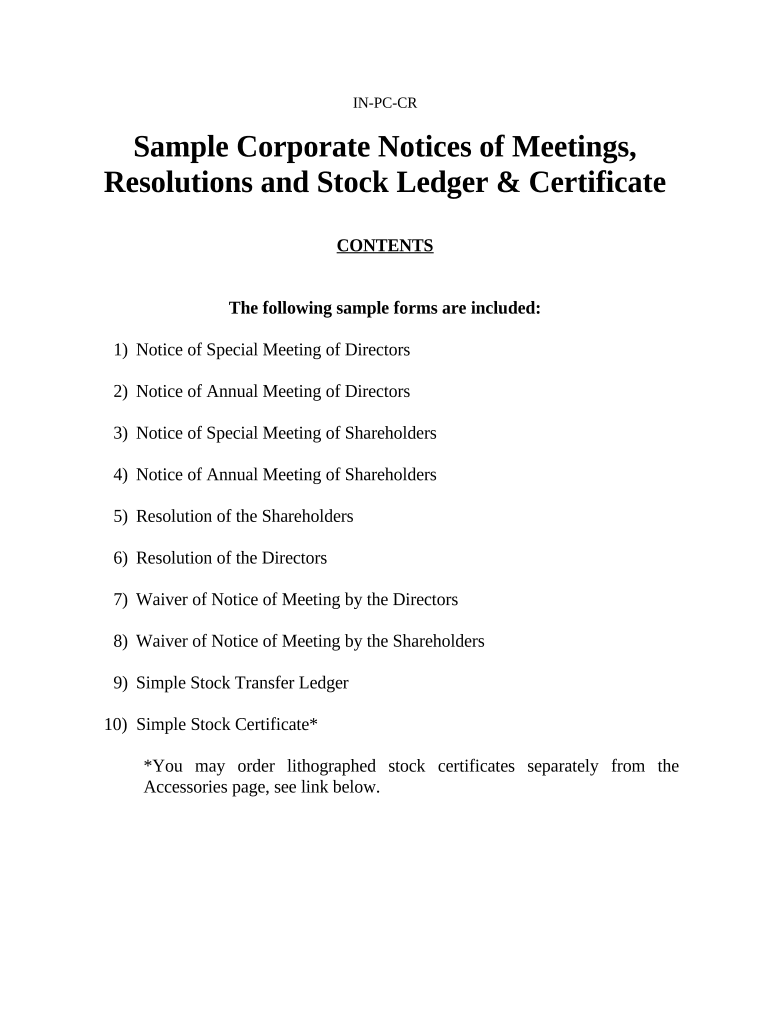
professional corporation form Preview on Page 1

Here's how it works

01. Edit your form online
Type text, add images, blackout confidential details, add comments, highlights and more.
02. Sign it in a few clicks
Draw your signature, type it, upload its image, or use your mobile device as a signature pad.
03. Share your form with others
Send it via email, link, or fax. You can also download it, export it or print it out.

How to use or fill out professional corporation form with our platform

Form edit decoration
9.5
Ease of Setup
DocHub User Ratings on G2
9.0
Ease of Use
DocHub User Ratings on G2
  1. Click ‘Get Form’ to open the professional corporation form in the editor.
  2. Begin by entering the 'Name of Corporation' at the top of each section. This is crucial for identifying your entity.
  3. Fill in the 'Date of Meeting and Time' for each notice, ensuring accuracy to comply with legal requirements.
  4. Specify the 'Address of Meeting' where the meeting will take place. This should be a complete address for clarity.
  5. In the 'Purpose of Meeting' section, clearly outline what will be discussed or decided during the meeting.
  6. Complete the 'Date of Notice' field, indicating when this notice is being issued to ensure compliance with notification timelines.
  7. Finally, have the Secretary sign and date the document to validate it before distribution to directors or shareholders.

Start using our platform today for free to streamline your professional corporation form completion!

be ready to get more

Complete this form in 5 minutes or less

Get form

Got questions?

We have answers to the most popular questions from our customers. If you can't find an answer to your question, please contact us.
Contact us
Whats the main difference between an LLC and a PC for solo practitioners? An LLC is simpler to manage and has more flexible tax options, while a PC has stricter rules but may be required by your state. Both protect your personal assets from business debts, but they work differently for taxes and paperwork.
In order to qualify as a Professional Corporation the ownership of the company must meet N.C.G.S. 55B-6 and 55B-4(3), which requires at least 2/3 ownership by licensees and at least one North Carolina licensee for each profession that will be offered who is an officer, director and shareholder in the corporation.
A professional corporation (PC or professional corp for short) is a business entity intended to be formed by people in specific licensed professional service industries, such as attorneys, doctors, dentists or accountants. The exact industries vary by state but typically focus on these licensed professionals.
To form a professional corporation in California, you can fill out this form or prepare your own document, and submit for filing along with: A $100 filing fee. A separate, non-refundable $15 service fee also must be included, if you drop off the completed form or document.
Types of corporations A standard corporation can be formed by almost anyone. A professional corporation can generally only be established by licensed professionals in certain fields which include medical doctors, dentists, engineers, lawyers, accountants, etc.

Security and compliance

At DocHub, your data security is our priority. We follow HIPAA, SOC2, GDPR, and other standards, so you can work on your documents with confidence.

Learn more
ccpa2
pci-dss
gdpr-compliance
hipaa
soc-compliance

People also ask

A professional corporation (PC) is a corporation organized under state law to provide services by licensed professionals. Some states use the term professional service corporation (PSC) or professional association (PA).
Professional corporation means a corporation which is engaged in rendering the professional services as herein specified and defined, pursuant to a certificate of registration issued by the Licensing Board regulating the profession or practice, and which has as its shareholders only those individuals permitted by
Professional Corporation Cons Not recognized in all states as a legal business structure. May be limited to only certain licensed professions. Subject to double taxation (if choosing default tax treatment method) Must deal with more formation paperwork and tasks than a PLLC.

Related links