




Here's how it works
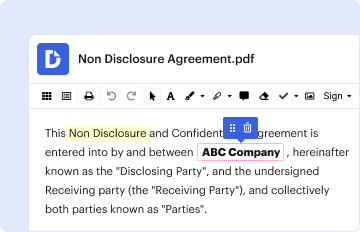
01. Edit your et 133 online
Type text, add images, blackout confidential details, add comments, highlights and more.
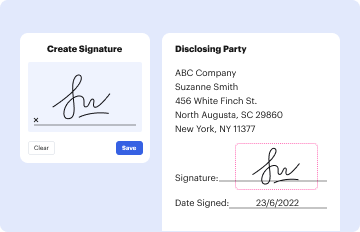
02. Sign it in a few clicks
Draw your signature, type it, upload its image, or use your mobile device as a signature pad.

03. Share your form with others
Send et 133 instructions via email, link, or fax. You can also download it, export it or print it out.
How to use or fill out et 133 fillable with our platform

- Click ‘Get Form’ to open the ET-133 fillable form in the editor.
- Begin by entering the decedent’s last name, first name, and middle initial in the designated fields. Ensure accuracy as this information is crucial for identification.
- Fill in the social security number and address of the decedent at the time of death. This section helps establish residency and tax obligations.
- Indicate the date of death and mark an X if a copy of the death certificate is attached. If applicable, check the box for non-resident status and attach Form ET-141.
- Complete executor details, including names and contact information. If there are multiple executors, ensure to mark that appropriately.
- For extensions, mark the appropriate boxes for filing or payment extensions and provide detailed explanations where required.
- In the computation section, accurately input values related to federal gross estate and taxable gifts as instructed. Double-check calculations for accuracy.
- Finally, certify your application by signing and dating it before submission. Ensure all necessary attachments are included.
Start using our platform today to easily complete your ET-133 form online for free!
Fill out et 133 fillable online
It's free
It's free
See more et 133 fillable versions
We've got more versions of the et 133 fillable form. Select the right et 133 fillable version from the list and start editing it straight away!
Got questions?
We have answers to the most popular questions from our customers. If you can't find an answer to your question, please contact us.
Contact us
What are the inheritance laws in New York state?
When There Is No Will If the Decedent hasthen children* but no spouse children inherit everything spouse and children* the spouse inherits the first $50,000 plus half of the balance. The children* inherit everything else. parents but no spouse and no children* the parents inherit everything3 more rows Oct 11, 2018
How to avoid NY state estate tax?
Generally, for New York estate tax purposes, if the value of assets passing to beneficiaries other than a spouse or charity is below a certain threshold ($6.94 million in 2024), the assets are fully exempt from tax and no New York estate taxes will be due.
How much inheritance is tax free in New York state?
New York Estate Tax Exemption The New York estate tax threshold is $7.16 million in 2025 and $6.94 million in 2024. That number will keep going up annually with inflation. This means that if a persons estate is worth less than $7.16 million and they die in 2024, the estate owes nothing to the state of New York.
How much can you inherit in NYS without paying taxes?
While New York doesnt charge an inheritance tax, it does include an estate tax in its laws. The state has set a $7.16 million estate tax exemption for 2025 (up from $6.94 million in 2024), meaning if the decedents estate exceeds that amount, the estate is required to file a New York estate tax return.
What triggers an estate tax return?
An estate tax return is required if the gross value of the estate is over a certain threshold. For individuals who die in 2025, the threshold is $13.99 million (up from $13.61 million in 2024). Almost anything belonging to the deceased with a tangible cash value is included in the value of the estate.
Security and compliance
At DocHub, your data security is our priority. We follow HIPAA, SOC2, GDPR, and other standards, so you can work on your documents with confidence.
Learn more


Related forms

Master Truck bRentalb Agreement - Castex bRentalsb
The Master Truck Rental Agreement outlines the terms between BCK-TEX dba Castex Rentals and the customer for truck renta ...

Personal Fact Find and Financial Needs Analysis
The document is a Personal Fact Find and Financial Needs Analysis prepared for clients by InterPrac Financial Planning. ...

NO DUES FORM 2021
The document is a No Dues Form from the Indian Institute of Information Technology, Design & Manufacturing, Jabalpur. It ...

Basic Business License Inspection Tenant Consent Formdob
The document is a consent form from the Department of Buildings in Washington, D.C., allowing inspectors to enter a tena ...

Research File Sharing Service New Request Form
The document is a request form for establishing a 25 GB network research data storage space for principal investigators ...

MM Fall 1997 p60 - Cornell Mathematics - Cornell University
The document 'Math Matters' from the Department of Mathematics at Cornell University provides an overview of departmenta ...
People also ask
Can you file an extension for an estate tax return?
Automatic extension. An executor may apply for an automatic 6-month extension of time to file Form 706, 706-A, 706-NA, or 706-QDT. Unless you are an executor who is out of the country (see below), the automatic extension of time to file is 6 months from the original due date of the applicable return.
What is the most you can inherit without paying taxes?
While state laws differ for inheritance taxes, an inheritance must exceed a certain threshold to be considered taxable. For federal estate taxes as of 2024, if the total estate is under $13.61 million for an individual or $27.22 million for a married couple, theres no need to worry about estate taxes.