
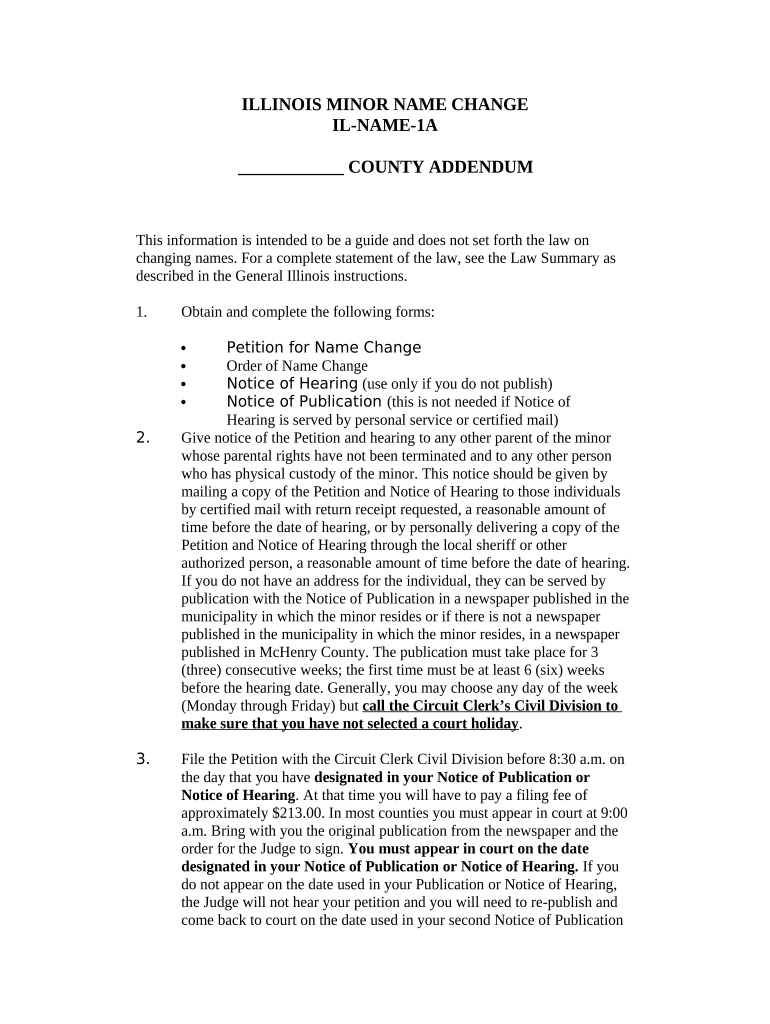







Understanding the Addendum for Name Changes in Contracts
An addendum for a name change in a contract is a supplemental document that modifies an existing contract's details to reflect a change in a party's name, whether for an individual or a business. This is essential when the original contract may not adhere to the new legal name for parties involved.
Key Elements of a Name Change Addendum
A well-crafted addendum should contain several critical components to ensure clarity and legal compliance:
- Original Contract Reference: Clearly state details of the original contract, including names, date, and any reference numbers.
- New Name Information: Provide the full legal name being adopted, alongside any previous names used in the contract.
- Signatures: Ensure all parties involved in the original contract provide their signatures to validate the addendum.
- Effective Date: Specify the date from which the changes are applicable to avoid any confusion.
- Notarization Clause: In certain circumstances, a notarization may be advised to enhance validity.
Each of these elements plays a role in preserving the integrity of the contract while updating it to reflect accurate information.
Steps to Create a Name Change Addendum
Creating a name change addendum involves a series of straightforward steps to ensure accuracy and legality:
- Review the Original Contract: Identify the specific portions of the contract that refer to the parties' names.
- Draft the Addendum: Include sections such as the introduction stating the purpose of the addendum, the amended party names, and the effective date of the change.
- Gather Required Signatures: Coordinate with all parties to obtain signatures, affirming their consent to the changes.
- Distribute Copies: Ensure each party receives a copy of the signed addendum to maintain proper documentation.
- Record Keeping: Store the addendum alongside the original contract for future reference.
Following these steps can help secure a smooth transition from the old name to the new one documented in the contract.
Real-World Scenarios for Using a Name Change Addendum
Understanding practical applications can illuminate the utility of a name change addendum:
- Personal Name Changes: Individuals who have legally changed their names due to marriage, divorce, or personal choice may need to amend existing contracts such as leases or mortgages to prevent legal complications.
- Business Name Changes: A company that undergoes rebranding and adopts a new name must adjust contractual obligations with suppliers, clients, and employees to ensure legal contracts reference the correct entity name.
- Property Transactions: In real estate, a name change may occur post-marriage or divorce, requiring adjustments to purchase agreements or lease contracts to maintain compliance with property records.
Legal Considerations When Modifying Contracts
Certain legal aspects must be considered during the process of drafting and executing a name change addendum:
- Compliance with State Laws: Different states may have specific regulations governing the recognition and enforcement of name changes in contracts. It is advisable to consult local laws that may affect the addendum's validity.
- Implications on Liability: Changing a name does not absolve a party of their responsibilities under the original contract. Thus, liabilities continue unless clearly outlined otherwise in the addendum.
- Future Contractual Agreements: New contracts entered into post-name change should accurately reflect the updated name to avoid confusion and ensure enforceability.
Common Misconceptions About Name Change Addendums
It's essential to address some misconceptions surrounding name change addendums:
- Not a Complete Contract Rewrite: An addendum is intended to amend specific terms without nullifying the entire contract; its purpose is to preserve the original agreement as much as possible.
- No Impact on Existing Rights: The existing rights and obligations remain in effect post-addendum; a name change does not alter the legal responsibilities previously established.
- Simplicity of Process: Some may view executing an addendum as complex; however, following organized steps can streamline the process considerably.
Adhering to these guidelines facilitates a clear and legally sound transition, ensuring document accuracy and legal protection for all involved parties.




