




01. Edit your irs 15227 form online
Type text, add images, blackout confidential details, add comments, highlights and more.

Type text, add images, blackout confidential details, add comments, highlights and more.

Draw your signature, type it, upload its image, or use your mobile device as a signature pad.

Send form 15227 via email, link, or fax. You can also download it, export it or print it out.
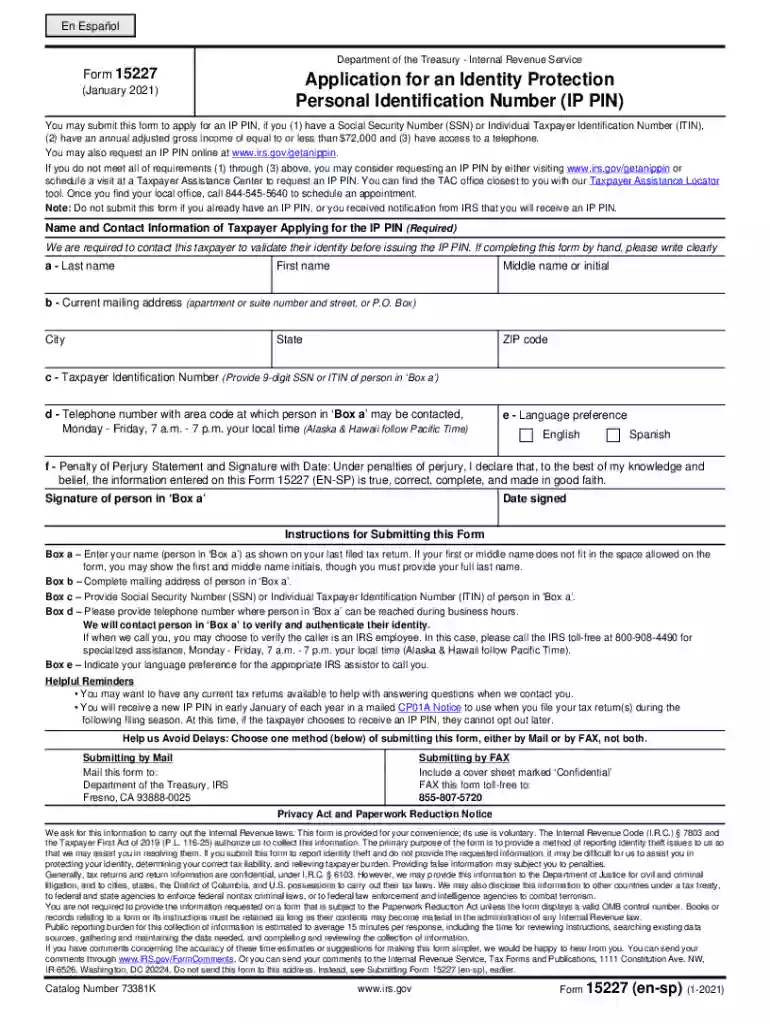
Form 15227 is an application submitted to the IRS for an Identity Protection Personal Identification Number (IP PIN), aimed at protecting taxpayers from identity theft. An IP PIN is a unique six-digit number that allows individuals to verify their identity when filing taxes, thereby adding an extra layer of security.
To apply for an IP PIN using Form 15227, individuals must meet specific eligibility criteria. The primary requirements include:
Understanding these requirements is crucial for ensuring a smooth application process. For example, if your income exceeds the threshold, you'll need to explore other options for identity protection or assistance.
Completing Form 15227 involves several sections that require accurate information. Key sections include personal identification information, reasons for requesting an IP PIN, and instructions for submission.
Carefully following these steps can significantly reduce the chances of delays in processing your application.
When submitting Form 15227, consider the two primary methods: mail or fax.
Mail Submission:
Fax Submission:
Choosing the appropriate submission method can affect the speed of your application’s processing time.
Providing accurate information on Form 15227 is critical. Errors can lead to processing delays or denial of your IP PIN request.
Double-checking your information and following IRS guidelines can help prevent these issues.
Once you submit Form 15227, it's essential to monitor the status of your application.
Staying informed will help ensure that you receive your IP PIN promptly, allowing you to file your taxes with peace of mind.
Failing to complete Form 15227 when eligible can expose taxpayers to the risk of identity theft. Without an IP PIN, anyone can use your SSN to file fraudulent tax returns. This not only affects your tax return but can also lead to complications in rectifying the situation once identity theft occurs.
For those looking for further information regarding Form 15227, the IRS provides various resources, including:
Utilizing these resources can provide clarity and assist in resolving any issues that may arise during the application process.
We've got more versions of the irs 15227 form form. Select the right irs 15227 form version from the list and start editing it straight away!
At DocHub, your data security is our priority. We follow HIPAA, SOC2, GDPR, and other standards, so you can work on your documents with confidence.
The primary purpose of the form is to provide a paper method of requesting an Identity Protection PIN. Providing false information may subject you to penalties.Read more
Consumers can request deletion of personal data provided by or obtained about them, subject to exceptions for completing transactions, detecting fraud,Read more
Web taxpayers whose adjusted gross income is $72,000 or less may complete form 15227 [pdf], application for an identity protection personal identification


