Non-Foreign Affidavit Under IRC 1445 - Iowa-2026

Get Form
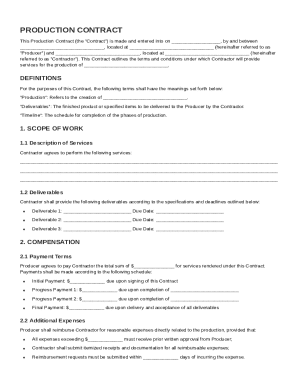
Non-Foreign Affidavit Under IRC 1445 - Iowa Preview on Page 1

Here's how it works

01. Edit your form online
Type text, add images, blackout confidential details, add comments, highlights and more.
02. Sign it in a few clicks
Draw your signature, type it, upload its image, or use your mobile device as a signature pad.
03. Share your form with others
Send it via email, link, or fax. You can also download it, export it or print it out.

How to use or fill out Non-Foreign Affidavit Under IRC 1445 - Iowa with DocHub

Form edit decoration
9.5
Ease of Setup
DocHub User Ratings on G2
9.0
Ease of Use
DocHub User Ratings on G2
  1. Click ‘Get Form’ to open the Non-Foreign Affidavit Under IRC 1445 - Iowa in our editor.
  2. Begin by entering the names of the Seller(s) in the designated field at the top of the form. Ensure that all names are spelled correctly to avoid any discrepancies.
  3. In Section 1, provide the complete address of the property being transferred, including city, county, and state. Fill in any additional details such as District, Section, Block, Township, Range, or Parcel Number as applicable.
  4. For Section 2, input each Seller's United States taxpayer identification number along with their corresponding addresses. Make sure to double-check for accuracy.
  5. In Section 3, confirm that you are not a 'foreign person' as defined by Section 1445(f). This is crucial for establishing your exemption from withholding requirements.
  6. Finally, have all Sellers sign and date the affidavit at the bottom of the form. Ensure that a Notary Public witnesses this signing for it to be valid.

Start using our platform today to easily fill out your Non-Foreign Affidavit Under IRC 1445 - Iowa for free!

be ready to get more

Complete this form in 5 minutes or less

Get form

Got questions?

We have answers to the most popular questions from our customers. If you can't find an answer to your question, please contact us.
Contact us
Also known as an Affidavit of Non-Foreign Status, it is an IRS form a seller uses to docHub under oath that he/she isnt a foreign citizen. The form includes important information such as the name of the seller, U.S. taxpayer identification number as well as the home address.
If you can prove that you are not a foreign seller, you can be exempt from FIRPTA withholding. This means that if you can show documentation confirming your U.S. citizenship or residency status, the FIRPTA withholding requirement wont apply to your property sale.
Although there are some exceptions, the act requires a mandatory 15% withholding of the sale price on U.S. property sold or transferred by a foreign national to another owner. This helps ensure a tax return is filed, and the IRS can collect the appropriate taxes, even when the seller is not a U.S. resident.
How much is FIRPTA withholding? FIRPTA is 15% of the gross value, less any attorney fees less realtor fees payable. $5,000 is the attorney fee for selling the property. $380,000 is the figure used for the 15% FIRPTA tax calculation.
3. Understand withholding rates: The FIRPTA withholding rate is generally 15 percent of the gross sales price of the U.S. real property being sold, however, it can be adjusted lower in certain circumstances.

Security and compliance

At DocHub, your data security is our priority. We follow HIPAA, SOC2, GDPR, and other standards, so you can work on your documents with confidence.

Learn more
ccpa2
pci-dss
gdpr-compliance
hipaa
soc-compliance

People also ask

(3) Foreign person. The term foreign person means any person other than -- (A) a United States person, and. (B) except as otherwise provided by the Secretary, an entity with respect to which section 897 does not apply by reason of subsection (l) thereof.
Under FIRPTA, a foreign seller of U.S. real property is subject to a tax withholding at closing, and the buyer in such transaction is obligated to submit the tax withholding to the IRS.
The transferee or a member of the transferees family must have definite plans to reside at the property for at least 50% of the number of days the property is used by any person during each of the first two 12-month periods following the date of transfer.

Related links