




01. Edit your high value item sheet army online
Type text, add images, blackout confidential details, add comments, highlights and more.

Type text, add images, blackout confidential details, add comments, highlights and more.

Draw your signature, type it, upload its image, or use your mobile device as a signature pad.

Send army high value item sheet via email, link, or fax. You can also download it, export it or print it out.
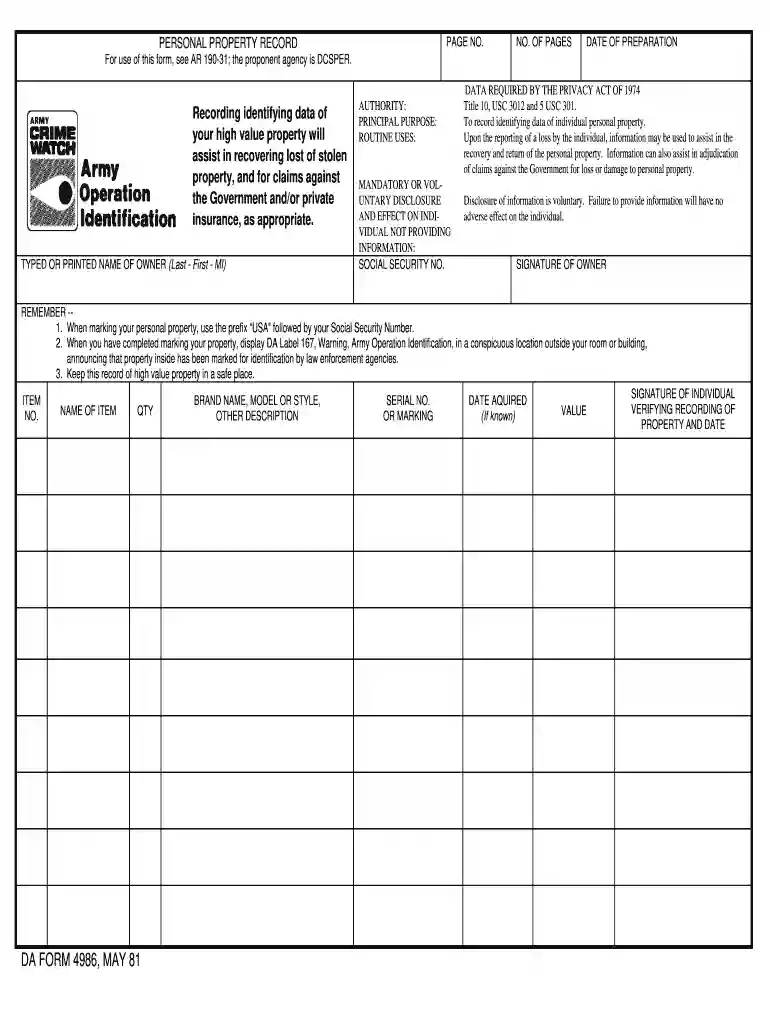
The Army high value item sheet, often referred to as DA Form 4986, is an essential document used by the United States Army to maintain a record of high-value items. This form is crucial for tracking items that carry significant monetary value, ensuring accountability, and aiding in the protection of military assets. The high value item sheet serves multiple purposes, including inventory management and security measures for military property, assisting units in safeguarding significant equipment and supplies.
The items that require this documentation typically include items valued at $1,000 or more, such as weapons, vehicles, communications equipment, and other related assets. Keeping an accurate record of these items is essential for operational readiness and auditing processes. The high value item sheet not only helps in monitoring the condition and location of these items but also plays a pivotal role during inspections and audits, ensuring compliance with military regulations regarding asset management.
Completing the high value item sheet (DA Form 4986) involves a systematic approach to ensure accuracy and compliance. Here are detailed steps to follow:
Gather Required Information: Collect all the necessary data related to the high-value items, including:
Open the Form: Access the DA Form 4986, which can be obtained through various military administration offices or via the official Army publications website.
Fill Out Item Details: Carefully enter the item's information into the form:
Provide Accountability Information: Add details about the unit responsible for the items, including:
Sign and Validate: The accountable officer must sign the document to validate its accuracy. This signature confirms that the information provided is correct and that the officer is accountable for the listed items.
Submit the Form: Once completed, submit the high value item sheet to the appropriate authority in your chain of command or designated administrative office.
Each step requires meticulous attention to detail to ensure the accuracy of the information recorded, which can significantly impact logistical operations and asset accountability.
The Army high value item sheet includes several key elements vital for its functionality. Understanding these elements is necessary for effective documentation. They consist of:
Identification Information: Each entry needs an identification number, item description, and serial number to uniquely define the item and differentiate it from other assets.
Value and Procurement Details: Accurate reflection of the item's market value and procurement date is imperative, as this information supports financial accountability and future audit requirements.
Custodianship Data: Details regarding the custodian or accountable officer, including their unit and contact information, ensure responsible management of high-value items. This facilitates communication and accountability within a unit.
Condition Reporting: A section to document the current condition of the items is crucial for maintenance and operational readiness. This might include notes regarding repairs, usage status, and potential liabilities.
By ensuring these elements are correctly addressed, military personnel can maintain an accurate record of significant operational assets.
The high value item sheet has various practical applications within the military setting. Here are several examples that demonstrate its utility:
Inventory Management: Units can leverage the high value item sheet to conduct regular inventories of high-value assets, ensuring that all items are accounted for and in acceptable condition. This helps prevent losses through theft, misplacement, or neglect.
Audit Preparation: During fiscal audits, having a well-maintained high value item sheet assists units in demonstrating compliance with asset management protocols. It provides a clear record of items assigned to the unit, which simplifies verification processes.
Operational Readiness: Commanders can use this documentation to gauge the readiness of critical equipment. If items are reported as damaged or in need of maintenance, they can make informed decisions about resource allocation for repairs or replacement.
Security Protocols: The form helps enhance security measures by ensuring that all valuable items are properly documented and monitored within the unit. This can help in cases of theft, ensuring quick responses and recovery efforts.
Transfer of Assets: When items are transferred between units, the high value item sheet serves as a formal record of the transaction, providing accountability and ensuring that responsibilities are clearly delineated.
The diverse applications of the high value item sheet illustrate its significance in maintaining operational efficiency and asset integrity within military environments.
The army high value item sheet is a document utilized by various personnel across military ranks for asset management and accountability. The primary users include:
Accountable Officers: Individuals responsible for the oversight of high-value items within a unit. They ensure that the items are adequately documented using the high value item sheet.
Supply Sergeants: Responsible for managing supplies and equipment within a unit, supply sergeants frequently utilize the high value item sheet for inventory purposes, ensuring that all assets are accounted for.
Logistics Personnel: Those involved in the logistics chain rely on the high value item sheet for tracking and managing high-value equipment, facilitating operations, and ensuring that assets are available when needed.
Unit Commanders: Commanders often review the high value item sheet for situational awareness regarding their unit's assets, helping to inform decisions related to mission readiness and equipment allocation.
Auditors and Inspectors: Military auditors and inspectors use the high value item sheet during inspections and audits to verify compliance with asset management policies and procedures.
By involving these key personnel in the maintenance and use of the high value item sheet, units can strengthen their asset management protocols and ensure accountability across the board.


We've got more versions of the high value item sheet army form. Select the right high value item sheet army version from the list and start editing it straight away!
| Versions | Form popularity | Fillable & printable |
|---|---|---|
| 1981 | 4.9 Satisfied (407 Votes) |
At DocHub, your data security is our priority. We follow HIPAA, SOC2, GDPR, and other standards, so you can work on your documents with confidence.




Feb 12, 2005 The BMP manual serves as guidance for the greater range community on how to address or mitigate any identified areas of concern on small armsRead more
Aug 25, 2016 Make sure items with serial numbers (and small, valuable items) are recorded on high-value item sheets. 6. Label all Blu-ray discs, video gamesRead more
Apr 26, 2017 Know how to extract high value targets. Treat and evacuate casualties. Accurately report information. Understand the society andRead more


