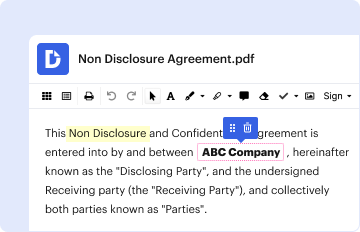
Type text, add images, blackout confidential details, add comments, highlights and more.
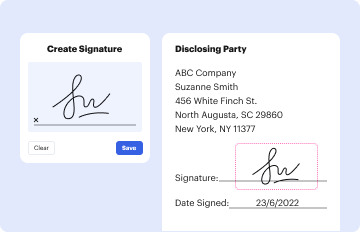
02. Sign it in a few clicks
Draw your signature, type it, upload its image, or use your mobile device as a signature pad.
03. Share your form with others
Send it via email, link, or fax. You can also download it, export it or print it out.
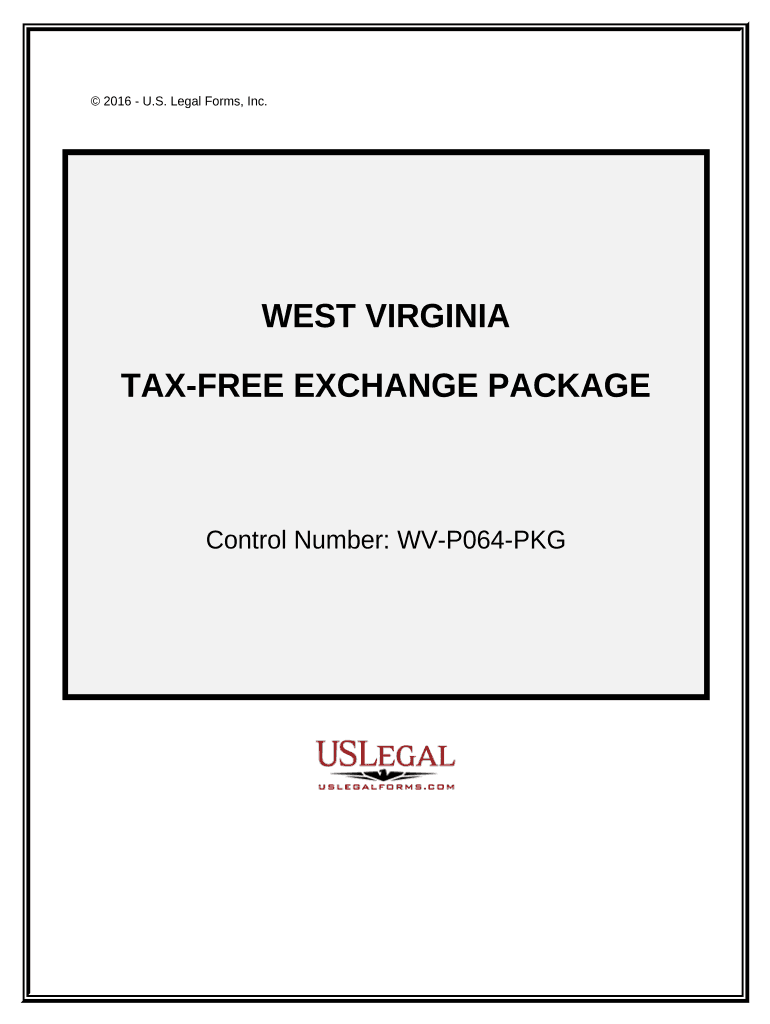
How to use or fill out Tax Free Exchange Package - West Virginia with our platform
Ease of Setup
DocHub User Ratings on G2
Ease of Use
DocHub User Ratings on G2
Click ‘Get Form’ to open the Tax Free Exchange Package in the editor.
Begin with the Exchange Agreement. Fill in the names of the parties involved and specify the property details. This establishes your intent to enter into an exchange agreement.
Next, proceed to the Exchange Addendum. Here, amend any existing contracts by entering relevant details about assignable rights and cooperation terms between parties.
Complete the Certification Of No Info Reporting On Sale Of Exchange form by indicating whether reporting is necessary for tax purposes.
For Like-Kind Exchanges, report each exchange of business or investment property by filling in required information about the properties exchanged.
Lastly, use the Sale of Business Property form to document gains, losses, and recapture amounts from any business property sales.
Start using our platform today for free to streamline your Tax Free Exchange process!
Fill out Tax Free Exchange Package - West Virginia online It's free
The tax-free cash must not exceed 25% of the benefits crystallised. The value given to crystallised benefits within a DB scheme are 20 x pension, plus the face value of cash. Maximum tax-free cash (TFC) can be calculated using the following formula: Maximum TFC = (20 x pension before commutation) / (3 + 20/CF)
Is West Virginia offering money to move there?
In order to redeem real property purchased by an individual in all counties with the exception of Kanawha County, the owner of, or any other person who was entitled to pay the taxes shall pay to the State Auditor in certified funds, the total amount payable to sheriff and the cost of the Certification of Redemption, as
What are the rules for tax-free exchange?
1031 Tax-Free Exchange requirements include: Your old and new property must be used for business or investment purposes to qualify for a 1031 exchange. During a 1031 exchange, you must purchase and take title of the new property identical to how your old property was held.
What items are tax-free in West Virginia?
Most tangible personal property (physical goods) sold in West Virginia is subject to sales tax. This includes things like furniture, sporting goods, and building materials. Some exemptions include groceries for human consumption, prescription drugs and medical devices, and certain farm equipment.
What are the rules for a 1031 exchange?
Eligibility for a 1031 Exchange is dependent on the exchanges timeline and the Same Taxpayer Rule. To qualify, the replacement property must be identified within 45 days, and the exchange must be completed within 180 days of the relinquished propertys transfer. (26 U.S.C.A. 1031.)
Related Searches
Tax free exchange package west virginia real estateWest Virginia sales tax exemptionWest Virginia sales tax exemption formWest Virginia sales tax calculatorWV tax exempt form PDFWest Virginia resale certificateWest Virginia resale certificate pdfWest Virginia Sales Tax login
Security and compliance
At DocHub, your data security is our priority. We follow HIPAA, SOC2, GDPR, and other standards, so you can work on your documents with confidence.
A Tax-Free transfer allows you to transfer your Tax-Free Savings Account from one financial institution into another institution without triggering contributions or withdrawals. You can do a partial transfer (transferring a portion of your tax-free funds) or a full transfer (transferring all your tax-free funds).
What is the tax-free exchange rule?
Section 1031 provides that No gain or loss shall be recognized if property held for use in a trade or business or for investment is exchanged solely for property of like kind. The first provision of a federal tax code permitting non-recognition of gain in an exchange was Code Sec. 202(c) of the Revenue Act of 1921.
Related links
WV NRAE - West Virginia Tax Division
This form is to be used only to request a Certificate of Full or Partial Exemption from the withholding requirements on the proceeds of the sale or exchange.
Income Tax--Tax Free Transfers to Controlled Corporations
It essentially provides that no gain or loss is recog- nized upon the transfer of property to a corporation by one or more persons solely in exchange for the
Cookie consent notice
This site uses cookies to enhance site navigation and personalize your experience.
By using this site you agree to our use of cookies as described in our Privacy Notice.
You can modify your selections by visiting our Cookie and Advertising Notice.