Type text, add images, blackout confidential details, add comments, highlights and more.
02. Sign it in a few clicks
Draw your signature, type it, upload its image, or use your mobile device as a signature pad.
03. Share your form with others
Send it via email, link, or fax. You can also download it, export it or print it out.
How to use or fill out Letter from Tenant to Landlord containing Notice of failure to return security deposit and demand for return - West Virginia with our platform
Ease of Setup
DocHub User Ratings on G2
Ease of Use
DocHub User Ratings on G2
Click ‘Get Form’ to open it in the editor.
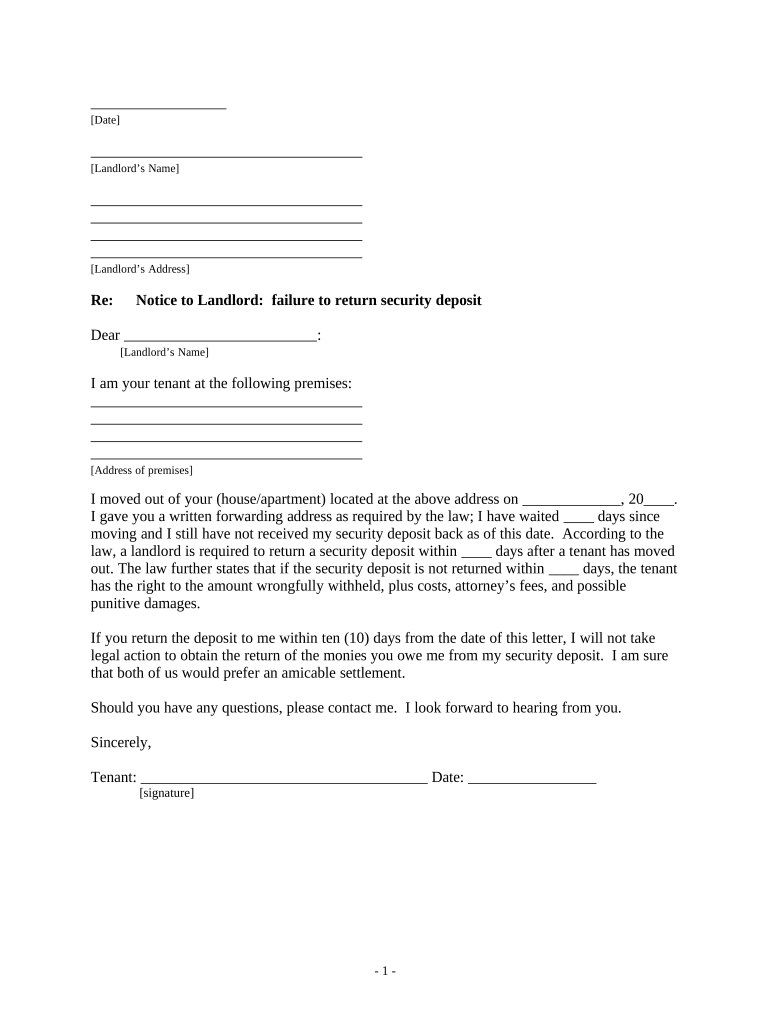
Begin by entering the date at the top of the letter. This is important for record-keeping and establishes a timeline for your notice.
Fill in the landlord’s name and address in the designated fields. Ensure accuracy to avoid any delivery issues.
In the body of the letter, clearly state your name as the tenant and provide the address of the premises you rented.
Indicate the date you moved out and how many days have passed since then without receiving your security deposit.
Reference West Virginia law regarding security deposit returns, specifying that landlords must return deposits within a certain timeframe.
Include a statement offering an amicable resolution if your deposit is returned within ten days, emphasizing your preference to avoid legal action.
Sign and date the letter at the bottom, ensuring all required information is complete before sending.
Select how you will deliver this notice (personal delivery, certified mail, etc.) and sign that section as well.
Start using our platform today to easily fill out your tenant notice form for free!
Fill out Letter from Tenant to Landlord containing Notice of failure to return security deposit and demand for return - West Virginia online It's free
Tenant security deposit return letter templateGetting security deposit back from landlordNot refunding security deposit letter template wordWV code 37-6A-1WV renters rightsSecurity deposit letter to Tenant sampleWhat a landlord cannot do in WVHow long does a landlord have to return deposit
Security and compliance
At DocHub, your data security is our priority. We follow HIPAA, SOC2, GDPR, and other standards, so you can work on your documents with confidence.
Jan 1, 2013 West Virginia Code concerning the return of security deposits. Any lease provision waiving these rights is unenforceable by law. W.Va. CodeRead more
Cookie consent notice
This site uses cookies to enhance site navigation and personalize your experience.
By using this site you agree to our use of cookies as described in our Privacy Notice.
You can modify your selections by visiting our Cookie and Advertising Notice.