




01. Edit your tenancy agreement standard online
Type text, add images, blackout confidential details, add comments, highlights and more.

Type text, add images, blackout confidential details, add comments, highlights and more.

Draw your signature, type it, upload its image, or use your mobile device as a signature pad.

Send ontario lease agreement template via email, link, or fax. You can also download it, export it or print it out.
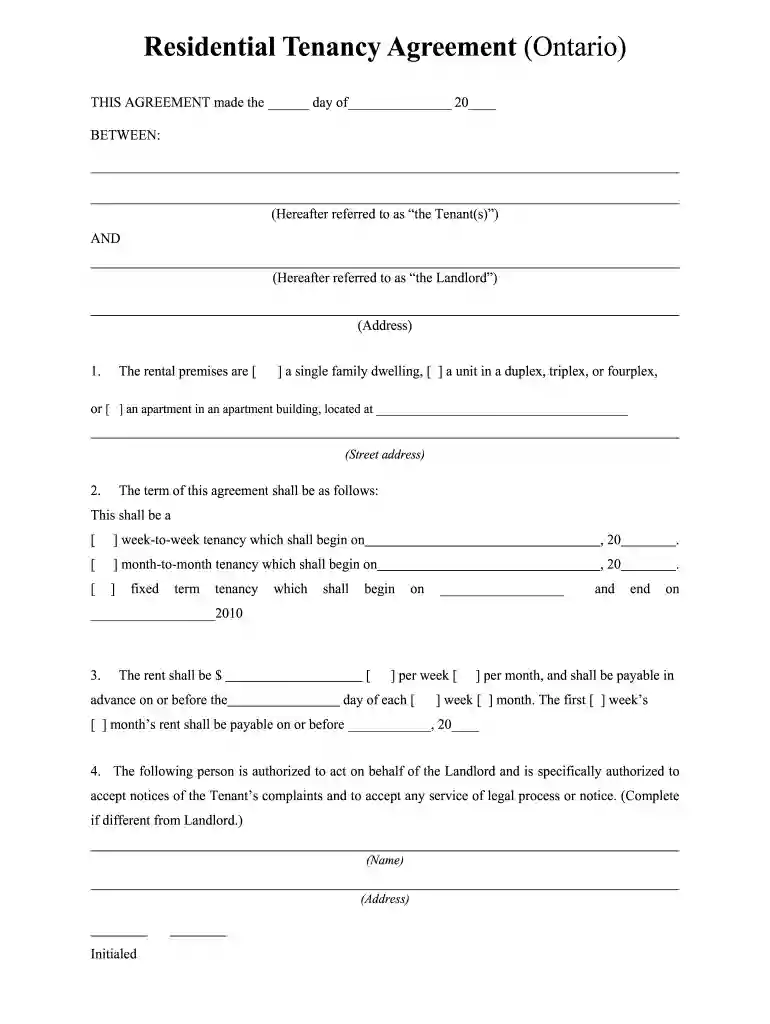
The Ontario lease agreement is a legally binding document used to formalize the rental arrangement between a landlord and a tenant for residential properties in Ontario, Canada. This agreement outlines the rights and responsibilities of both parties, serving as a crucial component to ensure clarity and prevent potential disputes during the tenancy period. By defining terms such as rental payment specifics, lease duration, and property maintenance responsibilities, the lease agreement helps establish a clear understanding between landlords and tenants.
To effectively utilize the Ontario lease agreement, both landlords and tenants must thoroughly review the document to understand the obligations and terms it encompasses. Landlords typically present this agreement to potential tenants after outlining the rental property details and any specific conditions. Tenants should carefully read through each section, asking questions or seeking clarification where required. Once both parties agree on the terms, they can sign the agreement to finalize the contract, ensuring all stipulations are understood and accepted.
Landlords and tenants can acquire the Ontario lease agreement from various sources. It is often available through real estate agencies, legal advisors, or downloadable from online platforms specializing in legal documents. The Ontario government also provides a standardized version, known as the Residential Tenancy Agreement (Standard Form of Lease), which can be downloaded from the government’s official website. Ensuring the use of the official or appropriately customized form is crucial for compliance with provincial law.
Completing the Ontario lease agreement involves a series of critical steps:
Several essential components make up the Ontario lease agreement:
Understanding critical terms in the Ontario lease agreement is vital for all involved parties:
The Ontario lease agreement is governed by the Residential Tenancies Act, 2006, which outlines the legal framework for all residential rental agreements in Ontario. The Act ensures that terms within the lease align with provincial laws, protecting tenant rights while allowing landlords to enforce reasonable rules. Legal adherence during the signing and execution of the lease is essential, ensuring all rights and responsibilities are accurately represented and enforceable under Ontario law.
While each rental situation is unique, the Ontario lease agreement can accommodate various scenarios with appropriate amendments:
These examples highlight the document's versatility in managing diverse rental relationships while maintaining compliance with regional regulations.
At DocHub, your data security is our priority. We follow HIPAA, SOC2, GDPR, and other standards, so you can work on your documents with confidence.





This plan package is designed to help you control operating costs during your lease and limit expenses when you return your Nissan. Next Level Lease ProtectionRead more
Form 2229E Residential Tenancy Agreement (Standard Form of Lease) is used in Ontario, Canada for creating a legally binding agreement between a landlord and aRead more


