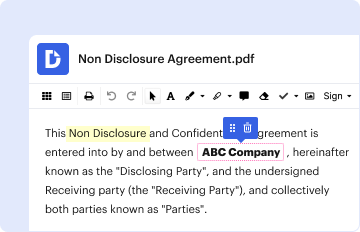
Type text, add images, blackout confidential details, add comments, highlights and more.
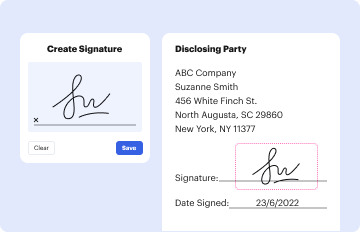
02. Sign it in a few clicks
Draw your signature, type it, upload its image, or use your mobile device as a signature pad.
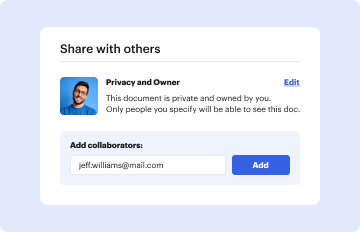
03. Share your form with others
Send it via email, link, or fax. You can also download it, export it or print it out.
How to use or fill out Living Trust for Individual Who is Single, Divorced or Widow or Widower with Children - Wisconsin
Ease of Setup
DocHub User Ratings on G2
Ease of Use
DocHub User Ratings on G2
Click ‘Get Form’ to open it in the editor.
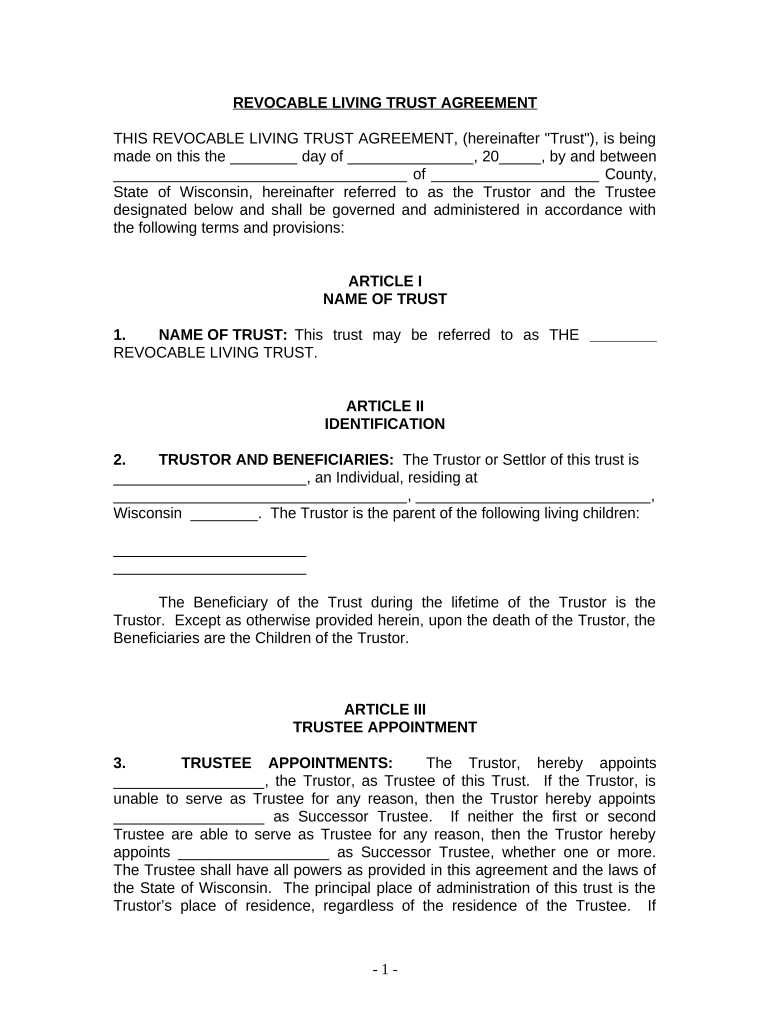
Begin by entering the name of the Trustor and their address in the designated fields. This identifies who is creating the trust.
In Article I, specify the name of the trust. This can be customized as per your preference.
Fill out Article II by listing all living children of the Trustor, ensuring accurate representation of beneficiaries.
Designate a Trustee in Article III. You may appoint yourself or another individual as Trustee and include successor Trustees if necessary.
In Article IV, list all assets being transferred into the trust on Schedule A. Ensure that all property details are accurate and complete.
Review Articles V through XII for any additional provisions you wish to include regarding trustee powers, distributions, and administration after death.
Start using our platform today to easily fill out your Living Trust form online for free!
Fill out Living Trust for Individual Who is Single, Divorced or Widow or Widower with Children - Wisconsin online It's free
A Wisconsin living trust holds ownership of your assets while you continue to use and control them during your lifetime. After your death, the trust assets are distributed to the beneficiaries you have chosen.
Does a living trust avoid probate in Wisconsin?
avoid probate Property in your revocable living trust doesnt go through probate after your death. (See the State Bar of Wisconsins pamphlet, Probate: Answering Your Legal Questions.) If, however, you die leaving property that never got transferred to the trust, probate usually will be required.
What are the disadvantages of putting your house in a living trust?
Suze Orman, the popular financial guru, goes so far as to say that everyone needs a revocable living trust. But what everyone really needs is some good advice. Living trusts can be useful in limited circumstances, but most of us should sit down with an independent planner to decide whether a living trust is suitable.
What is the downside of a living trust?
Here are the cons: A living trust is more complex and typically more costly to set up, and you must retitle your assets in the name of the trust, which is also time-consuming. It doesnt offer any estate tax benefits or special asset protection.
What happens to a living trust when a spouse dies?
If a couple creates a revocable living trust together and one spouse passes away, the surviving spouse continues acting as the trustee during their lifetime. The surviving spouse still has the same power they had before their spouses death to amend the trust or revoke the trust.
Related Searches
Living trust Wisconsin requirementsWisconsin trust lawsRevocable trust vs irrevocable trust WisconsinBest living trust for individual who is single divorced or widow or widower with children wisconsinWho owns the property in a revocable trustWisconsin Living Trust formsLiving trust vs will in WisconsinLiving trust Wisconsin cost
Security and compliance
At DocHub, your data security is our priority. We follow HIPAA, SOC2, GDPR, and other standards, so you can work on your documents with confidence.
Jan 2, 2018 Your filing status may be single if you were widowed before January 1, 2017, and didnt remarry before the end of 2017. You may, however, be
Living trusts. A living trust may be set up for a spec- ified period of time. It may last for part or all of the settlors lifetime, and it may continue
Cookie consent notice
This site uses cookies to enhance site navigation and personalize your experience.
By using this site you agree to our use of cookies as described in our Privacy Notice.
You can modify your selections by visiting our Cookie and Advertising Notice.