




01. Edit your blood pressure record sheet online
Type text, add images, blackout confidential details, add comments, highlights and more.

Type text, add images, blackout confidential details, add comments, highlights and more.

Draw your signature, type it, upload its image, or use your mobile device as a signature pad.

Send blood pressure recording form via email, link, or fax. You can also download it, export it or print it out.
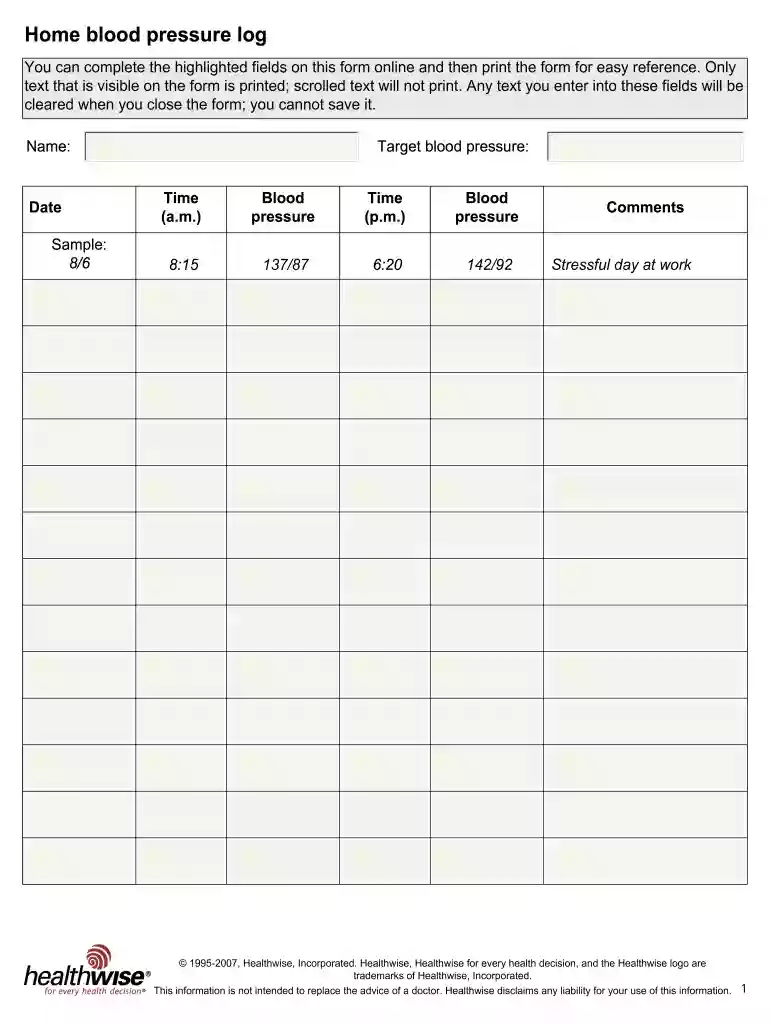
The home blood pressure record sheet is an essential tool for individuals managing their cardiovascular health. It serves as a structured way to log daily blood pressure readings, which can be vital for monitoring conditions such as hypertension. By regularly recording these measurements, users can discuss their blood pressure trends effectively with their healthcare providers to make informed decisions regarding their treatment plan.
The blood pressure record sheet typically includes the following components:
This structured format permits users to easily observe patterns over time, helping both the individual and healthcare professionals understand how daily activities or treatments may affect blood pressure levels.
To effectively leverage the blood pressure recording form, follow these steps:
By adhering to this method, you ensure a reliable record that supports effective health management.
Regular use of the home blood pressure record sheet is crucial for several reasons:
The information documented in the home blood pressure record sheet can assist in making critical healthcare decisions but is not a substitute for professional medical advice. It’s important to share your readings with healthcare providers, who may interpret the data within the broader context of your overall health. Moreover, maintaining records can sometimes aid in proving compliance with hypertension management programs, which may have legal implications for insurance purposes.
There are several customizable templates available for recording blood pressure:
Each variant has its own benefits; for instance, a digital tracker may automatically compute averages, whereas a paper version easily allows for quick notes or reflections.
The Centers for Disease Control and Prevention (CDC) and other health organizations often provide useful resources related to blood pressure management, offering education on what constitutes normal readings and tips for maintaining a healthy lifestyle. Such tools complement the use of a home blood pressure record sheet effectively, promoting better health outcomes.
The home blood pressure record sheet is an indispensable tool for anyone tracking their blood pressure. Proper use, regular monitoring, and knowledgeable interpretation of the data can significantly contribute to health management. As always, collaborating closely with health care professionals is vital to ensuring that blood pressure control strategies are effective and well-suited to individual needs.
At DocHub, your data security is our priority. We follow HIPAA, SOC2, GDPR, and other standards, so you can work on your documents with confidence.
Try these tips for keeping track of your blood pressure at home: Always take your blood pressure at the same time every day. Take at least two readings,Read more
Please use this log to record the blood pressure and heart rate (pulse) readings you take at home. Note the date and time of day you take them.Read more


