Type text, add images, blackout confidential details, add comments, highlights and more.
02. Sign it in a few clicks
Draw your signature, type it, upload its image, or use your mobile device as a signature pad.
03. Share your form with others
Send filing bankruptcy in utah via email, link, or fax. You can also download it, export it or print it out.
How to use or fill out Utah Bankruptcy with our platform
Ease of Setup
DocHub User Ratings on G2
Ease of Use
DocHub User Ratings on G2
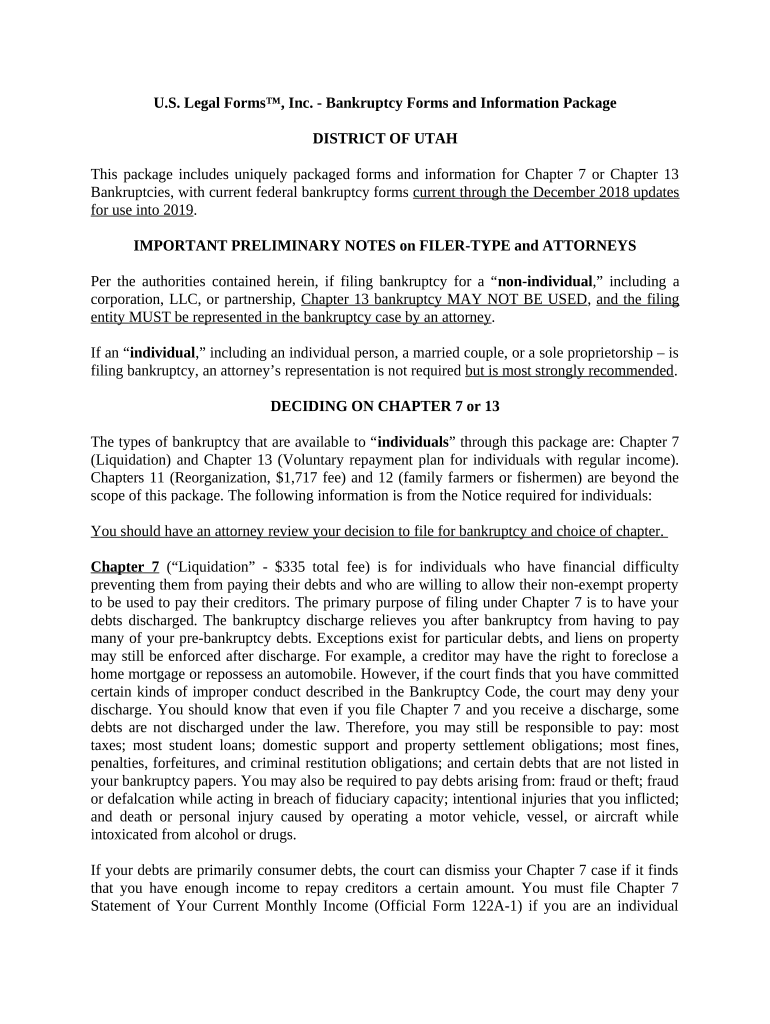
Click ‘Get Form’ to open the Utah Bankruptcy form in the editor.
Begin by selecting the appropriate chapter for your bankruptcy: Chapter 7 for liquidation or Chapter 13 for a repayment plan. Ensure you understand the implications of each option.
Fill out your personal information in the designated fields, including your name, address, and contact details. Accuracy is crucial here.
Complete the financial sections by detailing your income, expenses, and debts. Use our platform's tools to easily input figures and ensure clarity.
If filing under Chapter 7, complete the Statement of Your Current Monthly Income (Official Form 122A-1) to determine eligibility based on median income.
For Chapter 7 filers, list any exempt property on Schedule C (Official Form 106C) to protect certain assets from being sold.
Review all entries carefully before submitting. Utilize our platform’s review features to catch any errors or omissions.
Start filling out your Utah Bankruptcy forms today for free using our platform!
Information and Resources Bankruptcy Basics Filing for Bankruptcy Without an Attorney U.S. Courts Bankruptcy Resources Utah Legal Services - bankruptcyRead more
Gentry Mountain No. 4 Coal Mine - Global Energy Monitor
May 14, 2025 Mining Company declared bankruptcy in 2010,, the mine was acquired by Castle Valley Mining LLC and renamed Castle Valley Mine No.4. In 2020,Read more
Debt and Bankruptcy - Free and Low-Cost Legal Resources in
Free and Low-Cost Legal Resources in Utah: Debt and Bankruptcy. Home Page Any There are also limited online appointments available, email probono@law.utah.Read more
Cookie consent notice
This site uses cookies to enhance site navigation and personalize your experience.
By using this site you agree to our use of cookies as described in our Privacy Notice.
You can modify your selections by visiting our Cookie and Advertising Notice.