Type text, add images, blackout confidential details, add comments, highlights and more.
02. Sign it in a few clicks
Draw your signature, type it, upload its image, or use your mobile device as a signature pad.
03. Share your form with others
Send it via email, link, or fax. You can also download it, export it or print it out.
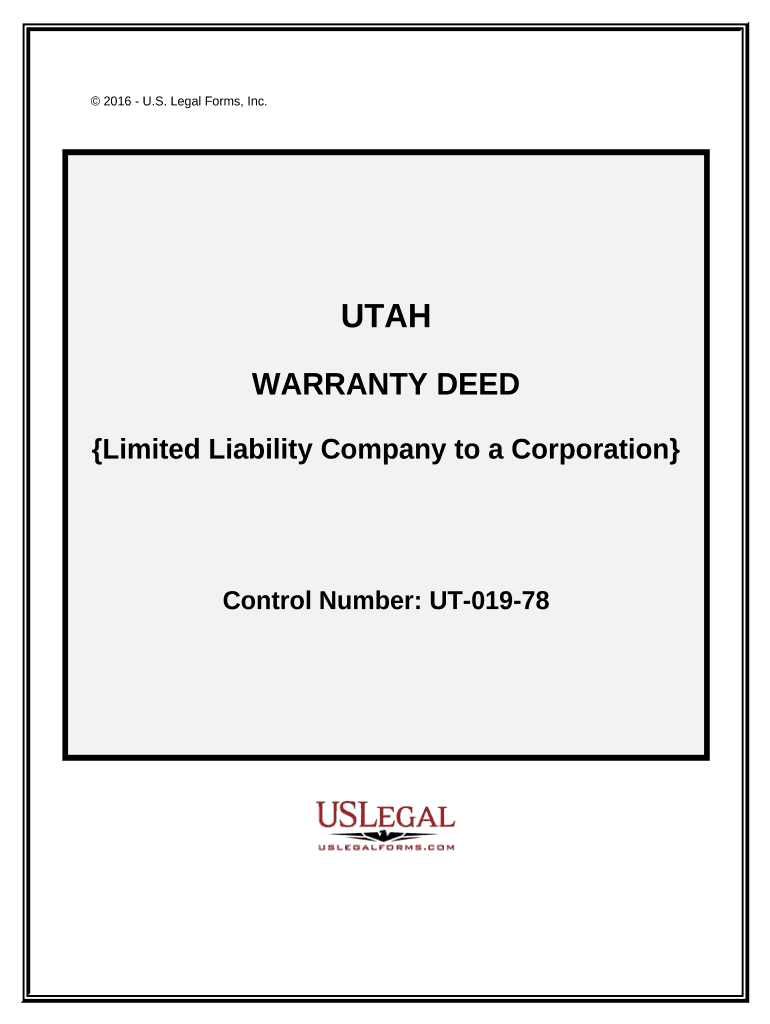
How to use or fill out Warranty Deed - Limited Liability Company to Corporation - Utah
Ease of Setup
DocHub User Ratings on G2
Ease of Use
DocHub User Ratings on G2
Click ‘Get Form’ to open it in the editor.
Begin by entering the Grantor's information, including the name of the limited liability company and its address. Ensure accuracy as this identifies the seller in the transaction.
Next, fill in the Grantee's details, which is the corporation receiving the property. Include its name and address clearly.
In the section for legal description, attach Exhibit A that outlines the specific property being transferred. This is crucial for clarity on what is included in the deed.
Indicate any prior instrument references if applicable, ensuring all historical data is correctly noted.
Complete the tax proration section by selecting how taxes will be handled between Grantor and Grantee.
Finally, have an authorized representative of the Grantor sign and date the document. Ensure notarization is completed to validate the deed legally.
Start using our platform today to complete your Warranty Deed effortlessly and for free!
Fill out Warranty Deed - Limited Liability Company to Corporation - Utah online It's free
Warranty deed limited liability company to corporation utah templateWarranty deed limited liability company to corporation utah formWarranty deed limited liability company to corporation utah exampleWarranty deed limited liability company to corporation utah onlineWarranty deed limited liability company to corporation utah costUtah LLC RegistrationUtah business entity searchUtah LLC login
Security and compliance
At DocHub, your data security is our priority. We follow HIPAA, SOC2, GDPR, and other standards, so you can work on your documents with confidence.
Holmes Development, LLC v. Paul Cook, an individual,
PAUL COOK, an individual, COOK. DEVELOPMENT, LC, a Utah. Limited Liability Company, and. FIRST AMERICAN TITLE. INSURANCE COMPANY, a. California Corporation,.
Attachment to that certain Warranty Deed executed by A.L.E. Investments, LLC, a Utah limited liability company grantor(s), to Kanab City, a Utah MunicipalRead more
NOTICE: This report was prepared as an account of work sponsored by an agency of the United States Government. Neither the United States Govern-.Read more
Cookie consent notice
This site uses cookies to enhance site navigation and personalize your experience.
By using this site you agree to our use of cookies as described in our Privacy Notice.
You can modify your selections by visiting our Cookie and Advertising Notice.